Air Crew Training Program (1943-1944)

During the Second World War, Dickinson College became the site of an army air corps training program. Beginning on March 1, 1943, a large segment of the campus was used by the Thirty-Second College Training (Air-Crew) Detachment. The College provided a five month course for the "Preparation of Air Crew Students, both mentally and physically, for intensive ground training in the Preflight Schools." This program concentrated on the three distinct areas of academic preparation, military training, and physical training. In exchange for hosting the air crew students, the College received compensation from the U. S. government. The program was terminated on January 29, 1944, due to diminishing need for such programs in the northeastern United States. From its inception to its termination, 2260 cadets passed through the program at the College, providing a welcome federal income in the reduced circumstances of the conflict.

Note: Digital copies of 32nd's newspaper, the Eager Eagle, as well as two magazines are available by following this COLLECTION LINK.
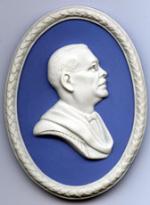
Arts Award

The Dickinson College Arts Award honors an individual or group who has made an outstanding contribution to the creative or performing arts. A committee of faculty and trustees makes the selection.

The Award was initiated by the faculty and endowed in 1959 by gifts from members of the board of trustees, notably C. Scott Althouse and Sumner Drayer, in honor of William W. Edel, president of the College from 1946 to 1959. The recipient receives a Wedgewood medallion bearing the likeness of President Edel based on a sculpture created by Nancy Dryfoos, distinguished American sculptor, together with an honorarium.

Bosler Cartouche

The Bosler Cartouche was carved in 1885 and appeared above a portico at the entrance to Bosler Hall. In 1940 and 1941, the building's portico and turret were removed and the original sandstone walls of Bosler Hall were covered with limestone. During this construction project, the three-and-a-half-ton cartouche was removed and placed in storage.

In 1968, the class of 1913 was preparing for its 55th reunion and recommended the display of the slab. It was placed between Adams and Witwer Halls, facing the Dickinson School of Law.

Later, a group of faculty, staff, and local alumni formed the half tongue-in-cheek "Committee to Restore Our Cartouche"(CROC). The ad-hoc CROC met off and on over a number of years, and its members wrote several letters to successive college treasurers requesting action. In 2000, on the orders of new President William G. Durden '71, the Cartouche was moved to its current location, a prominent place in front of Bosler Hall.

Butler's Analogy

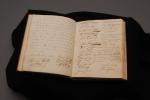
Joseph Butler (1692-1752) wrote his infamous Analogy of Religion, Natural and Revealed, to the Constitution and Course of Nature, in 1736. Butler was born and educated in England as a Presbyterian but became ordained in the Church of England in 1718, and eventually became the Dean of St. Paul's Cathedral and later Bishop of Durham. He studied Locke, Shaftesbury, and Hutcheson, philosophers who all influenced his writing. In his Analogy, Joseph Butler discusses his views on morality, and how under normal circumstances, humans are designed to follow moral lives. The work impressed Hume and Wesley and became widely read first in Scotland during the end of the eighteenth century, and made its way to Oxford, and eventually spread to American universities and colleges during the early part of the nineteenth century when many such institutions were heavily influenced by Scottish philosophy. Dr. Benjamin Rush, one of Dickinson's founders, who was educated at Edinburgh University, certainly read the Analogy when, following a long career to the study of medicine and science, he began later in life to search for a unity between nature and God. He found some answers to his questions in Butler's Analogy.

Charter

By 1783, the trustees of the Carlisle Grammar School had begun to discuss the possibility of expanding the school into a classical academy. Learning of their plans, prominent Philadelphia physician Benjamin Rush endeavored, with the help of grammar school trustee John Montgomery, to advance the idea of a college, not a simple academy. Despite reservations held by some of the trustees, Rush's plan was accepted. Garnering support from such prominent men as John Dickinson and James Wilson, already himself a trustee of the grammar school, the trustees successfully petitioned the Pennsylvania State Assembly for the creation of their proposed "Dickinson College." The charter was granted on September 9, 1783.

The charter is entitled "An Act for the Establishment of a College at the Borough of Carlisle, in the County of Cumberland, in the State of Pennsylvania," and it sets forth the guidelines by which the business of the college is to be conducted by the board. The Board of Trustees was to be comprised of forty men, nine of whom were required to be present to form a quorum. No one was permitted to be a member of the Board while as a student, professor, or president of the college. Information regarding impending meetings was to be distributed in sufficient time beforehand.

College Bowl 1965

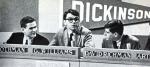
On September 17, 1965, a team of eight Dickinson students, coached by Professor Sanford J. Smoller and Harold R. Gillespie, traveled to New York to compete in the General Electric College Bowl, "the varsity sport of the mind," then broadcast on NBC television. They began a string of victories in five programs that saw the team retire undefeated, only the nineteenth team to do so of the 256 that had competed up to that point in the thirteen year history of the show. At the conclusion of the television program of October 24, 1965, in which they overwhelmed Adelphi University by a score of 285 to 170, the team was awarded a silver bowl and $10,500 in scholarships.

The first team members included the captain, George Williams, a senior English major from Chappaqua, New York; Norman Rothman, another senior and an history major from West Pittston, Pennsylvania; David Richman, senior English major from Philadelphia; and, from Carlisle, junior fine arts major Art Litoff. They were strongly supported by the second squad of Donald Richmond from Long Island, Elizabeth Wagner of Nanuet, New York, Reginald Templeton of Mount Lebanon, Pennsylvania, and Mark Dischell from Margate, New Jersey.

Dick the dog

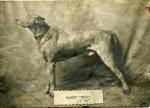
When Dick, the College Mascot, was found dead in Dr. Morgan's front garden on Monday, January 19, 1903, there was, in the words of Dickinsonian correspondent Whitfield J. Bell, writing thirty years later, "genuine sadness on the campus, for the old dog was as much a part of the College as the Mermaid on Old West." (Dickinsonian, Jan. 19, 1933)

For years, the ubiquitous Great Dane had posed with sports teams in official photographs, enlivened dormitory life, and attended every chapel, where, by ostentatious yawning, he often "commented" on proceedings, to the delight of the student body. His story "after death" is every bit as interesting (follow the link below). At the time Whitfield Bell was writing, Dick's stuffed remains were still preserved in the Bosler Library "in the extreme northwest alcove, wearing his collar...."

S.S. Dickinson Victory

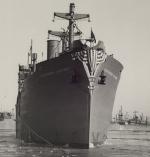
The S.S. Dickinson Victory was a "Victory" ship built by the California Ship Building Corporation for the United States Maritime Commission on Terminal Island, California, near Los Angeles. The keel was laid on December 15, 1944, and the ship was launched on February 9, 1945.

The "Victory" ship program was begun in 1944 as an improved extension of the "Liberty" ship program. Vessels in this new class were designed to be faster, safer, and convertible to civilian use following the war. The Dickinson Victory was a "VC2-S-AP2 Type" of close to 11,000 tons, 455' 3" long and with a beam of 62'. It was powered by 8,500 horsepower turbine engines generating a top speed of 17 knots and a cruising radius of 25,000 miles. The first of the type was completed in February, 1944 and called the United Victory. A total of 534 Victory ships were built between 1944 and 1946; the first 35 ships, including the United Victory, honored the Allied nations. The next 218 were named after cities, followed by 150 ships named for educational institutions; Dickinson Victory was the second in this latter series, following the Rutgers Victory. The remaining 131 Victory ships were given assorted names.

Dickinson-in-China

The late nineteenth-century in America was marked by a desire to introduce Western influence, and, more importantly, Christian doctrines to the nations of the East. Not immune to this trend, numerous Dickinson College alumni used their ties to the College to help establish educational and religious institutions in China, most particularly the West China Union University in Chengtu in the Sechuan Province. Men such as John Goucher, class of 1868, and Raymond Brewer, class of 1916, were instrumental in the workings of the University as well as securing financial support for it through Dickinson and its alumni. Although thousands of students studied at the university, by the turn of the twentieth-century, anti-Western and anti-Christian sentiment had risen to an all-time high in China, resulting in the Boxer Rebellion in 1900. Despite such outbursts, the West China Union University continued to exist until 1926, when relations with the Chinese government as well as its people became extremely strained.

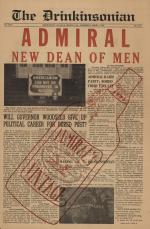
The Drinkinsonian

The Drinkinsonian is an annual satirical issue of The Dickinsonian, the regular campus newspaper. The first issue arrived on the Dickinson campus on November 3, 1932 claiming "We dare to print all." This was at the time of the Great Depression and prohibition, and The Drinkinsonian provided comic relief as it poked fun at campus life. Throughout its sporadic run, which continues to the present, The Drinkinsonian has taken on Dickinson's social, educational, political, and everyday issues in sometimes outrageous satire.

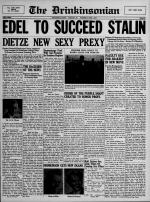
Along with poking fun at the campus, The Drinkinsonian also concocted stories which included everything from executions to fires. Early issues used the Carlisle community in some of its articles. The paper placed advertisements upside down and often placed random unrelated pictures throughout with whimsical captions. Most headlines concerned sports, fraternities, current events, and especially the presidents and other authority figures of the College. As the world watched to see who the Soviet Union would select to follow Joseph Stalin, the stridently anti-communist President William Wilcox Edel was announced as his successor in the 1953 edition complete with photograph of him boarding the plane for Moscow.

The present Drinkinsonian editions are usually produced to coincide with April Fools' Day.

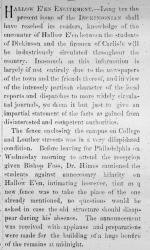
Halloween Riot (1888)

On the night of October 31, 1888, students of Dickinson College in Carlisle, Pennsylvania, tore down the old picket fence along the north side of the Dickinson campus, as acting college president Dr. Charles Francis Himes had suggested that morning, and piled up the wood in order to make a bonfire. The students claimed that Carlisle Chief of Police Zimmerman witnessed their efforts, and told them to “go ahead”. Zimmerman would later deny this allegation. Around eleven o'clock, the students set the pile ablaze.

Junior Oratorical Contest (1836-1939)

The Junior Oratory was a cherished event that for over a hundred years served as part of the Commencement week ceremonies at Dickinson. Earliest records indicate that this contest, first titled the "Junior Exhibition," occurred on July 20, 1836. The first four oratories were on American Indians, the topic "The destruction of our form of government is not to be inferred from the examples of former republics," Chivalry, and Poland. These four set the stage for future oratory topics that focused on domestic issues, the American government, the qualities of man, and foreign relations. The winner and the runner up received gold and silver medals, respectfully.

"The Liberty Song" (1768)

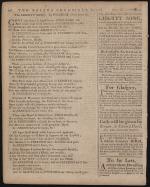
"The Liberty Song" was written in 1768 when John Dickinson set out to reflect on the political strife caused by the Townshend Acts of 1767, the latest in a series of British crown taxes levied on the Colonies. Dickinson wrote the words to fit the famous music of the anthem of the British Royal Navy, "Heart of Oak," composed in 1759 by Dr. William Boyce (1711-1779). Boyce's music was first performed in London in Harlequin's Invasion with the words that famed British actor David Garrick (1716-1779) penned to celebrate the three great victories of that year in the Seven Year's War. Dickinson freely adapted Garrick's lyrics, especially in the chorus, and Dickinson's friend, Arthur Lee, in Boston enroute to England for law studies, also contributed two stanzas.

When Dickinson wrote his lyrics, he undoubtedly knew well the patriotic association with the Navy of the words and the music of "Heart of Oak." Perhaps because of this, he also used the song to comment on his colleague John Hancock's ship, called Liberty, which had been seized by the authorities for smuggling. This seizure, along with anger over the acts, precipitated riots and led to the declaration of a suspension of English imports by Boston merchants in August, 1768 to begin December 31.

The College Mace

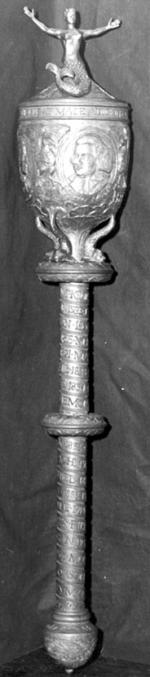
The College Mace of Dickinson College in Carlisle, Pennsylvania was adopted at a special convocation ceremony there on Parents' Day, October 13, 1951. In the words of then President William W. Edel, the mace was to be "the symbol of the corporate authority of the College [to be] carried at the head of all academic processions on such formal and official occasions as commencements, matriculation services and regular and special convocations." At the dedication ceremony, Professor David I. Gleim of the chemistry department was chosen to be the first assistant marshal and mace bearer. The senior member of the faculty today bears the mace at official ceremonies.

Tradition-minded President Edel had conceived of this symbol during his travels to Europe, most especially through his close association with the officers of Carlisle, seat of the county of Cumberland in northern England. Adapted from the official mayoral mace of that city, the design incorporates long-established symbols of Dickinson College.

The Mermaid Story

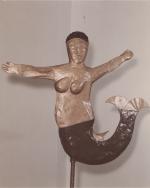
The Dickinson College mermaid was originally designed as a weathervane to be placed on top of the cupola of Old West. It is believed that the architect of the building, Benjamin Latrobe, intended the weatherwane to be in the form of Triton, in reference to the ancient Temple of the Winds in Athens. The local metalworker who was given the task of crafting the Triton likely had little knowledge of the temple or this mythical male sea god, so he created the closest thing he could imagine - a mermaid. Alumnus and faculty member Charles Francis Himes, class of 1855, first detailed this theory in a pamphlet, printed in the early 20th century

John C. Pflaum Lectures in History (1972-present)

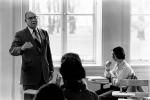
The Pflaum Lectures in History are supported by income from a fund contributed to by students and friends of the late Professor John C. Pflaum in appreciation of his effective teaching. The lectures bring to campus scholars who, like Professor Pflaum, are particularly successful in oral presentation of historical topics. The first lecture was held in the spring of 1972 in honor of Pflaum's retirement; the speaker was Dr. Bell I. Wiley, who provided his insight on "Some Glimpses of the Confederacy High Brass." Although the original intention of the lectures was to provide scholars for topics in history that were of particular interest to Prof. Pflaum, the area has since been much expanded, as the professor himself showed a wide variety of interests in his historical pursuits. The list of Pflaum lecturers since 1972 includes such notable scholars as Edward Acton, Grayton Tunstall, John Voll, Mercedes Vilanova, and former Assistant Secretary of State Harold H. Saunders.

The Priestley Award

Established during the presidency of William Edel, the Joseph Priestley Award is bestowed annually upon a distinguished scientist for notable discoveries and contributions to mankind. In 1952 Sir Hugh Stott Taylor became the first recipient of the Priestley Award for his research and teaching in physical chemistry. Linus Pauling, Margaret Mead, Stephen Jay Gould, and Francis Crick are just a few of the many noted recipients of the award since its inception.

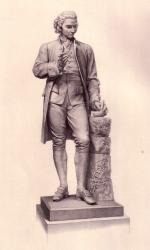
A marble statue of Joseph Priestley, crafted by Francis J. Williamson, was unveiled in Birmingham, England in 1874 to mark the 100th anniversary of Priestley’s discovery of oxygen. Dickinson College owns two smaller plaster replicas of this statue; one is on display in the Rector Science Complex, and the other is exhibited among the many Joseph Priestley papers and artifacts in the Archives and Special Collections. A stipple engraving of the statue was rendered by artist George J. Stodart at the time of the unveiling, and this image was widely circulated through popular magazines and artistic journals of the day.

Note:  Several audio and video clips from Priestley Award recipients' lectures are available by following this LINK.

"Red Devils"

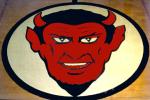
The Dickinson football team traveled to George Washington University for a game on Saturday, October 25, 1930. The Dickinson Red and White were heavily outmatched in the end, but they held off George Washington throughout the first half. The score at half was GW 7 and Dickinson 6. Because of this show of grit and spirit against a superior team, a Washington writer from the Public Ledger dubbed the Dickinson team "the Red Devils."

Dickinson students apparently were taken with the name because in the Dickinsonian of the very next week (November 6, 1930), a headline on the next game, against the Pennsylvania Military College, read RED DEVILS OUTPLAY CADETS, BUT GAME ENDS IN 7-7 SCORE.

The flavor of the time really comes through in the actual articles in the Dickinsonian of Thursday, October 30, 1930.

GRIDDERS FIGHT ODDS BUT LOSE TO GEORGE WASHINGTON 27-6 "Displaying an offense that spoke volumes for the work being done this year by Coaches Griffith and McAndrews, the 'Red Devils' of Dickinson College succumbed to George Washington, by a 27-6 score on Saturday at Washington. Though outweighed by the Capital city gridders, whose line averaged 195 pounds, and the backs 185 pounds, the Dickinson team outfought the victors throughout the entire first half, until the sheer force of weight caused the worn out battlers to yield up a touchdown. The offense displayed was easily the strongest shown during the present campaign."

The Salmagundi

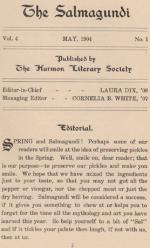
The Salmagundi was the literary magazine published by the Harman Literary Society following its resurrection in 1900 at Dickinson College in Carlisle, Pennsylvania. The original Salmagundi was composed by Washington Irving in 1807 “simply to instruct the young, and reform the old, correct the town and castigate the age.” This objective the Harman Literary Society adopted as its own with the establishment of their magazine.

The name Salmagundi was derived from two Latin roots – salgama meaning “pickles” and condita meaning “preserved,” thus making the literal translation of the magazine “pickles preserved.” However, the Webster’s dictionary provided another definition for Salmagundi as “a mixture of chopped meat and pickled herring, with oil, vinegar, pepper and onions.” While the Harman Literary Society’s Salmagundi had nothing to do with food, the members used both definitions to describe in its pages the contents of their magazine as “…the chopped meat represented the real food for thought, in the magazine…They [the pickled herring] are not particularly nourishing, yet who would do without them?…not enough vinegar to make Sal really sour, nor yet sufficient pepper to make her truly dark and bitter, but just that happy combination of the two, that only the real chef can strike…she is well seasoned with the oil of good will.”

Three Mile Island (1979)

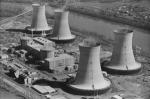
On March 28, 1979, the eastern United States faced the threat of a nuclear meltdown at the Three Mile Island (TMI) nuclear power facility in Middletown, Pennsylvania, twenty-five miles southeast of Dickinson College, on the Susquehanna River. The crisis originally began when a valve opened unnoticed, and allowed thousands of gallons of coolant water to flow from one of the plant's reactors. This caused temperatures within the unit to raise to over 5000 degrees, causing the fuel core to begin to melt. The threat of the overheated reactor and leaking radiation had an immediate impact on the College.