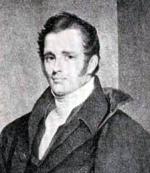
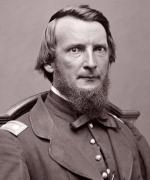
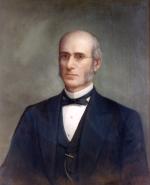
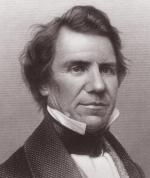
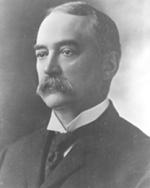
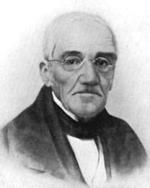
George Armstrong Lyon (1784-1855)

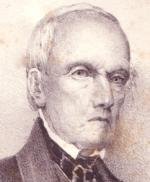
George Lyon was born in Carlisle, Pennsylvania on April 11, 1784, the son of William and Margaret Lyon. His father had been one of the patentees of the 1773 school and was a prominent Carlisle Presbyterian. Lyon attended the local Dickinson Grammar School and joined the Dickinson College class of 1800 in 1797. He became a member of the Union Philosophical Society at the College but did not complete his degree. He instead trained as a lawyer.

Lyon followed his family's prominence in Carlisle, operating a law practice, and was president of a local bank. He served as a member of the Dickinson College Board of Trustees between 1815 and 1833. He was also the president of the Presbyterian Church of Carlisle during the tenure of the well known "new light" minister, George Duffield. Conservative and rigid of principle, Lyon resisted Duffield's revivalist influence on his church. He also suspected and resented Duffield's perceived influence on the operation of the College and its President How. Lyon gathered evidence for a charge of heresy against Duffield and was instrumental in placing Duffield's 1832 book, Duffield on Regeneration, on trial before the Presbytery. Before that matter was concluded, however, Lyon had led seventy families out of the Carlisle church to form the Second Church of Carlisle. This permanent split was the fatal weakening of local Presbyterian support for Dickinson College and the institution closed its doors in the spring of 1832.
College Relationship
Alumnus/Alumna Class Year
Trustee - Years of Service
1815-1833

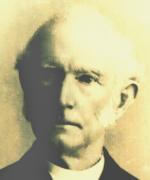
Robert Samuel Maclay (1824-1907)

Robert Samuel Maclay was born on February 2, 1824 in Concord, Pennsylvania, the son of Robert Maclay and Annabella Erwin Maclay, one of nine children. His parents were highly respected members of the community, running a tanning business and actively involved in the Methodist Episcopal Church. Maclay entered Dickinson College in the fall of 1841 and was elected into the Belles Lettres Society. He graduated with a Bachelor of Arts degree in 1845, received his Masters in 1848, and was later honored with a Doctor of Divinity from his alma mater. One year after his graduation, Maclay was ordained in the Baltimore Conference of the Methodist Episcopal Church. At this time, the Church was suffering the internal struggles that the heated debate over the issue of slavery brought on. In 1847, however, Maclay was appointed as a missionary to China, where he began a lengthy missionary career overseas.

College Relationship
Alumnus/Alumna Class Year
Honorary Degree - Year
1864

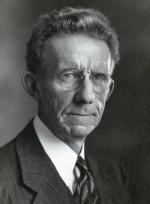
Gilbert Malcolm (1892-1965)

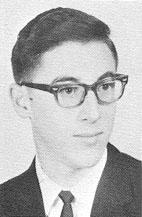
Gilbert Malcolm was born in New York City on October 13, 1892 to Scottish immigrants, Mr. and Mrs. Thomas Duff Malcolm. Growing up in the city where his father was a well-known contractor, he attended the Horace Mann School. Among his young adventures was his notoriety as a very early motorcycle racer, setting a local record for an oval track of 70 miles per hour. He later suffered an accident while racing which ruled out any possibility of other athletic participation.

Malcolm entered Dickinson College in Carlisle, Pennsylvania in the fall of 1911. While an undergraduate, he began his long association with his fraternity, Beta Theta Pi and served as football manager. He had been expelled briefly during his sophomore year for breaching the College hazing regulations, but he graduated nonetheless in 1915. He graduated from the Dickinson School of Law in 1917 and took up employment as a journalist for the Harrisburg Patriot. During the First World War, he served in France with the 79th Division and was a delegate to the organizing meeting of the American Legion in Paris following the war. Malcolm returned to the newspaper, then worked for the Tax Audit Company in Philadelphia before returning to his alma mater in 1922 to begin a remarkable life of service to Dickinson.

Alumnus/Alumna Class Year
President - Years of Service
Acting, 1945-1946; 1959-1961
Honorary Degree - Year
1963
Trustee - Years of Service
1961-1965

Howard Malcom (1799-1879)

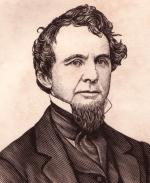
Howard Malcom was born on January 19, 1799 in Philadelphia, Pennsylvania to John J. and Deborah Howard Malcom. He entered DickinsonCollege in Carlisle, Pennsylvania in 1813 as a part of the class of 1816 but never graduated as the College suffered its first closing of its doors in 1816. Malcom's youthful interest in preaching the Baptist faith had grown in the meantime. He had already received his license to preach before he entered the Princeton Theological Seminary in 1818 and was ordained in April, 1820. He took up his first post in Hudson, New York that same year and served there until 1826 when took on the busy life of a general agent and later secretary of the American Baptist

Sunday School Union. At the same time, he was starting to become involved in missionary work further afield; he became a deputy of the Baptist Missionary Society and later, in 1835, embarked on his own missions to India, Burma, Siam, China, and Africa. Though he was already a well known religious author and speaker, Malcom wrote some of his most noteworthy literature about his missionary travels, notably, in 1839, Travels in South-Eastern Asia, embracing Hindustan, Malaya, Siam, and China, and in 1840, Travels in the Burman Empire. In 1843, largely due to these writings, he received Doctorates of Divinity from Union College and University of Vermont. The previous year, his alma mater, now operating again, had conferred on him the Master of Arts degree.

College Relationship
Alumnus/Alumna Class Year
Honorary Degree - Year
1842

Peter Marco (1910-1944)

Peter Marco was born in 1910 in Berks County, Pennsylvania, the son of Italian immigrants. He graduated from Birdsboro High School in 1929 and entered Dickinson College in Carlisle, Pennsylvania soon after. He graduated with the class of 1932 and immediately entered the Dickinson School of Law, from which he received his LL.B. in 1935. While an undergraduate, he was a member of Mohler Scientific Club and Theta Chi fraternity.

In June 1936, Marco became the first Italian-American to be admitted to the Berks County Bar. After practicing law in the county, he entered the army on June 4, 1941 and was assigned to basic training in Georgia. In October 1941, he was released from selective service as he was actually beyond the peacetime age for service. With the outbreak of war, however, Marco was soon back in uniform. He served as a sergeant of military police in Philadelphia in mid-1942 but by December he had graduated from the Infantry School at Fort Benning, Georgia and had been commissioned. In June 1944 he was assigned to an officer replacement unit in England and was soon serving with Company A, 22nd Infantry Regiment of the Fourth Division in the hedgerow fighting through Normandy.

On September 20, 1944, near Aachen, Germany, Peter Marco was first reported missing in action and was later declared to have been killed.

College Relationship
Alumnus/Alumna Class Year

Walter H. Marshall (1921-1944)

Walter Marshall was born in Philadelphia in 1921 and entered Dickinson College in Carlisle, Pennsylvania in September 1939 after his graduation from Collingswood High School in Collingswood, New Jersey. As a member of the class of 1943, "Red" was a member of Phi Kappa Psi fraternity, participated in the International Club, and worked on the Microcosm. He also took advantage of the College's accelerated wartime program, graduating with his bachelor of arts degree on January 24, 1943. He then joined sixteen other Dickinson men in the first group to leave in a body for the armed services, assigned to Camp Lee, Virginia.

Marshall trained at Miami Beach, Florida and then was selected for technical school in photography at Lowry Field, near Denver, Colorado. He studied photo topography at Colorado Springs and finished first in his class. He was offered an assignment as an instructor but rejected this in favor of an overseas assignment with the Intelligence Corps and was sent to the Mediterranean theater in April.

College Relationship
Alumnus/Alumna Class Year

Ernest Dudley Martin (1843-1868)

Ernest Dudley Martin was born in Philadelphia, Pennsylvania on July 1, 1843 the second son of William and Sarah Ann Smith Martin. He matriculated at Dickinson College in Carlisle, Pennsylvania with the class of 1864 but did not complete his degree, leaving during his junior year. While enrolled he was a member of Phi Kappa Sigma and gained membership to the Union Philosophical Society. He left to pursue medical training at the University of Philadelphia, and by January 1865 he was applying for a position with the U.S. Navy as an assistant surgeon. He was examined at the Naval Hospital in Philadelphia and passed as qualified on March 9, 1865 and was appointed as acting assistant surgeon with a monthly salary of $104. He was ordered to the receiving ship Princeton at the Philadelphia Naval Yard in mid March; he was then required to take passage aboard the USS Bermuda for Key West, Florida and to report for duty as a relief surgeon aboard the USS Fort Henry. His orders changed several times soon after, however. First, he was ordered to take passage from New York to Florida aboard the USS Florida, then, while in New York, he was detached from his assignment to the Fort Henry, and was instead to await orders in New York in early June. In the meantime the Civil War had ended, and thus he resigned his acting commission and received an honorable discharge on October 9, 1865.

College Relationship
Alumnus/Alumna Class Year

John E. Martin III (1920-1945)

Jack Martin was born in Philadelphia in 1920 and grew up in nearby Camp Hill, Pennsylvania. He graduated from Camp Hill High School in 1938 after three years of varsity football and editing the first yearbook in the high school's history. He entered Dickinson College in nearby Carlisle and continued his football career as a half-back. He also followed his father, John E. Martin, class of 1917 and a veteran of the First World War, in joining Beta Theta Pi.

He finished the requirements for the degree in 1943 and was already a United States Marine when diplomas were awarded. The Dickinson Alumnus of September 1945 stated that Martin may have been the first graduate never to see his diploma since he was not able to obtain a home leave before shipping to the Pacific.

Martin joined Company H, 3rd Battalion, 29th Regiment, 6th Marine Division in the invasion of Okinawa. On May 15, 1944, during the bloody battle for the island's main town of Naha at a place called Sugar Loaf Hill, Corporal John Martin was killed in action. He was buried on Okinawa in the Marine cemetery, becoming one of more than 12,500 Americans (including three Dickinsonians) lost in securing what was intended to be the main staging area for the final invasion of the Japanese home islands.

College Relationship
Alumnus/Alumna Class Year

Wilbur Fisk Massey (1839-1923)

Wilbur F. Massey was born to James A. and Anne Parker Massey on September 30, 1839 in Onancock, Virginia. He began his studies at Washington College in Maryland and in 1857 entered the Dickinson College class of 1859. Massey was elected to the Belles Lettres Society before leaving Dickinson after one year. The following year, he became engaged in railway construction work on the Northern Missouri Railroad in Missouri and Iowa.

College Relationship
Alumnus/Alumna Class Year

Lewis Linn McArthur (1843-1897)

Lewis L. McArthur was born in Portsmouth, Virginia on March 18, 1843. He was the third son of famous naval hydrographer and surveyor Lieutenant Commander William Pope McArthur, USN, and his wife Mary Stone Young McArthur. While commanding the first Pacific Coast Survey, during which he explored the Columbia River, his father died at sea of dysentery in December 1850. The younger McArthur then grew up in Portsmouth and Baltimore, Maryland before he entered Dickinson College in Carlisle, Pennsylvania with the class of 1861. While at the College he became a member of the Belles Lettres Society, but left before graduating. He subsequently studied the law.

By May 1864, McArthur was in Umatilla, Oregon where he was elected recorder in the first city government after its incorporation. He also began a newspaper there, but then moved on to Baker City where he founded that town's first journal, the Bedrock Democrat, in 1870. McArthur had already been elected as county judge of Baker County in 1868 and in 1870 was elected to state-wide office as a Democrat to the Circuit Bench of the Eastern Oregon District . He also served a term on the State Supreme Court. McArthur was then a district judge and in 1886 was appointed United States Attorney for Oregon in the Cleveland Administration, for which he moved to Portland. He also lectured on equity in the University of Oregon where he served on the board of regents.

College Relationship
Alumnus/Alumna Class Year

Alfred Brunson McCalmont (1825-1874)

Birth: April 28, 1825; Franklin, Venango County, Pennsylvania

Death:  May 7, 1874 (age 49); Philadelphia, Pennsylvania

Military Service: USA, 1861-65

Unit: 142nd Pennsylvania Volunteer Infantry; 208th Pennsylvania Infantry

Alma Mater: Allegheny College, (non-graduate); Dickinson College, B.A. (Class of 1844)

Alfred Brunson McCalmont was the fourth of five children and third son of Alexander and Elizabeth Hart Connely McCalmont. He attended from an early age the local Latin School that Reverend Nathanial Randolph Snowden kept in Franklin and in 1839 entered Allegheny College. He soon withdrew and entered Dickinson College in Carlisle, Pennsylvania, where, coincidentally, Snowden had been a member of the board of trustees from 1794 to 1827, when it was under Presbyterian auspices. McCalmont entered with the class of 1844 and was elected to the Belle Lettres Society. He graduated joint top of his class and began law studies at home in Franklin under his sister's husband, Edwin Wilson and his own father, who was then a Pennsylvania District Judge.

College Relationship
Alumnus/Alumna Class Year

John McCarty (c.1831-1862)

Birth: 1831; Allegany County, Maryland

Death: 1862 (age 31); Battle at Island No. 10 in 1862

Military Service: USA, 1861-62

Unit: ---

Alma Mater: Dickinson College, B.A. (Class of 1852)

John McCarty was born around 1831 in Allegany County, Maryland. He prepared at the Dickinson Grammar School in Carlisle, Pennsylvania during the 1847-1848 academic school year and then entered the freshman Dickinson College class in the fall of 1848. During his years at the College, McCarty was a member of the Zeta Psi fraternity as well as the Union Philosophical Society. He received his bachelor of arts degree in 1852 and thereafter studied law in Cumberland, Maryland. McCarty relocated to Missouri, where he established a law practice.

At the outbreak of war, McCarty was commissioned as a lieutenant in the Confederate States Army. He was killed in action at the Battle at Island No. 10 in 1862.

College Relationship
Alumnus/Alumna Class Year

James Andrew McCauley (1822-1896)

James Andrew McCauley was born on October 7, 1822 in Cecil County, Maryland to Daniel and Elizabeth McCauley. He prepared for college at the Baltimore Classical Institute in Maryland before entering Dickinson College in Carlisle, Pennsylvania as a freshman in September 1844. He was elected to the Union Philosophical Society and he graduated with highest honors in 1847.

After graduation, McCauley entered the Methodist Episcopal Church and joined the Baltimore Conference in 1850. Shortly following this, he married Rachel M. Lightner on July 8, 1851, with whom he had a daughter, Fanny. He was granted a doctor of divinity degree from his alma mater in 1867 and joined the Board of Trustees in 1869. In 1872, McCauley accepted the position as the fourteenth president of the College, remaining as such for the next sixteen years.

Alumnus/Alumna Class Year
President - Years of Service
1872-1888
Honorary Degree - Year
1867
Faculty - Years of Service
1872-1888
Trustee - Years of Service
1869-1872

Robert McClelland (1807-1880)

Robert McClelland was born in Greencastle, Pennsylvania on August 1, 1807, the son of a prominent Franklin County doctor, John McClelland, and his wife, Eleanor Bell McCulloh. The father had studied medicine under Benjamin Rush and perhaps not coincidentally the younger McClelland entered Dickinson College in Carlisle, Pennsylvania to graduate high in the Class of 1829.

McClelland was admitted to the Pennsylvania bar in 1832 in Chambersburg, and he practiced law in Pittsburgh for a short while before leaving the state for Monroe, Michigan in 1833. He set up a successful law practice and was a member of the convention to prepare Michigan for statehood in 1835. At the same time he became a leader in the new state's Democratic Party. He served as a member of the board of regents of the University of Michigan at Ann Arbor in 1837 and was elected to the state legislature for the first time in 1838. He became speaker of the state house in 1842 and from 1843 represented his district in the U.S. Congress for three terms sitting on the Commerce Committee and the Foreign Relations Committee.

College Relationship
Alumnus/Alumna Class Year

John Emory McClintock (1840-1916)

John Emory McClintock was born on September 19, 1840 in Carlisle, Pennsylvania, the son of John McClintock and Caroline Augusta Wakeman. His father, a devoted clergyman of the Methodist Episcopal Church, taught mathematics, Greek, and Latin at Dickinson College in Carlisle, Pennsylvania. At the age of 14, young Emory (he dropped "John" to distinguish himself from his father) enrolled in the College as a freshman with a concentration in mathematics. He withdrew in 1856 to study at Yale, yet he ultimately received his degree from Columbia University in 1859. He was immediately offered a position as a mathematics tutor at that institution, but the job was short-lived as Emory wanted to further his own education. To that end, he studied chemistry in Paris and London until February, 1862, and also spent a semester in laboratory training at the University of Göttingen, Germany in 1861.

College Relationship
Alumnus/Alumna Class Year

Charles McClure (1804-1846)

Charles McClure was born on his father's farm at Willow Grove near Carlisle, Pennsylvania. His father, Colonel Charles McClure, was currently serving as a member of the board of trustees at the local Dickinson College and his son entered the nearby institution with the class of 1824. He was a solid student, being named a sophomore sophister and was elected to the Union Philosophical Society. He also was one of the seven founder members of the Turkey Club, an eating club instituted on the campus in 1823. A fellow member was Andrew Parker, another local student and also destined to serve in the U.S. Congress. Short and stocky in stature, McClure was a practicing Methodist. Following his graduation with his class, he studied law and was admitted to the Carlisle bar in 1826.

A Democrat, he was elected as a state representative in 1835 and then served in the United States Congress when elected in his own right 1837-1839; he was elected for part of 1840 and 1841 to replace the deceased incumbent, William Sterritt Ramsay - a fellow Dickinsonian who had shot himself in October, 1840. He served as secretary of state for Pennsylvania between 1843 and 1845.

College Relationship
Alumnus/Alumna Class Year
Trustee - Years of Service
1833-1846

Louis Emory McComas (1846-1907)

Louis Emory McComas was born October 28, 1846 near Williamsport, Maryland where his father was in the hardware business. He attended Saint James' College and entered Dickinson College in Carlisle, Pennsylvania with the class of 1866 in 1863. His cousin, Henry Frederick Angle, was one of his classmates. They both became members of the Belle Lettres Literary Society. While Louis joined Phi Kappa Sigma, Henry became a member of Sigma Chi.

Louis graduated with his class in 1866 and then studied law, being admitted to the Maryland bar in 1868. His influential political career began when he was first elected to Congress in 1883 as a Republican and served several terms until his defeat in 1891. He was secretary of the Republican National Committee during the election campaign of 1892. President Benjamin Harrison named him, meanwhile, to the Supreme Court of the District of Columbia. He was subsequently elected to the Senate for a six year term in 1899. At the time he was a professor at Georgetown Law School and continued to teach two courses a semester throughout his term in the Senate. He retired from the Senate and President Theodore Roosevelt appointed him to his last post as a justice of the Court of Appeals of the District of Columbia in 1905.

College Relationship
Alumnus/Alumna Class Year
Honorary Degree - Year
1898
Trustee - Years of Service
1876-1907

David McConaughy (1775-1852)

David McConaughy was born on September 29, 1775 in Menallen, Pennsylvania, six miles from Gettysburg in what was then York County. He was tutored locally and attended the Rev. Alexander Dobbin's classical School in Gettysburg. He attended Dickinson College in nearby Carlisle. He was elected to the Union Philosophical Society and graduated in September 1795 with the honor of being assigned the Latin Salutary. He continued his studies in theology under Rev. Nathan Grier and on October 5, 1797, the New Castle presbytery licensed him to preach.

After a time as a traveling preacher, he became the head of the congregation at Upper Marsh Creek in October 1800. When in 1813 the new Adams County seat was inaugurated in nearby Gettysburg, the church moved into town. In the ensuing two decades, McConaughy became an active figure in Gettysburg, founding a grammar school in 1807, which the county took over in 1812, as well as founding and serving as first president of the first Temperance Society in Adams County. His reputation as a teacher led Washington College to offer him the post of president in March 1830. Although he did not accept initially due to family difficulties, he accepted the trustees' second offer in December 1831. Installed in May 1832, he served Washington College through difficult times for more than sixteen years until his retirement at age 74 in 1849.

College Relationship
Alumnus/Alumna Class Year
Trustee - Years of Service
1802-1834

Richard Scott McFarland (?-1970)

Richard McFarland was born into a military family in Washington, D.C. In September 1967 he entered Dickinson College in Carlisle, Pennsylvania as a member of the class of 1970 while his father was stationed at the Carlisle Barracks. He did not remain for long, however, leaving after the end of his first year.

McFarland entered the army in July 1967 and had arrived in Vietnam by April 1970. He served as medic in the 5th Special Forces camp. Sergeant McFarland was killed in action on November 9, 1970 when the camp came under siege.

College Relationship
Alumnus/Alumna Class Year

James Miller McKim (1810-1874)

James Miller McKim was born November 10, 1810 on a farm near Carlisle, Pennsylvania, the second of eight children. Known as Miller McKim, he entered the local Dickinson College at the age of 13 in September 1824. While at Dickinson College, he was active in the Belles Lettres Literary Society and graduated in 1828. George Duffield, a local “new light” Presbyterian minister, influenced him greatly, and McKim became a Presbyterian minister himself in 1831.

His ministry gave way to his involvement in the abolition movement in 1833, when he attended the Philadelphia Conference which formed the American Anti-Slavery Society. A year later, in a town not supportive of the movement, McKim delivered Carlisle’s first anti-slavery speech at his church and started the Carlisle Anti-Slavery Society. In 1836, McKim, recruited by Theodore Weld, began his career as a full-time abolitionist and as an agent for the American Anti-Slavery Society. He attended the first Pennsylvania Anti-Slavery Society meeting in Harrisburg in 1838. In 1840 he moved to Philadelphia to become the corresponding secretary of the Society and the editor and manager of its publication, the Pennsylvania Freeman. As such, he became an influential supporter of the underground railroad organizations centered in Philadelphia assisting in the many court cases that emerged after the passage of the Fugitive Slave Law.

College Relationship
Alumnus/Alumna Class Year

Mordecai McKinney (1796-1867)

Mordecai McKinney was born in Middletown in central Pennsylvania in 1796. His parents, Mordecai and Mary (Molly) Chambers McKinney, who owned a store in the town, sent him to Dickinson College in Carlisle where he graduated with the class of 1814. He then studied law under Stephen Duncan of Carlisle, the father of his classmate Robert Duncan, and was admitted to the Dauphin County bar in Harrisburg in May 1817.

He served as district attorney of Union County between 1821 and 1824; he was then clerk of the Dauphin County commissioners from 1824 until October 23, 1827, when he was appointed an associate judge of the county court. Seen by most as honest and modest, McKinney did not acquire more than a comfortable income but poured his attentions into the study of the law. He published profusely on the subject, including the well known McKinney's Digest of the Laws of Pennsylvania as well as The Pennsylvania Justice of the Peace in two volumes in 1839 and The American Magistrate and Civil Officer in 1850, among others.

College Relationship
Alumnus/Alumna Class Year

James Xavier McLanahan (1809-1861)

James Xavier McLanahan was born near Greencastle, Pennsylvania in 1809. He was the grandson of renowned Pennsylvania political figure Andrew Gregg (1755-1835) and second cousin to Andrew Gregg Curtin, Class of 1837. He graduated from Dickinson College with the class of 1827, studied law, qualified to the Franklin County bar and set up a practice in Chambersburg, Pennsylvania.

In late 1841, he was elected to the state senate and served there between 1842 and 1844. He was elected as a Democrat from the Sixteenth District to the United States Congress for its 31st and 32nd sessions, serving between March 1849 and March 1853. While in Washington, he was the chair of the House Committee on the Judiciary, but declined renomination in 1852.

James Xavier McLanahan died in New York City on December 16, 1861 and was buried in Chambersburg. He was 52 years of age.

College Relationship
Alumnus/Alumna Class Year

Samuel McClung McPherson (1837-1863)

Birth: October 11, 1837; Lewisburg, Virginia (now West Virginia)

Death: June 14, 1863 (age 25); Richmond, Virginia

Military Service: USA, 1861-63

Unit: 59thVirginia Infantry

Alma Mater: Dickinson College, B.A. (Class of 1858)

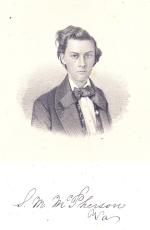
Samuel M. McPherson was born to state legislator and Virginia militia officer Colonel Joel McPherson and his wife Amanda McClung McPherson. He was the fourth child of eight. McPherson entered Dickinson College in Carlisle, Pennsylvania, was elected to the Union Philosophical Society there, and graduated with his class in the early summer of 1858.

McPherson studied medicine in Philadelphia and earned his medical degree. Early in the Civil War he became surgeon of the Fifty-ninth Virginia Infantry and a well-known and respected medical officer under General Henry A. Wise.

On June 14, 1863, Samuel McClung McPherson died in the service of the Confederate States near Richmond, Virginia.

College Relationship
Alumnus/Alumna Class Year

George Metzger (1782-1879)

George Metzger was born on November 19, 1782, the youngest of six children. His parents, Paul and Susanna Maria Bower Metzger, were well-to-do residents of Hanover in York County, Pennsylvania. George was sent to study at Dickinson College in Carlisle, Pennsylvania in 1797. He was elected to the Union Philosophical Society but he did not complete his studies and instead went to study law, first with an attorney in Lancaster, and then with David Watts of Carlisle.

In 1805 George was admitted to the Cumberland County bar. The following year he was appointed deputy attorney general for Cumberland and Adams Counties, and from 1813 to 1814 Metzger served as a Pennsylvania State Legislator. Not being particularly fond of public office, he resumed his law practice after only one term in office. He continued to make his home in Carlisle throughout his life, serving as a trustee of Dickinson College from 1825 to 1833, as well as acting as a founding trustee of Second Presbyterian Church. George Metzger died June 10, 1879.

College Relationship
Alumnus/Alumna Class Year
Trustee - Years of Service
1825-1833

George Washington Mitchell (c.1834-1917)

George W. Mitchell was born in Perry Valley, Perry County, Pennsylvania to William and Alice McBlair Mitchell. He grew up in Juniata Township, attending school there and at the Bloomfield Academy. He entered Dickinson College in Carlisle, Pennsylvania with the class of 1859 and became a member of the Belles Lettres Society, but left Dickinson to study medicine with Dr. Robert C. Brown of Newport, Pennsylvania. Mitchell subsequently graduated from the Jefferson Medical College in Philadelphia in March 1860.

Mitchell returned to Newport to practice and then moved farther west in the county to set up in Andersonburg. He enlisted on February 14, 1863 as assistant surgeon in the 119th Pennsylvania Volunteer Infantry, "The Gray Reserves," then heavily involved with the campaigns of the Army of the Potomac. As one of two or three trained medical personnel in the regiment, Mitchell saw heavy duty when his regiment fought at Chancellorsville, Gettysburg, the Wilderness, and in the Shenandoah Campaign. He mustered out with the 119th on June 19, 1865 and returned to his practice in Andersonburg. Mitchell worked there as a family physician until 1903, when he joined his family in Alliance, Nebraska where they had settled.

College Relationship
Alumnus/Alumna Class Year