Thomas Lloyd Rockwell (1923-1944)

Thomas Rockwell was born in Wellsboro, Pennsylvania in May 1923 and attended the Carson Long Military Institute. He entered Colgate University and transferred to Dickinson College in Carlisle, Pennsylvania after a year, but withdrew before the end of his first term in the fall of 1941.

He enlisted in the Army Air Corps in December 1941 but ultimately trained as an infantry officer at Fort Benning, Georgia, earning his commission in November 1943. Rockwell later trained as a paratrooper and toured the country with a group of parachute infantry jumpers promoting war loans. He was assigned to Europe in August 1944. Rockwell was reported as missing in action on December 24, 1944 and confirmed as killed in action on January 12, 1945.

College Relationship
Alumnus/Alumna Class Year

Allan Scott Rogers (1924-1944)

Born on March 24, 1924, Allan Rogers was from Jenkintown, Pennsylvania and was a graduate of Abington High School. He transferred to Dickinson College in Carlisle, Pennsylvania in 1942 from Duke University but was called to active duty after only the fall and winter sessions at the College. He had been a pledge of Phi Kappa Psi fraternity.

Rogers was trained in Alabama and Arkansas as a pilot and was commissioned in January 1944. In June 1944 he joined the Eighth Air Force in England, flying co-pilot in B-17 bombers.

On July 29, 1944, on his fourteenth mission, his B-17 was one of a group sent to bomb a synthetic oil plant in Germany. En route to target over Holland, the plane was struck by anti-aircraft fire, which caused it to explode. Rogers was initially declared as missing in action but subsequent information gained toward the end of the war stated that the badly injured young lieutenant had been taken to a German military hospital in Holland and did not survive the day. He was twenty years old.

College Relationship
Alumnus/Alumna Class Year
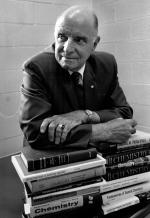
Horace Elton Rogers (1902-1987)

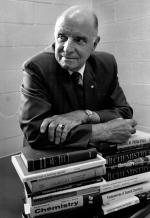
Horace Rogers was born on December 5, 1902 in Philadelphia, Pennsylvania. He entered Dickinson College in Carlisle, Pennsylvania in 1920 and graduated Phi Beta Kappa four years later in 1924. He had also become a member of the Kappa Sigma fraternity. His mentor, Dr. Ernest A. Vuilleumier encouraged him to remain at the College and after he turned down an offer from Eastman Kodak in Rochester, New York, Rogers was able to secure a position as a faculty member. He began as an instructor of physics and chemistry in 1925. Apart from the three years in which he pursued graduate studies, earning a master's degree from Lafayette and a doctorate from Princeton in 1930, he devoted his working life to his alma mater. By 1930 Rogers held the position of associate professor of chemistry and then became a full professor of analytical chemistry in 1941. He was named Alfred Victor duPont Professor of analytical chemistry in 1952. He became chairman of the chemistry department after the death of Dr. Vuilleumier in 1958.

College Relationship
Alumnus/Alumna Class Year
Faculty - Years of Service
1925-1971

Lewis Guy Rohrbaugh (1884-1972)

Lewis Guy Rohrbaugh was born on February 24, 1884 in Fowblesburg, near Baltimore, Maryland. He graduated from Franklin High School in Reisterstown in 1903 and entered Dickinson College in Carlisle, Pennsylvania. During his college years, Rohrbaugh became a member of Alpha Chi Rho, Omicron Delta Kappa and the Union Philosophical Society. He graduated in 1907, studied at Drew Theological Seminary for his B. D. degree and earned his Ph.D. at the State University of Iowa in 1922 in philosophy and religion.

He returned to Dickinson as an associate professor of philosophy and religious education that same year and, in 1930, became professor of philosophy and religion. Rohrbaugh was appointed as the dean of the freshman class in 1933. He later also chaired his department. An ordained Methodist minister, Rohrbaugh was also a theology scholar, publishing books and essays such as Religious Philosophy, The Science of Religion, and A Natural Approach to Philosophy. In 1951, he was appointed to the newly endowed Thomas Bowman Chair of Religion, named for the first graduate of the College to be named a Methodist bishop.

Rohrbaugh married Lillian Mae Heffelbower in 1907 and they had one son, H. Lewis Rohrbaugh, who graduated from Dickinson in 1930. He taught at the College until 1953 when he was accorded professor emeritus status. Lewis Guy Rohrbaugh died on June 30, 1972.

College Relationship
Alumnus/Alumna Class Year
Honorary Degree - Year
1954
Faculty - Years of Service
1922-1953

Marie T. Rossi (1957-1991)

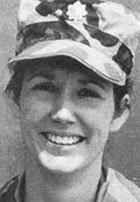
A graduate of River Dell Regional High School near her home in Oradell, New Jersey, Marie Rossi entered Dickinson College in Carlisle, Pennsylvania in the autumn of 1976 and graduated with her class of 1980 as a psychology major. While at the College she was an outstanding R.O.T.C. cadet.

Major Marie Rossi died at age thirty-two on March 1, 1991, when the Chinook helicopter she was piloting flew into an unlighted microwave tower in bad weather at night. The crash, which also claimed the lives of three others in her crew, took place near her base in northern Saudia Arabia the day after the Operation Desert Storm ceasefire had come into effect.

The unit Rossi commanded, Company B of the 159th Aviation Battalion, 24th Infantry Division, had been among the very first American units to cross into enemy-held territory and spent the pivotal days of the operation flying fuel and ammunition to the rapidly advancing 101st and 82nd Airborne Divisions. The United States Army remembered her sacrifice when it named in 1992 the new small-arms development and testing facility at the Picatinny Arsenal in Dover, New Jersey the "Major Marie T. Rossi-Cayton Building Armament Technology Facility."

Major Rossi, the only Dickinsonian to perish in the first Gulf War, is buried in Arlington Cemetery, the only female casualty of the war so honored. Her simple epitaph there commemorates her pioneering sacrifice and reads "First Female Combat Commander To Fly into Battle."

College Relationship
Alumnus/Alumna Class Year

George Fiske Round (1840-1928)

Birth: January 5, 1840; Franklin, Newton County, Georgia

Death:  May 2, 1928 (age 88); Canyon City, Oregon

Military Service: CSA, 1861-65

Unit: 142nd Pennsylvania Volunteer Infantry; 208th Pennsylvania Infantry

Alma Mater: Dickinson College, B.A. (Class of 1860 non-graduate); Wofford College

George F. Round was born on January 5, 1840 in Newton County, Georgia. He was the eldest son of Methodist minister George Hopkins Round and his wife, Mary Louisa McCants Round. Round grew up in Cokesburg, South Carolina. He entered Dickinson College in Carlisle, Pennsylvania as a member of the class of 1861. His brother, William Capers Round, joined him in the class of 1863. While at the College, George Round was elected to the Belles Lettres Society and became a member of Phi Kappa Psi. He did not finish his degree, however, for he withdrew from Dickinson and returned home when the war began.

Round enlisted in Company K (Spartan Rifles) of the Fifth South Carolina Volunteer Infantry in Spartanburg, South Carolina. How much fighting he saw personally is unclear, but the Fifth South Carolina was in action in some of the fiercest fighting of the war. They were in A.P. Hill's Division, then in Longstreet's, and at Gettysburg served as a part of Pickett's Division. The Fifth South Carolina ended the war at Appomattox Court House as a part of Bratton's Division.

Round's brother William did not survive the conflict.

College Relationship
Alumnus/Alumna Class Year

William Capers Round (1842-1862)

Birth: April 23, 1842; Newton County, Georgia

Death:  June 27, 1862 (age 20); Richmond, Virginia

Military Service: CSA, 1861-62

Unit: Company B of the First (Orr's) Rifles

Alma Mater: Dickinson College, B.A. (Class of 1863 non-graduate)

William C. Round was born on April 23, 1842 to Methodist minister George Hopkins Round and his wife Mary Louisa McCants Round in Newton County, Georgia where his father was serving. He grew up in Cokesburg, South Carolina. He entered Dickinson College in Carlisle, Pennsylvania as a member of the class of 1863 in the fall of 1860. There, he joined his brother George Fiske Round of the class of 1861. Like so many other young men of the time, he withdrew from Dickinson, returned home, and enlisted at Abbeville, South Carolina into Company B of the First (Orr's) Rifles in the service of the Confederate States Army in June 1861.

He served in the CSA until his death at the Battle of Gaine's Mill in Virginia on June 27, 1862. He is buried under the Confederate Monument in Hollywood Cemetery in Richmond, Virginia. He was twenty years old.

College Relationship
Alumnus/Alumna Class Year

Albert G. Rowland (c.1822-c.1864)

Birth: 1822/23; Montgomery County, Pennsylvania

Death:  1864

Military Service: USA, 1861-64

Unit: 26th Pennsylvania Infantry

Alma Mater: Dickinson College, B.A. (Class of 1845 non-graduate)

Albert Rowland came from Montgomery County, Pennsylvania. He prepared at the Dickinson Grammar School in Carlisle, Pennsylvania from 1838 to 1839, but then took two years off before becoming a freshman in the College proper in the fall of 1841. Rowland’s student days did not last long as he retired from Dickinson in the spring of 1843; he had in that time become a member of the Belles Lettres Literary Society and had roomed in East College.

Rowland enlisted in the United States Army in 1861 and was killed sometime around 1864.

College Relationship
Alumnus/Alumna Class Year
Howard Lane Rubendall (1910-1991)

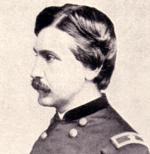
Howard Rubendall was born on May 14, 1910 in Williamstown, Pennsylvania to Charles W. and Lottie Row Rubendall. He grew up in the small ferry town of Millersburg near Harrisburg and attended Dickinson College in Carlisle, Pennsylvania from which he graduated in 1931. While at Dickinson he was a member of Phi Kappa Sigma fraternity as well as the Omicron Delta Kappa honor society.

Following graduation Rubendall spent three years teaching at the American University in Cairo, Egypt. In 1935, he resumed his studies at the Union Theological Seminary, from which he received his B.D. in 1937. He then began to work in the position of chaplain and chairman of the department of religion at the Hill School until 1941 when he became the pastor of the First Presbyterian Church in Albany, New York. In 1944, he served as the president of the Northfield Schools, which included the dual positions as the headmaster of Mount Hermon School for Boys and president of Northfield School for Girls in Northfield, Massachusetts. He served in this capacity for seventeen years.

Alumnus/Alumna Class Year
President - Years of Service
1961-1975
Honorary Degree - Year
1945
Trustee - Years of Service
1961-1975

David Mohler Rupp (c.1895-1918)

David Rupp was born in Shiremanstown, Pennsylvania. He attended the Dickinson College Preparatory School in Carlisle, Pennsylvania and then spent two years at Lafayette College before returning to enroll at Dickinson College. He completed the Classical course in 1916 and went on to the Dickinson Law School. He was a member of Phi Gamma Delta fraternity.

Rupp enlisted in 1917 and took his officer training course at Fort Niagara, New York. He was then assigned to Company C of the 313th Infantry, 79th Division, joining it at Fort Meade, Maryland. His unit left for France on January 13, 1918 and Second Lieutenant Rupp was killed in action on September 26, 1918.

College Relationship
Alumnus/Alumna Class Year
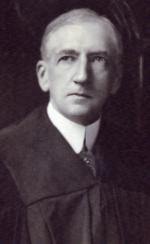
James Fowler Rusling (1834-1918)

Birth:  April 14, 1834; Washington,Warren County, New Jersey

Death:  April 1, 1918 (age 83); Trenton, New Jersey

Military Service: USA, 1861-67

Unit: 5th New Jersey Volunteer Infantry, 2nd Division of III Corps, Volunteer Army, 3rd Corps Quartermaster

Alma Mater: Dickinson College, B.A. (Class of 1854)

James Fowler Rusling was the fifth of the seven children born to Geishom and Eliza Hankinson Rusling. He was prepared at the Pennington School and entered Dickinson College, in Carlisle, Pennsylvania in 1852, joining the class of 1854. While there he studied the natural sciences and was a member of the Union Philosophical Society. He graduated with his class and immediately took up a teaching post at the Dickinson Williamsport Seminary, where he taught until 1857. He was admitted that year to the Pennsylvania bar and to the New Jersey bar in 1859 when he set up practice in Trenton.

College Relationship
Alumnus/Alumna Class Year
Honorary Degree - Year
1890
Trustee - Years of Service
1861-1883; 1904-1918

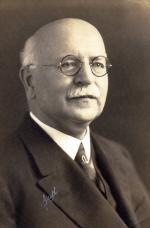
Sylvester Baker Sadler (1876-1931)

Sylvester Sadler was born in Carlisle on September 29, 1876, and attended Dickinson College in Carlisle, Pennsylvania before transferring to Yale like his older brother, Lewis. Unlike Lewis, however, Sylvester completed his studies at Yale with a batchelor's degree and membership in Phi Beta Kappa. At Yale, he was classmates with Clarence Day, Jr., later famous for Life With Father.

After leaving Yale in 1896, Sadler returned to Carlisle and entered the Dickinson School of Law. His father, County Judge Wilbur Fiske Sadler, had in 1890 revived the law school, dormant since the death of Judge John Reed. Wilbur Sadler served as president of the law school, while his old friend and former client, William Trickett, served as dean. Sylvester Sadler thrived under the pedantic bachelor Trickett, and upon earning his law degree, Sylvester Sadler joined the faculty of the school.

College Relationship
Alumnus/Alumna Class Year
Honorary Degree - Year
1920

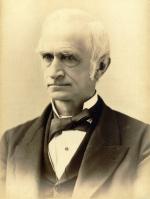
Eli Saulsbury (1817-1893)

Eli Saulsbury was born as the middle child of three sons of William and Margaret Smith Saulsbury, wealthy landowners in Kent County, Delaware, on December 29, 1817. He was schooled locally and entered Dickinson College in Carlisle, Pennsylvania with the class of 1843 in 1839. A member of Belle Lettres Literary Society, he remained at the College for only one year before returning to the family estate.

He became a representative for his home state in 1853 and was admitted to the Delaware Bar in 1857, beginning a law practice in Dover. The three Saulsbury siblings, all staunch democrats, were active in politics. His younger brother Willard, Dickinson class of 1842, served as a United States senator and his elder brother, Gove, was governor of Delaware. In 1871 Willard retired, and supported Eli in his successful bid against Gove to fill the vacancy.

Eli Saulsbury served three terms in the United States Senate, including a stint on the Committee on Privileges and Elections. His public service came to an end in the election of 1888, when political divisions enabled the Republicans to claim the seat. Defeated, he returned to his estate in Delaware. Eli Saulsbury died on March 22, 1893. He was never married.

College Relationship
Alumnus/Alumna Class Year
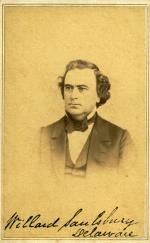
Willard Saulsbury (1820-1892)

Willard Saulsbury was born as the youngest of three sons of William and Margaret Smith Saulsbury, wealthy landowners in Kent County, Delaware, on June 2, 1820. Saulsbury prepared at Delaware College at Newark, and attended Dickinson College in Carlisle, Pennsylvania between 1839 and 1840 in the class of 1842 before leaving to study law. His middle brother, Eli Saulsbury, also attended Dickinson.

He opened a practice in Georgetown, Delaware in 1845. He became the attorney-general of Delaware in 1850, thus launching a career in politics as a Democrat. He was present at the Democratic convention in Cincinnati in 1856 that nominated James Buchanan for the presidency; for his support he was appointed to the United States Senate in 1859. He defended slavery but supported the preservation of the Union. He vigorously opposed arrests for disloyalty in Delaware, supported Senator Bright of Indiana in his fight against expulsion for treason in 1862, and protested Lincoln's suspension of the writ of habeas corpus.

In 1871, the three Saulsbury brothers vied for the Senate seat Willard held and he eventually gave his support to Eli, who was elected. In 1873, he was appointed as Chancellor of Delaware and remained in this post for the rest of his life.

College Relationship
Alumnus/Alumna Class Year
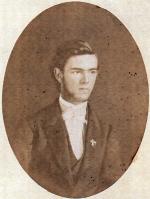
John O. Saxton (1833-1903)

John Saxton was born on July 3, 1833 in Silver Spring Township near New Kingston, Pennsylvania. He was the only son of John and Nancy Saxton. Although his farmer father died when John was ten years old, he attended the New Kingston Academy and entered Dickinson College in nearby Carlisle in 1852 with the class of 1855. He was elected to the Belles Lettres Society, but left the College after three years and returned home to run the family farm.

Saxton was a prosperous farmer who, after his marriage, controlled 345 acres in the area. He moved into the nearby town of Mechanicsburg, Pennsylvania, where he was active in civic affairs. Saxton sat for twenty years on the school board, held office for two terms on the city council, and served as chief burgess of the town. He was active in the Cumberland County Agricultural Society and, as an active Presbyterian, was a founder and treasurer of the Mechanicsburg Bible and Tract Society from 1871. Saxton was also a Democrat and was a presidential elector from the Nineteenth Congressional District in 1880.

In November 1866, Saxton married Ellen Dunlap of Lower Allen Township, Cumberland County. The couple had six children. Three of these reached maturity, including Lynn M. Saxton, who attended Dickinson with the class of 1896. John Saxton died at this home on the corner of York and Main Streets in Mechanicsburg in 1903. He was seventy years old.

College Relationship
Alumnus/Alumna Class Year
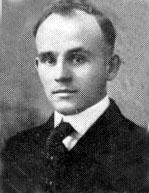
Montgomery Porter Sellers (1873-1942)

Montgomery Porter Sellers was born on August 26, 1873 to Francis Benjamin and Martha Porter Sellers. He grew up in Carlisle and graduated from Carlisle High School. Sellers entered the local Dickinson College in 1889. While a student at Dickinson, Sellers took courses in the modern language curriculum. He was a member of the Belles Lettres Literary Society and won that organization's Sophomore Prize, a gold medal awarded to a member outstanding in composition and declamation. In addition, Sellers was a member of the Phi Kappa Psi fraternity and the Phi Beta Kappa honor society. He graduated with his class in 1893.

Upon graduation, Sellers began teaching in the Preparatory School. Following this, he served as an adjunct professor of history and German at the College until 1904, and then from 1904 to 1942 he was a professor of rhetoric and English. Also during this time, Sellers served as dean of the freshman class and finally as dean of the College from 1928 to 1933. Outside of the classroom, Sellers traveled extensively in Europe, studying in both England and Germany. He also pursued graduate work at the University of Chicago.

College Relationship
Alumnus/Alumna Class Year
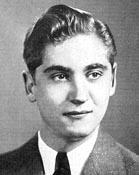
Faculty - Years of Service
1893-1942

Rufus Edmonds Shapley (1840-1906)

Rufus Edmonds Shapley was born in Carlisle, Pennsylvania on August 4, 1840, the son of Rufus and Susan Shapley and the older brother of William Wallace Shapley. He was educated locally and entered Dickinson College in Carlisle with the class of 1860. While attending he became an active member of the Union Philosophical Society and later on its hundredth anniversary in 1889 returned to give the keynote speech for the occasion. Following his graduation with his class he studied law in the office of William Penrose in Cumberland County. He very briefly served as a private in Company I of the militia's First Regiment of Pennsylvania Volunteers but this emergency unit was in being for only two short weeks in September 1862 before being broken up.

College Relationship
Alumnus/Alumna Class Year
Honorary Degree - Year
1900

William Wallace Shapley (1843-1870)

William Wallace Shapley was born in Carlisle, Pennsylvania in 1843, the son of Rufus and Susan Shapley and the younger brother of Rufus Shapley. He was educated locally and entered Carlisle's Dickinson College with the class of 1863. He was a member of the Union Philosophical Society but did not graduate. He later studied medicine and took up service in the Unites States Army as an Assistant Surgeon.

Shapley served with the Seventh Infantry in Florida between 1865 and 1869 before it was reassigned to Fort Shaw in the department of the Platte in Montana Territory in the spring of 1870. Conditions were difficult for infantry and Shapley, according to his fellow officers, had become quite stout and was suffering increasing apoplectic attacks. On a particularly arduous march into the Wind River Country, Shapley suffered a brain seizure near Silver Star, Montana and died in the early morning of August 12, 1870. He was buried in a lonely spot on the march, near the Fish Creek Post Office close to the road of the stage coach line. The nearest railway was then four hundred miles away.

College Relationship
Alumnus/Alumna Class Year
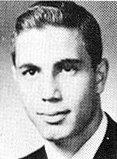
Frank Oliver Shauck (?-1918)

A member of the class of 1919 at Dickinson College in Carlisle, Pennsylvania, studying the Latin-Scientific course, Frank Shauck was from New Freedom, Pennsylvania. He was a member of Belles Lettres Literary Society and was active in the Dickinson Y.M.C.A.

Enlisting sometime during the middle of 1918, Shauck entered the Army Chemical Warfare Service and died in Washington, D.C. on October 12, 1918.

College Relationship
Alumnus/Alumna Class Year
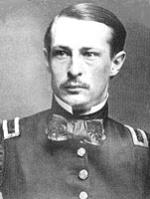
Val Dysert Sheafer, Jr. (1922-1945)

Val Sheafer was born March 4, 1922 in Carlisle, Pennsylvania and entered the local Dickinson College with the class of 1943 in September 1939. He was a member of Phi Kappa Psi and a senior mathematics major when he left Dickinson in April 1943 to enlist in the Army Air Corps. With credit assigned from his Army training, he was qualified to graduate at Dickinson's commencement in late May 1943, and his father received his diploma on his behalf.

Sheafer trained at Montgomery, Alabama and at gunnery school in Florida before completing bombardier school in Texas. He received his commission and his wings in April 1944. He was assigned to England on February 11, 1945 as the bombardier on a B-24 Liberator. Sheafer was killed five weeks later when his aircraft crashed during a training flight. He had just reached his twenty-third birthday.

College Relationship
Alumnus/Alumna Class Year
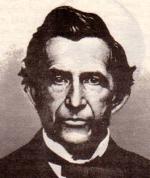
James Lester Shipley (1838-1937)

J. Lester Shipley was born in Baltimore, Maryland on June 21, 1838, the eldest son of Charles and Mary George Shipley. He was educated at a private classical school for boys in the city and then entered Dickinson College in Carlisle, Pennsylvania with the class of 1860 in September, 1857. While at the College, he became one of the founding members of the Phi Kappa Psi chapter on campus and was elected to the Union Philosophical Society. Shipley gave up his original career idea of becoming a civil engineer when he felt called to the Methodist ministry; he received both his degree and his license to preach in the summer of 1860.

College Relationship
Alumnus/Alumna Class Year

Wallace Kingsley Siner (1935-1966)

Born in Philadelphia on November 15, 1935, Wallace Siner entered Dickinson College in Carlisle, Pennsylvania as a member of the class of 1957 in September 1953. While at Dickinson, he was a member of Phi Kappa Psi fraternity but transferred at the end of his sophomore year.

Captain Wallace Siner died from small arms fire in Vietnam on January 5, 1966 while serving as an advisor to South Vietnamese troops in the Mekong Delta area. He left a widow and two sons. He was thirty years old.

College Relationship
Alumnus/Alumna Class Year

Duke Slavens (1840-1920)

Duke Slavens was born in Harrodsburg, Kentucky on August 5, 1840. He entered Dickinson College in Carlisle, Pennsylvania with the class of 1859. As a student, Slavens became a member of the Phi Kappa Sigma fraternity and was elected to the Union Philosophical Society. He graduated with his class.

Slavens returned to Kentucky and began preaching in the Methodist Episcopal Church while still nineteen. He served as a pastor in Illinois and Arkansas, then moved west in 1886 to join the Nebraska Conference. There, Slavens ministered at LaSalle St. Beatrice, Palmyra, Bennet, Rising City, and Adam. He was also the presiding elder of the York District in the conference and a member of the conference's Standing Committee on Freedman's Aid and Southern Education.

Slavens married Mary Taylor in 1861, and the couple had six children. He retired in 1903 and took up residence in Odell, Nebraska. In January 1920, Slavens and his wife joined their married daughter in the milder climate of Bay City, Texas. Suffering badly from rheumatism, Duke Slavens died in Bay City on September 14, 1920. He was eighty years old.

College Relationship
Alumnus/Alumna Class Year

John Radcliffe Smead (1830-1862)

Birth: November 4, 1830; Carlisle, Pennsylvania

Death: August 30, 1862 (age 32); Second Battle of Bull Run

Military Service: USA, 1861-62

Unit: 1st Company, PA Volunteers, 5th Artillery

Alma Mater: Dickinson College, B.A. (Class of 1849 non-graduate)

John Radcliffe Smead was born in Carlisle in 1830, the son of Raphael C. and Sarah Radcliffe Smead. He entered the local Dickinson College as a junior in the fall of 1847, pursuing a partial course. He was a member of the Union Philosophical Society. The family was struck with tragedy when Smead’s father died in 1848 of yellow fever while returning from the Mexican War. Because of this, Smead withdrew from Dickinson to take a position in the Coast Survey until he was able to enter West Point in 1851 where his father had been an instructor. He was commissioned four years later and became an instructor in mathematics there.

In 1861 Smead helped to organize the first company of Pennsylvania Volunteers within half an hour of receiving Lincoln’s first call for troops. He enlisted in the 2nd Artillery but was commissioned as a captain of the 5th Artillery.

Smead led his company in the battles on the Peninsula before he was killed at the Second Bull Run on August 31, 1862, when he was struck in the head by a ball from a Confederate ten-pounder cannon. He was thirty-two years old. He was buried at Ashland Cemetery in Carlisle, Cumberland County, Pennsylvania, USA.

College Relationship
Alumnus/Alumna Class Year

Abraham Herr Smith (1815-1894)

Abraham Herr Smith was born in Manor Township near Millersville, Pennsylvania on March 7, 1815 the son of Jacob Smith, a millwright, and Elizabeth Herr. His parents died when he was eight years old and he and his sister spent the remainder of their childhood with their paternal grandmother. He received early schooling at the Lititz Academy and also studied surveying at the Franklin Institute in Lancaster. After a start at college life at Harrington College, Smith entered Dickinson College in Carlisle, Pennsylvania and joined the class of 1840. While at the College he was a member of the Union Philosophical Society. Following graduation with his class, Smith read law in Lancaster with John R. Montgomery and was admitted to the Pennsylvania bar in October 1842.

He soon established a thriving practice in Lancaster and in 1842 was elected to the State house as a Whig, serving one term. He moved on to the State Senate in 1845 and served there until 1848. In state affairs he was particularly active in fiscal responsibility issues concerning the State debt, compulsory education, and the rights of married women. He also worked for the sale of public works. While in the State Senate he was defeated in an election for Speaker by one vote when, according to reports, he refused to vote for himself.

College Relationship
Alumnus/Alumna Class Year
Trustee - Years of Service
1847-1888