
About Full-Text Documents
Collections of college and personal papers, as well as a select number of individual documents, have been briefly described in entries available for browsing and searching on this site. All collection and document descriptions contain a representative image and a summary of the contents.
Search Document Descriptions
Browse Document Descriptions

January - March 1862
Thomas William Dick writes five letters to his friends and family describing his experience as a soldier in the Union Army during the Civil War. Dick discusses daily life in the military camp, in addition to encounters with the "rebel" army. "Our religious privileges here are very limited: we have no chaplain and seldom are permitted to enjoy the public administrations of the gospel." Transcripts included.
Format: Letters/Correspondence
Location: MC 2001.10, B1, F3
Subject: Military Affairs and Conflict, Personal and Family Life, Religion and Spirituality
Time Period: 1860-1879
View Item: Letters from Thomas Dick (Jan. - Mar. 1862)

January 21, 1862
G. G. Beckworth writes a letter from Frederick, Maryland, to Captain D. H. Hastings of Carlisle, Pennsylvania, with news that the Confederate forces had left Winchester and speculation that they were moving North with two brigades and considerable ammunition. Partial transcript included.
Format: Letters/Correspondence
Location: I-Friends-1975-2
Subject: Military Affairs and Conflict
Time Period: 1860-1879
View Item: Letter from G. G. Beckwith to D. H. Hastings

January - December 1862
Israel Gutelius writes nineteen letters to Eli Slifer, the Secretary of the Commonwealth during the Civil War, in which he describes his efforts to secure an appointment of collector of taxes for the U.S. government, requests Slifer's influence in helping various doctors secure positions as surgeons in the army, describes a meeting in Middleburg to raise a new company for the Civil War, and offers his opinion on the Selinsgrove Times in addition to other recent political developments. Transcripts included.
Format: Letters/Correspondence
Location: MC 2003.4, B5, F10
Subject: Business and Industry, Military Affairs and Conflict, Personal and Family Life, Politics and Government
Time Period: 1860-1879
View Item: Letters from Israel Gutelius to Eli Slifer (Jan. - Dec. 1862)
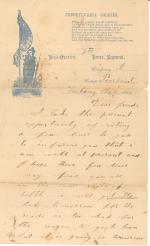
February 1862
John Taylor Cuddy writes six letters to his friends and family, describing life as a solider for the Union Army along with his experience in military campaigns during the Civil War. "We have good news from the south we have licked them a few places I do not think that this ware [war] can last much longer and then we will come home safe again," as Cuddy notes. Transcripts included.
Format: Letters/Correspondence
Location: MC 2001.9, B1, F4
Subject: Military Affairs and Conflict, Personal and Family Life
Time Period: 1860-1879
View Item: Letters from John Cuddy (Feb. 1862)
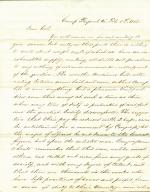
1862-1863
Thomas Chamberlin writes eleven letters to Eli Slifer, the Secretary of the Commonwealth under Governor Curtin, regarding life in the camp of a Union Army company during the Civil War. Chamberlin also discusses the weather, sickness, geography, and military tactics. "The suggestion that [soldiers'] pay be reduced will, I hope, never be entertained for a moment by Congress; let the wages of officers be cut down to the lowest figure, but spare the enlisted men," as Chamberlin notes.
In addition, Chamberlin briefly mentions how one company is guarding President Lincoln. "One is guarding the White House, having been brought there from the Soldier’s Home at the President’s request, when he moved into town," as Chamberlin explains. Transcripts included.
Format: Letters/Correspondence
Location: MC 2003.4, B2, F16
Subject: Health and Medicine, Military Affairs and Conflict, Personal and Family Life
Time Period: 1860-1879
View Item: Letters from Thomas Chamberlin to Eli Slifer
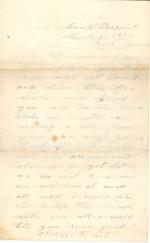
March - April 1862
John Taylor Cuddy writes six letters to friends and family describing his experience as a soldier of the Union Army during the Civil War. Cuddy, who mentions the places that his division travels through, also maintains an optimistic outlook on the war despite expressing a wish to return home. "I think this [war] will soon be over before long and then i hope to [get] home and spend a happy life with you all again," as Cuddy notes. Transcripts included.
Format: Letters/Correspondence
Location: MC 2001.9, B1, F5
Subject: Military Affairs and Conflict, Personal and Family Life
Time Period: 1860-1879
View Item: Letters from John Cuddy (Mar. - Apr. 1862)
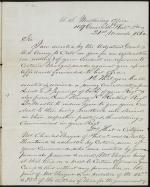
March 21, 1862
United States Mustering Officer C. J. Ruff writes Colonel William Frishmuth and requests a written response to several accusations of misconduct and corruption. “I am directed…. to call on you for an explanation (in writing) of your conduct in reference to certain charges made against you,” as Ruff explains. Colonel Frishmuth serves in the 12th Cavalry Pennsylvania volunteers. Others individuals who are involved include E. F. Jennings, Harry J. Reakert, Charles Wayne, E. L. McCahun, and Henry C. Sanford.
Format: Letters/Correspondence
Location: I-Purchase-1968-6
Subject: Legal Affairs, Military Affairs and Conflict
Time Period: 1860-1879
View Item: Letter from C. Ruff to William Frishmuth

March 24, 1862
Pennsylvania Governor Andrew Gregg Curtin sends this copy of the charges against Colonel William Frishmuth to Colonel R. Butler Pierce and orders him “to investigate.” Colonel Price, of the 59th Regiment of Pennsylvania Volunteers, is the President of the Court of Inquiry. Colonel Frishmuth faces five charges, including “selling Commissions in his Regiment.”
Format: Letters/Correspondence
Location: I-Purchase-1968-6
Subject: Legal Affairs, Military Affairs and Conflict
Time Period: 1860-1879
View Item: Letter from Andrew Gregg Curtin to R. Butler Price (Copy)

1862-1863
Jacob G. Frick writes eight letters to Eli Slifer, the Secretary of the Commonwealth under Governor Andrew Curtin, on a number of topics, including military-related travel and campaigns, Frick's opinion on the administration of select regiments and the ability to resolve conflict, a court-martial, daily life in the Union army, and finding a job after leaving military service. Transcripts included.
Format: Letters/Correspondence
Location: MC 2003.4, B4, F18
Subject: Health and Medicine, Legal Affairs, Military Affairs and Conflict, Personal and Family Life
Time Period: 1860-1879
View Item: Letters from Jacob Frick to Eli Slifer

May - August 1862
Thomas William Dick writes five letters to his family describing his experience as a soldier in the Union Army during the Civil War. Dick discusses daily life in the military camp, in addition to his own thoughts on the war. "I think none of us now doubt the valor of the southern troops... But I think their artillery and small arms both much inferior to ours and they are engaged in a bad cause which is why we are mostly successful." Transcripts included.
Format: Letters/Correspondence
Location: MC 2001.10, B1, F4
Subject: Military Affairs and Conflict, Personal and Family Life, Religion and Spirituality
Time Period: 1860-1879
View Item: Letters from Thomas Dick (May - Aug. 1862)

May 8, 1862
Former President James Buchanan explains to Thomas A. Goodman that he will not provide the autograph of another individual. While "it is true that in the course of my life I have received letters from most of the persons you enumerate," Buchanan explains that "those of importance have been filed away and of course I should be unwilling to mutilate them." "The desire to obtain autographs seems to pervade the whole country," as Buchanan notes. Transcript included.
Format: Letters/Correspondence
Location: MC 1998.10, B4, F6
Subject: Personal and Family Life, Politics and Government
Time Period: 1860-1879
May - June 1862
John Taylor Cuddy writes a series of four letters to friends and family describing his experience as a soldier of the Union Army during the Civil War. Cuddy remarks on the places that he travels through and expresses some exhaustion amid hope for a forthcoming end to the war. Transcripts included.
Format: Letters/Correspondence
Location: MC 2001.9, B1, F5
Subject: Military Affairs and Conflict, Personal and Family Life
Time Period: 1860-1879
View Item: Letters from John Cuddy (May - Jun. 1862)

1862-1864
Alexander McClure writes two letters to Pennsylvania Governor Andrew Curtin regarding McClure's recent newspaper article that on Pennsylvania and the Civil War as well as the qualifications of a Lieutenant serving in the 2nd Pennsylvania Artillery. This individual, as McClure explains, is an "intelligent, efficient & reliable officer." Transcripts included.
Format: Letters/Correspondence
Location: MC 2003.4
Subject: Military Affairs and Conflict, Politics and Government
Time Period: 1860-1879

June 1862- December 1863
Dr. Theodore Christ writes six letters to Eli Slifer, the Secretary of the Commonwealth under Governor Andrew Curtin, regarding his experience as a doctor in the Union Army during the Civil War. Christ describes problems with supplies as well as military engagements in Virginia, South Carolina, and Tennessee. In addition, Christ discuses the possibility of getting a promotion and briefly mentions political issues. "If you will Keep down the infernal Copperheads [Democrats] at home," Christ explains that "we will whip the Rebels in due time." Transcripts included.
Format: Letters/Correspondence
Location: MC 2003.4, B2, F19
Subject: Health and Medicine, Military Affairs and Conflict, Personal and Family Life, Politics and Government
Time Period: 1860-1879
View Item: Letters from Theodore Christ to Eli Slifer

June 21, 1862
Henry Clay Speake prepared this oration, entitled “Our Nation's Glory," for the Junior Prize (Grigg Prize) contest held June 21, 1862. A committee selected the top two orations, based on "the combined merits of Declamation and Composition," and awarded those two students with gold and silver medals for first and second place, respectively. Speake did not win an award for this oration. Transcript included.
Format: Speeches and Sermons
Location: Orations-1862-S741o
Subject: Politics and Government
Time Period: 1860-1879
View Item: "Our Nation's Glory," by Henry C. Speake
June 26, 1862
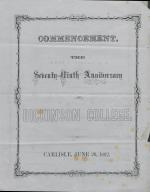
This copy of the printed program for the commencement exercises held on June 26, 1862 shows the members of the graduating class and the speeches that they were scheduled to deliver.
Format: Memorabilia and Ephemera
Location: Dickinsoniana Programs
Subject: Dickinson College Events
Time Period: 1860-1879
View Item: 1862 Commencement Program
July - October 1862
John Taylor Cuddy writes seven letters to his friends and family in which he shares his experiences fighting for the Union Army during the Civil War. Cuddy describes places he sees as well as several engagements, including noting the casualties in his unit. "I will [get] through this [war] for I was in three of the hardest fights that can be [and] the balls came as thick as [hail] all around me but none of them hit me," as Cuddy explains. Transcripts included.
Format: Letters/Correspondence
Location: MC 2001.9, B1, F6
Subject: Military Affairs and Conflict, Personal and Family Life
Time Period: 1860-1879
View Item: Letters from John Cuddy (Jul. - Oct. 1862)

July 11, 1862
R. H. Chamberlin asks Eli Slifer, the Secretary of the Commonwealth under Governor Andrew Curtin, for help in forwarding a letter from Bucknell University Professor Thomas Curtis to Curtis' brother in South Carolina during the Civil War. Transcript included.
Format: Letters/Correspondence
Location: MC 2003.4, B2, F15
Subject: Military Affairs and Conflict, Politics and Government
Time Period: 1860-1879
View Item: Letter from R. H. Chamberlin to Eli Slifer
July 26, 1862
William Wagenseller writes an unknown recipient and asks them to not appoint anyone as a recruiter for the Union army until after an upcoming meeting in Middleburg, Pennsylvania. Transcript included.
Format: Letters/Correspondence
Location: MC 2003.4, B10, F22
Subject: Military Affairs and Conflict
Time Period: 1860-1879
View Item: Letter from William Wagenseller to Unknown Recipient

July 28, 1862
William Wagenseller writes Pennsylvania Governor Andrew Curtin and Secretary of the Commonwealth Eli Slifer regarding Dr, H. P. Hattenstein, who is up for approval before the Medical Board of Examination. Wagenseller encourages Curtin or Slifer to put in a good word for the doctor. Transcript included.
Format: Letters/Correspondence
Location: MC 2003.4, B10, F22
Subject: Health and Medicine, Politics and Government
Time Period: 1860-1879
View Item: Letter from William Wagenseller to Andrew Curtin and Eli Slifer

1862-1865
William F. Wagenseller writes fourteen letters to Eli Slifer, Secretary of the Commonwealth during the Civil War, in which he updates him on the movement of Capt. Ryan's regiment and other companies, appointing Dr. B. F. Wagenseller as a surgeon, discusses charges against second lieutenant Jeremiah Snyder, and asks Slifer for advice in military administrative matters. Transcripts included.
Format: Letters/Correspondence
Location: MC 2003.4, B10, F22
Subject: Legal Affairs, Military Affairs and Conflict, Politics and Government
Time Period: 1860-1879

August 11, 1862
M. Chamberlin writes Eli Slifer, the Secretary of the Commonwealth, to recommend the Hon. F. Gearhart as a chaplain for the Union army. While "many of the Chaplains have been Wofully deficient in the Religious influences they Exert," Chamberlin explains that "I have the fullest Confidence in [Gearhart's] piety & integrity." James Pollock and John Porter also endorse the recommendation. Transcript included.
Format: Letters/Correspondence
Location: MC 2003.4, B2, F15
Subject: Military Affairs and Conflict, Religion and Spirituality
Time Period: 1860-1879
View Item: Letter from M. Chamberlin to Eli Slifer

March 23, 1862
Lieutenant Colonel L. B. Pierce writes Lieutenant Colonel C. J. Ruff, US Mustering Officer, and outlines his accusations of misconduct and corruption against Colonel William Frishmuth. Pierce’s accusations include Frishmuth “attempting the forcible release of a prisoner confined for good and valid reasons by the Officer in Command.”
Format: Legal and Government Documents
Location: I-Purchase-1968-6
Subject: Legal Affairs, Military Affairs and Conflict
Time Period: 1860-1879
View Item: Letter from L. Pierce to C. Ruff (Copy)
September 2, 1862
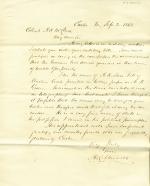
Henry D. Maxwell writes a letter to Colonel Alexander K. McClure informing him of a possible spelling error in the name of a military officer, whom he praises. "I see the name of A. L. Seem MD of Martin’s Creek printed in todays paper as A. K Green," as Maxwell notes. Transcript included.
Format: Letters/Correspondence
Location: MC 2003.4, B7, F7
Subject: Military Affairs and Conflict
Time Period: 1860-1879

September 11, 1862
The Carlisle Herald publishes Pennsylvania Governor Andrew G. Curtin's proclamation on September 11, 1862 in which he calls for "able-bodied loyal men of Pennsylvania" to join military companies in response to the threat of Confederate forces at Hagerstown, Maryland. "By authority of the President of the U.S. 50,000 of the freemen of Pennsylvania, are hereby called for immediate service to repel the now eminent danger from invasion by enemies of the country," as Governor Curtin explains.
Format: Newspapers and Magazines
Location: I-Original-1862-1
Subject: Military Affairs and Conflict, Politics and Government
Time Period: 1860-1879