Adams Hall (1963-present)

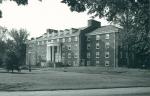
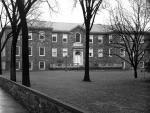
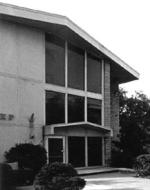
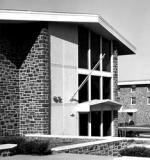
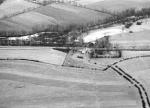
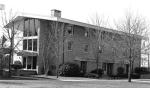
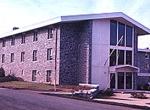
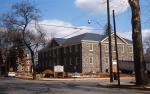
Located at the southern end of the Benjamin Rush campus, Adams Hall was dedicated as a women’s dormitory on October 5, 1963. Authorized in December 1960, the hall was designed by architect Elmer H. Adams and constructed at a cost of $1,031,000. Dr. and Mrs. Rolland Adams made the generous $250,000 donation that made construction possible; the building bears their name in recognition of this gift.

Originally home to 165 female students, Adams Hall also once contained the College Guest Suite, which was furnished and decorated through the support of the Mary Dickinson Club. The building began serving as a dormitory for both men and women in 1974, and has housed both upperclassmen and freshman students over the years.
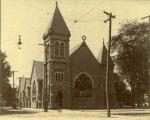
Allison Hall (2013-present)

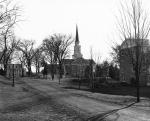
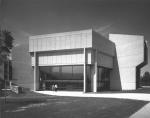
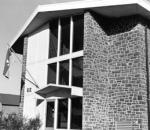
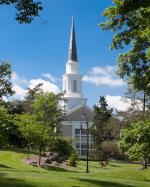
Allison Hall was acquired by Dickinson College in January, 2013. Previously, it served as the Allison United Methodist Church. The structure was designed by Hensel Fink, and was completed on April 20, 1958. It was constructed after the Allison Memorial Methodist Church was destroyed by fire on January 20, 1954. and cost $850,000 to build.

William Clare Allison Memorial Methodist Church (1892-1954)

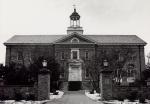
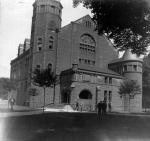
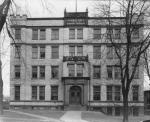
The William Clare Allison Memorial Methodist Church was completed in 1892. Construction of the Gothic style building had lasted for two years and the dedication took place on March 6, 1892. A large amount of the construction cost had been donated by Mrs. William Clare Allison as a memorial to her husband. The church property extended from High Street back to Church Alley. President George Reed allocated some of the land at the President's House for the church's usage, as a donation by Mr. Allison had allowed for the renovation of the house a few years earlier. Perhaps the most distinguished feature of the church was the set of stained glass windows on two sides of the building; each depicted the life of Christ and had been designed by Tiffany and Co.

Disaster struck the church on January 20, 1954, when faulty electrical wiring in the basement caused a fire that completely destroyed the church and most of its contents. The damage was estimated at over $300,000. Dickinson College offered the congregation space in Bosler Hall in which to hold their services until a new church building could be completed.

William Clare Allison United Methodist Church (1958-2013)

When the Allison Memorial Methodist Church was destroyed by fire on January 20, 1954, Dickinson College president William W. Edel arranged a trade with the members of the church. In exchange for the site of the destroyed church, adjacent to the President’s House, the College offered a section of the Benjamin Rush campus along Mooreland Avenue, close to the church’s parsonage, for the construction of a new church building. The new Allison Methodist Church, standing on the ground acquired in the trade, was designed by Hensel Fink, and was completed on April 20, 1958. It was constructed at a cost of $850,000, to which the College contributed $200,000. The church design was in keeping with the prevalent style of the College campus, complete with limestone façade; it also boasted of a 150-foot steeple and a sanctuary that could seat 750 people. A small chapel was dedicated to Bishop Fred Pierce Corson, Class of 1917 and former president of the College, for his many years of service to the church. This new building served as a “Church-Chapel” to the College community for some time. The building was sold to the college in January of 2013, and is now a multi-purpose space known as Allison Hall.

Alpha Chi Rho House (1919-1946)

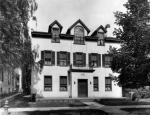
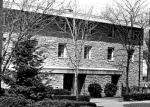
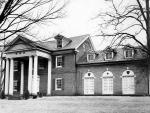
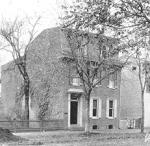
The Alpha Chi Rho fraternity purchased a house at 36 North College Street in January of 1919 at a cost of $8,000. The fraternity occupied this house until 1946, during which time the house underwent a series of major renovations, including a complete remodeling of the interior in 1926. In 1946 the fraternity purchased the former home of Abram Bosler at the corner of High and College Streets, and in turn sold their house to Phi Epsilon Pi, who moved out of the eastern section of East College. By this time, the façade of the building had been refaced in brick and a larger porch was added.

Phi Epsilon Pi occupied this house until it was sold to the College and razed in 1963 to make room for the Holland Union Building.

Alpha Chi Rho House (1946-1964)

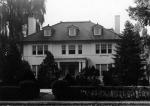
The two-story reinforced concrete house located at 272 W. High Street was built in 1912 by Abram Bosler, a non-graduate of the class of 1905 and member of the Board of Trustees. Bosler did not wish to lose his home to fire, and the building was the first Carlisle residence built of the fire-proof concrete. After Bosler’s death in 1930 his wife and children continued to occupy the house; in 1945 the house was purchased by the Chi Omega national sorority to be used as its national headquarters. However, the society's plans changed within a year and the house was returned to the market.

The Dickinson College chapter of Alpha Chi Rho acquired the house on November 4, 1946 for a sum of $34,500. The fraternity occupied the house until it was purchased by the College on June 6, 1964, as all of the College fraternities were preparing to move into the newly constructed Fraternity Quadrangle. The house, which was purchased for $55,000, became the home of the Admissions Office and was refurnished in the late 1980s. In 1990, after this renovation was completed, the house was named in honor of Robert A. Waidner, class of 1932 and a member of the Board of Trustees.

Althouse Hall (1958-present)

One of the significant goals and successes of the Ten Year Development Program launched in 1948, Althouse Hall first served as the home of the chemistry and geology departments. Ground was broken on June 1, 1957, and the building, located on the John Dickinson campus just west of West College, was dedicated on November 8, 1958. It was designed by architect Elmer H. Adams, and constructed at a cost of $618,029.

Dr. C. Scott Althouse, for whom the building is named, contributed the $300,000 gift that guaranteed this new facility. The building’s library was made possible by a $35,000 gift from Irénée du Pont, and served as a memorial to Alfred Victor du Pont, class of 1818. In 1964, a gift of $50,000 from Roscoe O. Bonisteel, class of 1912, paid for a roof-top observatory which included seven telescopes.

The geology department later relocated to the Benjamin D. James Center, leaving the chemistry department as the building’s sole resident.

Alumni Gymnasium (1929-1981)

The need for more space and better facilities made the decision to build the Alumni Gymnasium an easy one. The gymnasium, which provided more room for spectators, better locker rooms and showers for athletes, and a much-desired swimming pool, opened on January 9, 1929, for a basketball game between Dickinson and the University of Pennsylvania.

Situated on the site of Old South College and facing Old West from across High Street, the Alumni Gymnasium cost $232,621, all of which was raised through a fund drive organized by the General Alumni Association. Following the opening of the Kline Life/Sports Center, the gymnasium was completely remodeled and converted into the Emil R. Weiss Center for the Arts in 1983.

Anita Tuvin Schlechter Auditorium (1971-present)

A complex cultural center that could seat nearly half of the college community at the time at full capacity, the Anita Tuvin Schlechter Auditorium was dedicated on May 22, 1971. The building was designed by Architects Collaborative, Inc. and constructed at a cost of $2.2 million.

Louis Alfred Tuvin, a member of the graduating class of 1910, generously donated $500,000 toward the building project in memory of his daughter, for whom the building is named. Known more familiarly as ATS, the auditorium serves as a versatile space for lectures, debates, concerts, and performances of all variety.

Armstrong Hall (1964-present)

One of ten buildings that made up Dickinson College’s Fraternity Quadrangle, Armstrong Hall (Quad 8) was first used in September 1964 as the residence of the Phi Kappa Sigma fraternity. The hall was designed by Howell Lewis Shay and Associates and cost approximately $200,000. After the Phi Kappa Sigma fraternity moved out, the building continued to serve as a general residence hall.

This building, one of the four “lower quads,” was later named for John Armstrong, one of the nine founding patentees of the Carlisle Grammar School, as well as one of the founding trustees of Dickinson College in 1783.

Atwater Hall (1964-present)

One of the ten buildings that made up Dickinson College’s Fraternity Quadrangle, Atwater Hall (Quad 7) was first opened to students in September 1964, serving as the residence of the Alpha Chi Rho fraternity. The building began serving as a general residence hall in 1990 after that fraternity had moved out.

In 1992, the hall was named in honor of Jeremiah Atwater, the third president of Dickinson College, who served in that post from 1809 until 1815. The building was designed by Howell Lewis Shay and Associates, and cost approximately $200,000 to build.

Baird Biology Building (1937-1966)

The Baird Biology Building, previously known as “Mooreland,” the home and deer park of sportsman Johnston Moore, class of 1829, was purchased by Dickinson College in 1932 from the family estate following the death of Euphemia P. Moore, Johnston’s daughter. When the building was converted to college use in 1937, it became the home of the Biology Department. It was dedicated in memory of Spencer Fullerton Baird, a member of the graduating class of 1840, who would achieve notoriety as one of the leading naturalists of his day, ultimately serving as Secretary of the Smithsonian Institution. The three-story building, which sat on the grounds of the Benjamin Rush campus, was demolished in 1966 to make room for Witwer Hall.

Baird Hall (1964-2000)

Baird Hall (Quad 4), part of the “upper quad” and one of the ten residence halls that made up the College’s Fraternity Quadrangle, was first used to house students in September 1964. The hall, which initially served as the residence of the Sigma Chi fraternity, was named in honor of Spencer Fullerton Baird, class of 1840, who taught at Dickinson for several years and who later became the Secretary of the Smithsonian Institution. Actually the second building in the College’s history to bear the name (the first Baird Hall housed the Biology department), this dormitory was designed by Howell Lewis Shay and Associates and cost approximately $200,000 to build. In the fall of 2000, the building was remodeled and joined with McClintock Hall (Quad 5) to create a larger residence hall for upperclassmen.

Beta Theta Pi House (1906-1964)

The members of the Beta Theta Pi fraternity built a house in 1906 on the southwest corner of High Street and Mooreland avenue. In the summer of 1927 they remodeled the building for a cost of $18,000, adding a new dining room and kitchen, complete with an electric refrigerator, and outfitting the house with a new heating system. By December of 1954, the mortgage for the house had been completely repaid; the fraternity members, old and new, celebrated by burning the mortgage papers.

Beta Theta Pi occupied the house until it was sold to the College in 1964 and the members moved into Quad 6 (now Longsdorff Hall) of the Fraternity Quandrangle. The house was razed and the site was used for a new dormitory, Malcolm Hall.

Herman Bosler Biddle Athletic Field (1909-present)

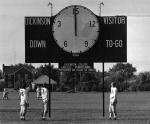
On June 8, 1909, Edward William Biddle donated this six-acre field to the College as a memorial to his son Herman, a member of the Class of 1903. The College has owned the field ever since, with subsequent land purchases having increased the size of the field to over eleven acres.

The site now features a football field, an outdoor track, tennis courts, and fields for soccer, field hockey, lacrosse, and baseball. In addition, weight training facilities and a locker room were authorized in 1962 and paid for by the Washington Redskins football organization, in return for pre-season use of the field and facilities. The main entrance to the field is a large stone gate located in the northeast corner bearing a plaque in tribute to Biddle.

Biddle House

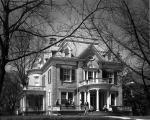
Biddle House was the former home of College alumnus and trustee Edward M. Biddle, Jr., and was purchased by the College on December 14, 1946 at a cost of $25,000. The house was used primarily as living space for men or women, as needed, in different years; it would later be occupied by fraternities and other student groups. The basement provided space for organizations such as the Alumni Office and the Faculty Club.

Shortly after Sigma Alpha Epsilon moved out in 1990, Biddle House became the Arts House residence and then the home of campus offices and departments such as Religious Affairs and the Counseling Center. The basement housed the Department of Theater and Dance until 2002, and from 1994 to 2004 the Clarke Center for Interdisciplinary Study of Contemporary Issues occupied the first floor. From 2004 onwards the building has been occupied by the Registrar's Office, the Career Center, and Academic Advising.

Bosler Hall (1886-present)

The construction of Bosler Hall on the John Dickinson Campus began in 1884, and was completed on June 23, 1886. The building was made possible through a gift from Helen (Beltzhoover) Bosler and was named the James Williamson Bosler Memorial Library in memory of her husband, a member of the class of 1854. Faced with red sandstone, the building was the first designed specifically for the purpose of housing the college’s library. Bosler Hall also included a chapel and assembly space on the top floor. Constructed at a cost of $68,000, the building was designed by architect Charles L. Carson.

In 1940-41 the building was transformed, enlarged, and refaced with limestone in the Georgian style according to the designs of architect William W. Emmart. This renovation was completed for $135,440.

Following the construction of the Boyd Lee Spahr Library in 1967, major alterations were made to Bosler Hall, and it became the home of the fine arts and modern language departments. The building was renovated once again in 1983 at a cost of approximately $2 million. Primary among the changes for this renovation was the establishment of space in the building to house the Media Center.

Buchanan Hall (1964-present)

Located in the “Upper Quad,” Buchanan Hall (Quad 2) is one of ten residence halls that originally made up the College’s Fraternity Quadrangle. First occupied in September 1964, the hall is named for James Buchanan, Class of 1809, whose lifelong political career culminated in his becoming the fifteenth President of the United States. The building was first used as the home of the Theta Chi fraternity, and later served as a general residence hall.

Designed by Howell Lewis Shay and Associates, the building cost approximately $200,000.

College Farm (1967-present)

The College Farm, located in South Middleton Township between Mount Holly Springs and Boiling Springs, Pennsylvania, was given to Dickinson College in nearby Carlisle in 1967. The farm, which was valued at $110,000, was the gift of Ivo V. Otto, class of 1904, and his wife Clara.

The 180-acre property was to be used by the College for educational purposes, and one idea at the time was the possibility of future development of a “model urban community,” which would be used by faculty and students to explore the benefits and drawbacks that are inherent with the establishment of such a community.

Since approximately 2006, this property has served as a working farm and educational resource that provides produce to the college’s dining hall, a local food bank, and members of the farm’s co-op. The farm is also home to a flock of sheep and a flock of laying hens and includes state-of-the-art sustainable operations, such as solar-electric and solar-hot-water systems. It is run by staff members, student workers, and interns.

Conway Hall (1964-present)

One of the ten “Quads” which made up Dickinson College’s Fraternity Quadrangle, Conway Hall (Quad 1) was first occupied in September 1964. The hall, which is the second building in the institution’s history to bear the Conway name, was named for Moncure Daniel Conway, Class of 1849, a distinguished author and anti-slavery, world peace activist.

The building first served as home to the Phi Epsilon Pi fraternity, and later became a general residence hall. The building was designed by Howell Lewis Shay and Associates and constructed at a cost of approximately $200,000.

Conway Hall (1905-1966)

Conway Hall was dedicated on June 6, 1905 as a home for the Dickinson Preparatory School, complete with offices, classrooms, and living quarters. Miller I. Kast designed the building, and Andrew Carnegie paid the $63,480 construction costs in full, in honor of his friend Moncure Daniel Conway, Class of 1849.

When the preparatory school closed in 1917, the College began to use Conway Hall as a residence hall for freshmen men. The building was also used as a locker room for teams competing at Biddle Field (the front step of Conway is preserved near the main stand entrance to Biddle Field), as well as a barracks for the 32nd training detachment for eleven months during World War II.

Conway Hall was closed and razed in the summer of 1966 to provide room for the construction of Boyd Lee Spahr Library.

Cook International House (1986-present)

The Cook International House, located at 239 West Louther Street, housed the Office of Off-Campus Studies (Office of Global Education) and the Internship Office until 2001, when these offices moved into the new Global Education Center in the newly-renovated Stern Center. Professor Emeritus Donald Flaherty, a professor of Political Science from 1952 until 1983, donated the house to the College through an annuity trust in 1986. It was named in honor of Winfield (Class of 1932) and Isabelle Cook, whose gifts created an endowed fund for the College’s international programs and helped establish Dickinson Centers in the European cities hosting Dickinson study-abroad programs, including Bremen, Germany; Toulouse, France; Malaga, Spain; Bologna, Italy; Norwich, England; and Moscow, Russia. The house now is the home of the College's Community Studies Center.

Cooper Hall (1964-present)

One of six residence halls that make up Dickinson College’s “Upper Quad,” in the Fraternity Quadrangle, Cooper Hall (Quad 3) began housing students in September 1964. It is named after Thomas Cooper, friend of Joseph Priestley and professor of natural philosophy and chemistry from 1811 to 1815. Members of the Kappa Sigma fraternity were the first students to occupy the hall, which later became a general residence hall.

Cooper Hall was designed by Howell Lewis Shay and Associates, and constructed at a cost of approximately $200,000. The building was completely remodeled in 1998.

Dana Hall (1966-present)

Built specifically for the College’s Biology Department, Dana Hall was dedicated on October 8, 1966. The building, situated on the northeast corner of College and Louther Streets, was designed by Elmer H. Adams and built at a cost of $1.3 million.

The building is named in honor of Charles A. Dana, whose foundation made a $300,000 grant toward the project. The Longwood Foundation contributed an additional $480,000 for the construction of this building. The Biology Department has been the building’s primary occupant since its opening.

Davidson Hall (1964-2005)

One of four residence halls that make up Dickinson College’s “Lower Quad,” Davidson Hall (Quad 10) was originally one of the ten buildings constructed to house the College’s fraternities in the 1960s. Davidson first housed students in September 1964, as the home of the Phi Delta Theta fraternity, and later became a general residence hall.

The building was named in honor of Robert Davidson, one of the first professors, and subsequently the second president of Dickinson College, 1804-1809. Davidson also served as pastor of the Carlisle Presbyterian Church for more than 25 years. The building was designed by Howell Lewis Shay and Associates, and constructed at a cost of approximately $200,000.