Butler's Analogy

Joseph Butler (1692-1752) wrote his infamous Analogy of Religion, Natural and Revealed, to the Constitution and Course of Nature, in 1736. Butler was born and educated in England as a Presbyterian but became ordained in the Church of England in 1718, and eventually became the Dean of St. Paul's Cathedral and later Bishop of Durham. He studied Locke, Shaftesbury, and Hutcheson, philosophers who all influenced his writing. In his Analogy, Joseph Butler discusses his views on morality, and how under normal circumstances, humans are designed to follow moral lives. The work impressed Hume and Wesley and became widely read first in Scotland during the end of the eighteenth century, and made its way to Oxford, and eventually spread to American universities and colleges during the early part of the nineteenth century when many such institutions were heavily influenced by Scottish philosophy. Dr. Benjamin Rush, one of Dickinson's founders, who was educated at Edinburgh University, certainly read the Analogy when, following a long career to the study of medicine and science, he began later in life to search for a unity between nature and God. He found some answers to his questions in Butler's Analogy.

Bosler Cartouche

The Bosler Cartouche was carved in 1885 and appeared above a portico at the entrance to Bosler Hall. In 1940 and 1941, the building's portico and turret were removed and the original sandstone walls of Bosler Hall were covered with limestone. During this construction project, the three-and-a-half-ton cartouche was removed and placed in storage.

In 1968, the class of 1913 was preparing for its 55th reunion and recommended the display of the slab. It was placed between Adams and Witwer Halls, facing the Dickinson School of Law.

Later, a group of faculty, staff, and local alumni formed the half tongue-in-cheek "Committee to Restore Our Cartouche"(CROC). The ad-hoc CROC met off and on over a number of years, and its members wrote several letters to successive college treasurers requesting action. In 2000, on the orders of new President William G. Durden '71, the Cartouche was moved to its current location, a prominent place in front of Bosler Hall.

Arts Award

The Dickinson College Arts Award honors an individual or group who has made an outstanding contribution to the creative or performing arts. A committee of faculty and trustees makes the selection.

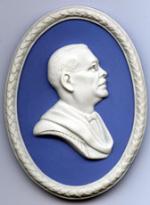
The Award was initiated by the faculty and endowed in 1959 by gifts from members of the board of trustees, notably C. Scott Althouse and Sumner Drayer, in honor of William W. Edel, president of the College from 1946 to 1959. The recipient receives a Wedgewood medallion bearing the likeness of President Edel based on a sculpture created by Nancy Dryfoos, distinguished American sculptor, together with an honorarium.

Air Crew Training Program (1943-1944)

During the Second World War, Dickinson College became the site of an army air corps training program. Beginning on March 1, 1943, a large segment of the campus was used by the Thirty-Second College Training (Air-Crew) Detachment. The College provided a five month course for the "Preparation of Air Crew Students, both mentally and physically, for intensive ground training in the Preflight Schools." This program concentrated on the three distinct areas of academic preparation, military training, and physical training. In exchange for hosting the air crew students, the College received compensation from the U. S. government. The program was terminated on January 29, 1944, due to diminishing need for such programs in the northeastern United States. From its inception to its termination, 2260 cadets passed through the program at the College, providing a welcome federal income in the reduced circumstances of the conflict.

Note: Digital copies of 32nd's newspaper, the Eager Eagle, as well as two magazines are available by following this COLLECTION LINK.

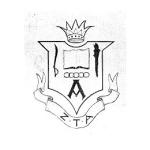
Zeta Tau Alpha

The Beta Beta Chapter of the Zeta Tau Alpha sorority was founded at Dickinson College in Carlisle, Pennsylvania in 1924. It was formed from a local sorority, Zeta Eta Phi, which had been established three years earlier. In 1969, when the chapter was disaffiliated from the national fraternity, the members officially disbanded and the group dissolved.

Organization Type

Zeta Psi

The Alpha Chapter of the Zeta Psi fraternity was established at Dickinson College in 1852. By the next year, the College trustees had forced its members to sign written pledges promising to disband the organization, and even burned the fraternity’s record book, roll book, by-laws, constitution, and initiation ritual. Members of Zeta Psi were likely able to conduct secret meetings after this crackdown, but with the graduation of its last remaining members in 1856, the chapter was permanently dissolved.

Organization Type

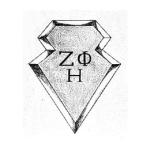
Zeta Eta Phi

Zeta Eta Phi was a local sorority established at Dickinson College in Carlisle, Pennsylvania in 1921. The group was the forerunner of Zeta Tau Alpha, a national sorority whose Dickinson chapter was founded in 1924.

Organization Type

Theta Nu Epsilon

The Pi Pi Chapter of the Theta Nu Epsilon Society was established at Dickinson College in Carlisle, Pennsylvania in 1887. Theta Nu Epsilon selected its members from among those in fraternities at the college and the law school, and occasionally accepted non fraternity students as well. The TNE adage, "Little is known and what is known is kept secret" aptly describes the Society whose chapter at Dickinson may have dissolved in 1905, the last year in which any mention appears in the College yearbook.

Organization Type

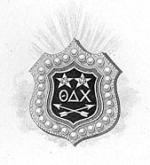
Theta Delta Chi

The Sigma Chapter of the Theta Delta Chi fraternity was established at Dickinson College in Carlisle, Pennsylvania in 1861. It enjoyed a "fairly vigorous life" until 1875, when the active chapter lapsed. Graduate members reinstated Theta Delta Chi in 1880, and the restored chapter prospered until 1895, when it again ceased to function.

Organization Type

Tau Delta Pi

A local drama fraternity, Tau Delta Pi was founded at Dickinson College in Carlisle, Pennsylvania in 1922. After a short period of inactivity, the society was revived in 1938 and remained active through 1949, when the national drama fraternity, Alpha Psi Omega, succeeded it.

Organization Type