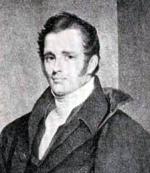
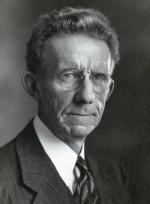
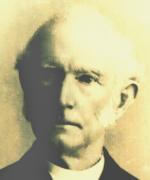
Wilbur Fisk Massey (1839-1923)

Wilbur F. Massey was born to James A. and Anne Parker Massey on September 30, 1839 in Onancock, Virginia. He began his studies at Washington College in Maryland and in 1857 entered the Dickinson College class of 1859. Massey was elected to the Belles Lettres Society before leaving Dickinson after one year. The following year, he became engaged in railway construction work on the Northern Missouri Railroad in Missouri and Iowa.

College Relationship
Alumnus/Alumna Class Year

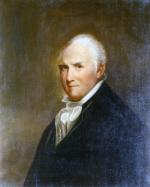
John Mitchell Mason (1770-1829)

John Mitchell Mason was born on March 19, 1770 in New York City. He attended Columbia University, receiving a bachelor's degree in 1789. In 1792 Mason succeeded his father as pastor of a small ministry in New York. During his tenure with this congregation, he quickly expanded the membership by 600 people. In 1794 Mason received a doctor of divinity degree from Princeton University. He established and organized the first theological seminary of the Associate Reformed Church (now Union Theological Seminary) in 1804, and he helped to establish the Christian Magazine in 1806. He also served as a trustee of Columbia University from 1795 to 1811, and was provost of that institution from 1811 to 1816. While serving as provost, Mason became minister of the Murray Street Church in New York City in 1812. Declining health from excessive work forced him to take leave of his duties in 1816, and then again after suffering a slight stroke upon his return. Following this second recovery, Mason accepted a position as president at the newly reopened Dickinson College in Carlisle, Pennsylvania, beginning his term in the fall of 1821.

College Relationship
President - Years of Service
1821-1824

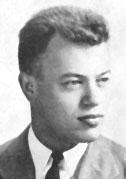
John E. Martin III (1920-1945)

Jack Martin was born in Philadelphia in 1920 and grew up in nearby Camp Hill, Pennsylvania. He graduated from Camp Hill High School in 1938 after three years of varsity football and editing the first yearbook in the high school's history. He entered Dickinson College in nearby Carlisle and continued his football career as a half-back. He also followed his father, John E. Martin, class of 1917 and a veteran of the First World War, in joining Beta Theta Pi.

He finished the requirements for the degree in 1943 and was already a United States Marine when diplomas were awarded. The Dickinson Alumnus of September 1945 stated that Martin may have been the first graduate never to see his diploma since he was not able to obtain a home leave before shipping to the Pacific.

Martin joined Company H, 3rd Battalion, 29th Regiment, 6th Marine Division in the invasion of Okinawa. On May 15, 1944, during the bloody battle for the island's main town of Naha at a place called Sugar Loaf Hill, Corporal John Martin was killed in action. He was buried on Okinawa in the Marine cemetery, becoming one of more than 12,500 Americans (including three Dickinsonians) lost in securing what was intended to be the main staging area for the final invasion of the Japanese home islands.

College Relationship
Alumnus/Alumna Class Year

Ernest Dudley Martin (1843-1868)

Ernest Dudley Martin was born in Philadelphia, Pennsylvania on July 1, 1843 the second son of William and Sarah Ann Smith Martin. He matriculated at Dickinson College in Carlisle, Pennsylvania with the class of 1864 but did not complete his degree, leaving during his junior year. While enrolled he was a member of Phi Kappa Sigma and gained membership to the Union Philosophical Society. He left to pursue medical training at the University of Philadelphia, and by January 1865 he was applying for a position with the U.S. Navy as an assistant surgeon. He was examined at the Naval Hospital in Philadelphia and passed as qualified on March 9, 1865 and was appointed as acting assistant surgeon with a monthly salary of $104. He was ordered to the receiving ship Princeton at the Philadelphia Naval Yard in mid March; he was then required to take passage aboard the USS Bermuda for Key West, Florida and to report for duty as a relief surgeon aboard the USS Fort Henry. His orders changed several times soon after, however. First, he was ordered to take passage from New York to Florida aboard the USS Florida, then, while in New York, he was detached from his assignment to the Fort Henry, and was instead to await orders in New York in early June. In the meantime the Civil War had ended, and thus he resigned his acting commission and received an honorable discharge on October 9, 1865.

College Relationship
Alumnus/Alumna Class Year

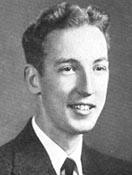
Walter H. Marshall (1921-1944)

Walter Marshall was born in Philadelphia in 1921 and entered Dickinson College in Carlisle, Pennsylvania in September 1939 after his graduation from Collingswood High School in Collingswood, New Jersey. As a member of the class of 1943, "Red" was a member of Phi Kappa Psi fraternity, participated in the International Club, and worked on the Microcosm. He also took advantage of the College's accelerated wartime program, graduating with his bachelor of arts degree on January 24, 1943. He then joined sixteen other Dickinson men in the first group to leave in a body for the armed services, assigned to Camp Lee, Virginia.

Marshall trained at Miami Beach, Florida and then was selected for technical school in photography at Lowry Field, near Denver, Colorado. He studied photo topography at Colorado Springs and finished first in his class. He was offered an assignment as an instructor but rejected this in favor of an overseas assignment with the Intelligence Corps and was sent to the Mediterranean theater in April.

College Relationship
Alumnus/Alumna Class Year

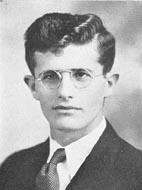
Peter Marco (1910-1944)

Peter Marco was born in 1910 in Berks County, Pennsylvania, the son of Italian immigrants. He graduated from Birdsboro High School in 1929 and entered Dickinson College in Carlisle, Pennsylvania soon after. He graduated with the class of 1932 and immediately entered the Dickinson School of Law, from which he received his LL.B. in 1935. While an undergraduate, he was a member of Mohler Scientific Club and Theta Chi fraternity.

In June 1936, Marco became the first Italian-American to be admitted to the Berks County Bar. After practicing law in the county, he entered the army on June 4, 1941 and was assigned to basic training in Georgia. In October 1941, he was released from selective service as he was actually beyond the peacetime age for service. With the outbreak of war, however, Marco was soon back in uniform. He served as a sergeant of military police in Philadelphia in mid-1942 but by December he had graduated from the Infantry School at Fort Benning, Georgia and had been commissioned. In June 1944 he was assigned to an officer replacement unit in England and was soon serving with Company A, 22nd Infantry Regiment of the Fourth Division in the hedgerow fighting through Normandy.

On September 20, 1944, near Aachen, Germany, Peter Marco was first reported missing in action and was later declared to have been killed.

College Relationship
Alumnus/Alumna Class Year

Howard Malcom (1799-1879)

Howard Malcom was born on January 19, 1799 in Philadelphia, Pennsylvania to John J. and Deborah Howard Malcom. He entered DickinsonCollege in Carlisle, Pennsylvania in 1813 as a part of the class of 1816 but never graduated as the College suffered its first closing of its doors in 1816. Malcom's youthful interest in preaching the Baptist faith had grown in the meantime. He had already received his license to preach before he entered the Princeton Theological Seminary in 1818 and was ordained in April, 1820. He took up his first post in Hudson, New York that same year and served there until 1826 when took on the busy life of a general agent and later secretary of the American Baptist

Sunday School Union. At the same time, he was starting to become involved in missionary work further afield; he became a deputy of the Baptist Missionary Society and later, in 1835, embarked on his own missions to India, Burma, Siam, China, and Africa. Though he was already a well known religious author and speaker, Malcom wrote some of his most noteworthy literature about his missionary travels, notably, in 1839, Travels in South-Eastern Asia, embracing Hindustan, Malaya, Siam, and China, and in 1840, Travels in the Burman Empire. In 1843, largely due to these writings, he received Doctorates of Divinity from Union College and University of Vermont. The previous year, his alma mater, now operating again, had conferred on him the Master of Arts degree.

College Relationship
Alumnus/Alumna Class Year
Honorary Degree - Year
1842

Gilbert Malcolm (1892-1965)

Gilbert Malcolm was born in New York City on October 13, 1892 to Scottish immigrants, Mr. and Mrs. Thomas Duff Malcolm. Growing up in the city where his father was a well-known contractor, he attended the Horace Mann School. Among his young adventures was his notoriety as a very early motorcycle racer, setting a local record for an oval track of 70 miles per hour. He later suffered an accident while racing which ruled out any possibility of other athletic participation.

Malcolm entered Dickinson College in Carlisle, Pennsylvania in the fall of 1911. While an undergraduate, he began his long association with his fraternity, Beta Theta Pi and served as football manager. He had been expelled briefly during his sophomore year for breaching the College hazing regulations, but he graduated nonetheless in 1915. He graduated from the Dickinson School of Law in 1917 and took up employment as a journalist for the Harrisburg Patriot. During the First World War, he served in France with the 79th Division and was a delegate to the organizing meeting of the American Legion in Paris following the war. Malcolm returned to the newspaper, then worked for the Tax Audit Company in Philadelphia before returning to his alma mater in 1922 to begin a remarkable life of service to Dickinson.

Alumnus/Alumna Class Year
President - Years of Service
Acting, 1945-1946; 1959-1961
Honorary Degree - Year
1963
Trustee - Years of Service
1961-1965

Robert Magaw (1738-1790)

Robert Magaw was born in Ireland in 1738. His family moved to Cumberland County, Pennsylvania and became prominent in local affairs around Carlisle. His brother Samuel was a Presbyterian minister who served as the Provost of the University of Pennsylvania, while Robert had built a prominent law practice. In 1774, Robert Magaw was a Carlisle representative to the Provincial Convention, but soon turned his attention to military duty, In June of the following year he was commissioned a major in Thompson's Regiment, which arrived in Cambridge, Massachusetts as one of the first units outside of that colony to rally to the Revolutionary cause. By January 1776, he was in command of the Fifth Pennsylvania Infantry; in August his troops were to cover General Washington's retreat from New York from the strong point at Fort Washington, in what is present-day Harlem. Defeated in the Battle of Long Island, Magaw was forced to surrender his 2,700 men to Lord Howe in October 1776; he remained a prisoner of war for four years. Captured with him was also fellow Carlisle representative John Montgomery.

Released on October 23, 1780, he later served as a member of the state legislature from 1781 to 1782. In 1783, he became, along with Montgomery, a charter member of the board of trustees of Dickinson College in Carlisle and remained so until his death.

College Relationship
Trustee - Years of Service
1783-1790

Robert Samuel Maclay (1824-1907)

Robert Samuel Maclay was born on February 2, 1824 in Concord, Pennsylvania, the son of Robert Maclay and Annabella Erwin Maclay, one of nine children. His parents were highly respected members of the community, running a tanning business and actively involved in the Methodist Episcopal Church. Maclay entered Dickinson College in the fall of 1841 and was elected into the Belles Lettres Society. He graduated with a Bachelor of Arts degree in 1845, received his Masters in 1848, and was later honored with a Doctor of Divinity from his alma mater. One year after his graduation, Maclay was ordained in the Baltimore Conference of the Methodist Episcopal Church. At this time, the Church was suffering the internal struggles that the heated debate over the issue of slavery brought on. In 1847, however, Maclay was appointed as a missionary to China, where he began a lengthy missionary career overseas.

College Relationship
Alumnus/Alumna Class Year
Honorary Degree - Year
1864