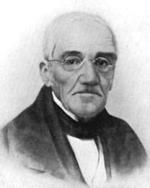
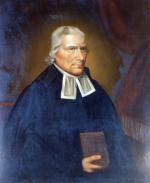
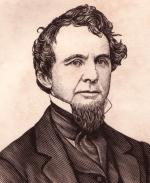
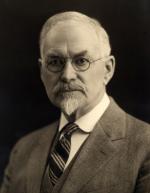
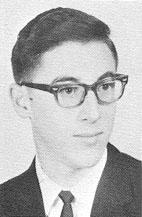
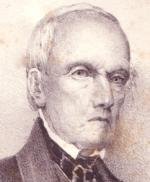
George Metzger (1782-1879)

George Metzger was born on November 19, 1782, the youngest of six children. His parents, Paul and Susanna Maria Bower Metzger, were well-to-do residents of Hanover in York County, Pennsylvania. George was sent to study at Dickinson College in Carlisle, Pennsylvania in 1797. He was elected to the Union Philosophical Society but he did not complete his studies and instead went to study law, first with an attorney in Lancaster, and then with David Watts of Carlisle.

In 1805 George was admitted to the Cumberland County bar. The following year he was appointed deputy attorney general for Cumberland and Adams Counties, and from 1813 to 1814 Metzger served as a Pennsylvania State Legislator. Not being particularly fond of public office, he resumed his law practice after only one term in office. He continued to make his home in Carlisle throughout his life, serving as a trustee of Dickinson College from 1825 to 1833, as well as acting as a founding trustee of Second Presbyterian Church. George Metzger died June 10, 1879.
College Relationship
Alumnus/Alumna Class Year
Trustee - Years of Service
1825-1833

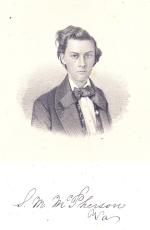
Samuel McClung McPherson (1837-1863)

Birth: October 11, 1837; Lewisburg, Virginia (now West Virginia)

Death: June 14, 1863 (age 25); Richmond, Virginia

Military Service: USA, 1861-63

Unit: 59thVirginia Infantry

Alma Mater: Dickinson College, B.A. (Class of 1858)

Samuel M. McPherson was born to state legislator and Virginia militia officer Colonel Joel McPherson and his wife Amanda McClung McPherson. He was the fourth child of eight. McPherson entered Dickinson College in Carlisle, Pennsylvania, was elected to the Union Philosophical Society there, and graduated with his class in the early summer of 1858.

McPherson studied medicine in Philadelphia and earned his medical degree. Early in the Civil War he became surgeon of the Fifty-ninth Virginia Infantry and a well-known and respected medical officer under General Henry A. Wise.

On June 14, 1863, Samuel McClung McPherson died in the service of the Confederate States near Richmond, Virginia.

College Relationship
Alumnus/Alumna Class Year

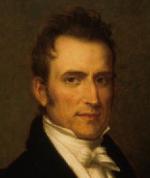
John McLean (1785-1861)

John McLean was born in Morris County, New Jersey on March 11, 1785 as the eldest son and first child of Scots-Irish immigrants Fergus and Sophia Blockford McLean. By the time the young McLean was fourteen, his family had moved to Virginia, Kentucky, and finally to Lebanon, Ohio where the family finally settled to farm. He attended a neighborhood school and took on extra work clearing other farmers' land to pay for private tutors to buttress what had been a poor early education. At eighteen he left for Cincinnati and a two year indentured apprenticeship with John Stites Grano, Clerk of the Court of Hamilton County. He also studied law there with Arthur St. Clair. In 1807 he was called to the Ohio bar.

College Relationship
Trustee - Years of Service
1833-1855

James Xavier McLanahan (1809-1861)

James Xavier McLanahan was born near Greencastle, Pennsylvania in 1809. He was the grandson of renowned Pennsylvania political figure Andrew Gregg (1755-1835) and second cousin to Andrew Gregg Curtin, Class of 1837. He graduated from Dickinson College with the class of 1827, studied law, qualified to the Franklin County bar and set up a practice in Chambersburg, Pennsylvania.

In late 1841, he was elected to the state senate and served there between 1842 and 1844. He was elected as a Democrat from the Sixteenth District to the United States Congress for its 31st and 32nd sessions, serving between March 1849 and March 1853. While in Washington, he was the chair of the House Committee on the Judiciary, but declined renomination in 1852.

James Xavier McLanahan died in New York City on December 16, 1861 and was buried in Chambersburg. He was 52 years of age.

College Relationship
Alumnus/Alumna Class Year

John McKnight (1754-1823)

John McKnight was born in Carlisle, Pennsylvania on October 1, 1754. He prepared for college at the Latin Grammar School in Carlisle and went on to study at the College of New Jersey (Princeton). He graduated in 1773 and went on to study theology under Reverend Robert Cooper. He was licensed to preach by the Presbytery of Donegal between 1774 and 1775 and later was ordained in 1776 or early 1777, although the exact dates are not certain. In 1776 McKnight married Susan Brown of Franklin County, Pennsylvania, with whom he had ten children. In 1783 he was named a charter trustee of Dickinson College in Carlisle, a position from which he would resign in 1794 before moving to New York. After moving, he became both a trustee and a professor of moral philosophy and logic at Columbia University. Also achieving prominence within the Presbyterian Church, McKnight would be selected to preside at the Presbyterian General Assembly in 1795, which met in Carlisle.

College Relationship
President - Years of Service
1815-1816
Trustee - Years of Service
1815-1820

Mordecai McKinney (1796-1867)

Mordecai McKinney was born in Middletown in central Pennsylvania in 1796. His parents, Mordecai and Mary (Molly) Chambers McKinney, who owned a store in the town, sent him to Dickinson College in Carlisle where he graduated with the class of 1814. He then studied law under Stephen Duncan of Carlisle, the father of his classmate Robert Duncan, and was admitted to the Dauphin County bar in Harrisburg in May 1817.

He served as district attorney of Union County between 1821 and 1824; he was then clerk of the Dauphin County commissioners from 1824 until October 23, 1827, when he was appointed an associate judge of the county court. Seen by most as honest and modest, McKinney did not acquire more than a comfortable income but poured his attentions into the study of the law. He published profusely on the subject, including the well known McKinney's Digest of the Laws of Pennsylvania as well as The Pennsylvania Justice of the Peace in two volumes in 1839 and The American Magistrate and Civil Officer in 1850, among others.

College Relationship
Alumnus/Alumna Class Year

James Miller McKim (1810-1874)

James Miller McKim was born November 10, 1810 on a farm near Carlisle, Pennsylvania, the second of eight children. Known as Miller McKim, he entered the local Dickinson College at the age of 13 in September 1824. While at Dickinson College, he was active in the Belles Lettres Literary Society and graduated in 1828. George Duffield, a local “new light” Presbyterian minister, influenced him greatly, and McKim became a Presbyterian minister himself in 1831.

His ministry gave way to his involvement in the abolition movement in 1833, when he attended the Philadelphia Conference which formed the American Anti-Slavery Society. A year later, in a town not supportive of the movement, McKim delivered Carlisle’s first anti-slavery speech at his church and started the Carlisle Anti-Slavery Society. In 1836, McKim, recruited by Theodore Weld, began his career as a full-time abolitionist and as an agent for the American Anti-Slavery Society. He attended the first Pennsylvania Anti-Slavery Society meeting in Harrisburg in 1838. In 1840 he moved to Philadelphia to become the corresponding secretary of the Society and the editor and manager of its publication, the Pennsylvania Freeman. As such, he became an influential supporter of the underground railroad organizations centered in Philadelphia assisting in the many court cases that emerged after the passage of the Fugitive Slave Law.

College Relationship
Alumnus/Alumna Class Year

Bradford Oliver McIntire (1856-1938)

Bradford Oliver McIntire was born April 23, 1856 in York, Maine. He graduated from Wesleyan University with a B.A. and received his M.A. three years later from the same university. Following graduation he became a professor of English literature and history at Maine Wesleyan Seminary in Kents Hill, Maine. He remained there until 1890 when he came to Dickinson College in Carlisle, Pennsylvania to take the Thomas Beaver Professor of Rhetoric and English Literature.

As a professor of English he was a recognized authority of Elizabethan literature and Shakespearean drama. He taught classes on the history of English literature, literary criticism, American literature, and Shakespeare. McIntire’s lectures were slowly dictated and each lesson was a skillfully organized essay. He also taught the three basic courses, English language, English literature, and rhetoric and composition until Montgomery Porter Sellers joined the English department in 1895.

College Relationship
Faculty - Years of Service
1890-1929

Richard Scott McFarland (?-1970)

Richard McFarland was born into a military family in Washington, D.C. In September 1967 he entered Dickinson College in Carlisle, Pennsylvania as a member of the class of 1970 while his father was stationed at the Carlisle Barracks. He did not remain for long, however, leaving after the end of his first year.

McFarland entered the army in July 1967 and had arrived in Vietnam by April 1970. He served as medic in the 5th Special Forces camp. Sergeant McFarland was killed in action on November 9, 1970 when the camp came under siege.

College Relationship
Alumnus/Alumna Class Year

David McConaughy (1775-1852)

David McConaughy was born on September 29, 1775 in Menallen, Pennsylvania, six miles from Gettysburg in what was then York County. He was tutored locally and attended the Rev. Alexander Dobbin's classical School in Gettysburg. He attended Dickinson College in nearby Carlisle. He was elected to the Union Philosophical Society and graduated in September 1795 with the honor of being assigned the Latin Salutary. He continued his studies in theology under Rev. Nathan Grier and on October 5, 1797, the New Castle presbytery licensed him to preach.

After a time as a traveling preacher, he became the head of the congregation at Upper Marsh Creek in October 1800. When in 1813 the new Adams County seat was inaugurated in nearby Gettysburg, the church moved into town. In the ensuing two decades, McConaughy became an active figure in Gettysburg, founding a grammar school in 1807, which the county took over in 1812, as well as founding and serving as first president of the first Temperance Society in Adams County. His reputation as a teacher led Washington College to offer him the post of president in March 1830. Although he did not accept initially due to family difficulties, he accepted the trustees' second offer in December 1831. Installed in May 1832, he served Washington College through difficult times for more than sixteen years until his retirement at age 74 in 1849.

College Relationship
Alumnus/Alumna Class Year
Trustee - Years of Service
1802-1834