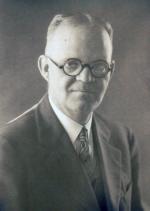
James Miller McKim (1810-1874)

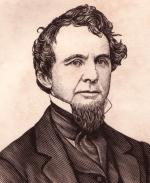
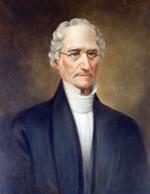
James Miller McKim was born November 10, 1810 on a farm near Carlisle, Pennsylvania, the second of eight children. Known as Miller McKim, he entered the local Dickinson College at the age of 13 in September 1824. While at Dickinson College, he was active in the Belles Lettres Literary Society and graduated in 1828. George Duffield, a local “new light” Presbyterian minister, influenced him greatly, and McKim became a Presbyterian minister himself in 1831.

His ministry gave way to his involvement in the abolition movement in 1833, when he attended the Philadelphia Conference which formed the American Anti-Slavery Society. A year later, in a town not supportive of the movement, McKim delivered Carlisle’s first anti-slavery speech at his church and started the Carlisle Anti-Slavery Society. In 1836, McKim, recruited by Theodore Weld, began his career as a full-time abolitionist and as an agent for the American Anti-Slavery Society. He attended the first Pennsylvania Anti-Slavery Society meeting in Harrisburg in 1838. In 1840 he moved to Philadelphia to become the corresponding secretary of the Society and the editor and manager of its publication, the Pennsylvania Freeman. As such, he became an influential supporter of the underground railroad organizations centered in Philadelphia assisting in the many court cases that emerged after the passage of the Fugitive Slave Law.
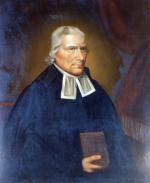
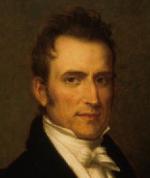
College Relationship
Alumnus/Alumna Class Year

Mordecai McKinney (1796-1867)

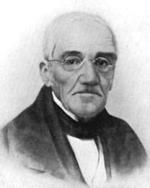
Mordecai McKinney was born in Middletown in central Pennsylvania in 1796. His parents, Mordecai and Mary (Molly) Chambers McKinney, who owned a store in the town, sent him to Dickinson College in Carlisle where he graduated with the class of 1814. He then studied law under Stephen Duncan of Carlisle, the father of his classmate Robert Duncan, and was admitted to the Dauphin County bar in Harrisburg in May 1817.

He served as district attorney of Union County between 1821 and 1824; he was then clerk of the Dauphin County commissioners from 1824 until October 23, 1827, when he was appointed an associate judge of the county court. Seen by most as honest and modest, McKinney did not acquire more than a comfortable income but poured his attentions into the study of the law. He published profusely on the subject, including the well known McKinney's Digest of the Laws of Pennsylvania as well as The Pennsylvania Justice of the Peace in two volumes in 1839 and The American Magistrate and Civil Officer in 1850, among others.

College Relationship
Alumnus/Alumna Class Year

John McKnight (1754-1823)

John McKnight was born in Carlisle, Pennsylvania on October 1, 1754. He prepared for college at the Latin Grammar School in Carlisle and went on to study at the College of New Jersey (Princeton). He graduated in 1773 and went on to study theology under Reverend Robert Cooper. He was licensed to preach by the Presbytery of Donegal between 1774 and 1775 and later was ordained in 1776 or early 1777, although the exact dates are not certain. In 1776 McKnight married Susan Brown of Franklin County, Pennsylvania, with whom he had ten children. In 1783 he was named a charter trustee of Dickinson College in Carlisle, a position from which he would resign in 1794 before moving to New York. After moving, he became both a trustee and a professor of moral philosophy and logic at Columbia University. Also achieving prominence within the Presbyterian Church, McKnight would be selected to preside at the Presbyterian General Assembly in 1795, which met in Carlisle.

College Relationship
President - Years of Service
1815-1816
Trustee - Years of Service
1815-1820

James Xavier McLanahan (1809-1861)

James Xavier McLanahan was born near Greencastle, Pennsylvania in 1809. He was the grandson of renowned Pennsylvania political figure Andrew Gregg (1755-1835) and second cousin to Andrew Gregg Curtin, Class of 1837. He graduated from Dickinson College with the class of 1827, studied law, qualified to the Franklin County bar and set up a practice in Chambersburg, Pennsylvania.

In late 1841, he was elected to the state senate and served there between 1842 and 1844. He was elected as a Democrat from the Sixteenth District to the United States Congress for its 31st and 32nd sessions, serving between March 1849 and March 1853. While in Washington, he was the chair of the House Committee on the Judiciary, but declined renomination in 1852.

James Xavier McLanahan died in New York City on December 16, 1861 and was buried in Chambersburg. He was 52 years of age.

College Relationship
Alumnus/Alumna Class Year

John McLean (1785-1861)

John McLean was born in Morris County, New Jersey on March 11, 1785 as the eldest son and first child of Scots-Irish immigrants Fergus and Sophia Blockford McLean. By the time the young McLean was fourteen, his family had moved to Virginia, Kentucky, and finally to Lebanon, Ohio where the family finally settled to farm. He attended a neighborhood school and took on extra work clearing other farmers' land to pay for private tutors to buttress what had been a poor early education. At eighteen he left for Cincinnati and a two year indentured apprenticeship with John Stites Grano, Clerk of the Court of Hamilton County. He also studied law there with Arthur St. Clair. In 1807 he was called to the Ohio bar.

College Relationship
Trustee - Years of Service
1833-1855

Samuel McClung McPherson (1837-1863)

Birth: October 11, 1837; Lewisburg, Virginia (now West Virginia)

Death: June 14, 1863 (age 25); Richmond, Virginia

Military Service: USA, 1861-63

Unit: 59thVirginia Infantry

Alma Mater: Dickinson College, B.A. (Class of 1858)

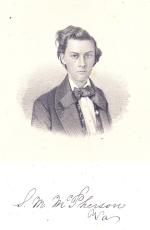
Samuel M. McPherson was born to state legislator and Virginia militia officer Colonel Joel McPherson and his wife Amanda McClung McPherson. He was the fourth child of eight. McPherson entered Dickinson College in Carlisle, Pennsylvania, was elected to the Union Philosophical Society there, and graduated with his class in the early summer of 1858.

McPherson studied medicine in Philadelphia and earned his medical degree. Early in the Civil War he became surgeon of the Fifty-ninth Virginia Infantry and a well-known and respected medical officer under General Henry A. Wise.

On June 14, 1863, Samuel McClung McPherson died in the service of the Confederate States near Richmond, Virginia.

College Relationship
Alumnus/Alumna Class Year

George Metzger (1782-1879)

George Metzger was born on November 19, 1782, the youngest of six children. His parents, Paul and Susanna Maria Bower Metzger, were well-to-do residents of Hanover in York County, Pennsylvania. George was sent to study at Dickinson College in Carlisle, Pennsylvania in 1797. He was elected to the Union Philosophical Society but he did not complete his studies and instead went to study law, first with an attorney in Lancaster, and then with David Watts of Carlisle.

In 1805 George was admitted to the Cumberland County bar. The following year he was appointed deputy attorney general for Cumberland and Adams Counties, and from 1813 to 1814 Metzger served as a Pennsylvania State Legislator. Not being particularly fond of public office, he resumed his law practice after only one term in office. He continued to make his home in Carlisle throughout his life, serving as a trustee of Dickinson College from 1825 to 1833, as well as acting as a founding trustee of Second Presbyterian Church. George Metzger died June 10, 1879.

College Relationship
Alumnus/Alumna Class Year
Trustee - Years of Service
1825-1833

George Washington Mitchell (c.1834-1917)

George W. Mitchell was born in Perry Valley, Perry County, Pennsylvania to William and Alice McBlair Mitchell. He grew up in Juniata Township, attending school there and at the Bloomfield Academy. He entered Dickinson College in Carlisle, Pennsylvania with the class of 1859 and became a member of the Belles Lettres Society, but left Dickinson to study medicine with Dr. Robert C. Brown of Newport, Pennsylvania. Mitchell subsequently graduated from the Jefferson Medical College in Philadelphia in March 1860.

Mitchell returned to Newport to practice and then moved farther west in the county to set up in Andersonburg. He enlisted on February 14, 1863 as assistant surgeon in the 119th Pennsylvania Volunteer Infantry, "The Gray Reserves," then heavily involved with the campaigns of the Army of the Potomac. As one of two or three trained medical personnel in the regiment, Mitchell saw heavy duty when his regiment fought at Chancellorsville, Gettysburg, the Wilderness, and in the Shenandoah Campaign. He mustered out with the 119th on June 19, 1865 and returned to his practice in Andersonburg. Mitchell worked there as a family physician until 1903, when he joined his family in Alliance, Nebraska where they had settled.

College Relationship
Alumnus/Alumna Class Year

Montagu Frank Modder (1891-1958)

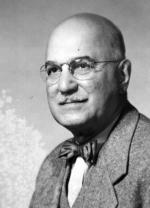
Montagu Frank Modder, Visiting Professor of English at Dickinson College in Carlisle, Pennsylvania for the 1957-1958 academic year, was born on November 24, 1891 in Colombo, Ceylon (Sri Lanka) where his father served as a Chief Justice for the British Government. Modder received his undergraduate education from the Royal College in Ceylon and Springfield College in Massachusetts. In the midst of his studies also served with the British armed forces in the First World War. Modder went on to receive advanced degrees from Clark University (M.A.) and the University of Michigan (Ph.D.), and pursued additional graduate studies at Yale University and at Cambridge and Oxford in England.

Modder taught for five years as Professor of English at Miami (Ohio) University. He also taught at West Virginia University and the University of Michigan, although the majority of his teaching years were spent at Beloit College in Wisconsin, where he was a member of the faculty for twenty-two years (1935-1957).

College Relationship
Faculty - Years of Service
1957-1958

John Frederick Mohler (1864-1930)

John F. Mohler was born on a farm near Boiling Springs, Pennsylvania on October 30, 1864, one five children of Samuel and Elizabeth Williams Mohler. He was educated at the local common schools where he also assisted with teaching in order to help fund his higher education. He entered Dickinson College in nearby Carlisle in December 1883 and graduated with the class of 1887 as its valedictorian. While at the College he became one of the first students elected to the new chapter of Phi Beta Kappa and was active in the Belle Lettres Society.

Following his graduation, Mohler taught mathematics and science for three years at the Wilmington Conference Academy in Dover, Delaware, then, from 1890 to 1894, at the Wesleyan Academy in Wilbraham, Massachusetts. He then broke from his career to enroll in a Ph.D. program at Johns Hopkins University, serving also as an assistant in astronomy and a fellow in physics. With his doctorate secured, Mohler returned to Dickinson College in 1896 as professor of physics. There he remained for the rest of his career becoming a respected author in the sciences and a remarkably admired teacher. The Dickinson Scientific Club, founded in 1867, was renamed the Mohler Society in his honor at his retirement and freshmen prizes in physics carry his name to this day.

College Relationship
Alumnus/Alumna Class Year
Faculty - Years of Service
1896-1930

John Montgomery (1727-1808)

John Montgomery was born in 1727 in Ireland and came to America as a teenager, settling in Cumberland County, Pennsylvania. Among the citizens of Carlisle, Montgomery was well-known as a man of many talents. Over the years he served variously as a storekeeper, farmer, soldier, lawyer, judge, and a politician. He gained respect as an heroic Indian fighter along the western frontier during the French and Indian Wars of the 1750s. Shortly thereafter he was elected sheriff of Cumberland County, the first of many local responsibilities with which he would be entrusted throughout his life.

Although advancing in age, Montgomery did not hesitate to uphold his patriotic duty during the Revolution. Attaining the rank of colonel, he fought with Robert Magaw at the Battle of Long Island and was captured at the surrender of Fort Washington. Within months, Montgomery was released and returned to Carlisle and became involved with the political scene. He was appointed to the Council of Safety and later became a member of both the state legislature and Congress.

College Relationship
Trustee - Years of Service
1783-1808

Johnston Moore (1809-1901)

Johnston Moore was born on September 8, 1809 at Mooredale in Cumberland County, Pennsylvania the only survivor of two sons of James and Nancy Johnston Moore. The Moore family was one of the oldest and largest landed proprietors in the county, a forebearer purchasing several thousand acres on the Yellow Breeches Creek from John Penn in 1780. Johnson's parents both died at an early age and he lived with an aunt near Greencastle and then with his guardian, Andrew Carothers, in Carlisle while he attended Dickinson College. He entered in 1825 with the class of 1829 but withdrew in 1827 when eighteen years years old. According to minutes of faculty meetings, however, Moore continued to socialize with his friends on the campus across High Street; in August 1828 he was officially expelled and banned from the campus after abusing College officers and generally causing a nuisance. Eventually, he took control of his family holdings and embarked on a long career of land management in the county. 

College Relationship
Alumnus/Alumna Class Year

James Henry Morgan (1857-1939)

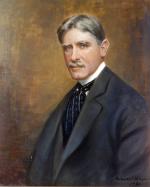
James Henry Morgan was born on a farm near Concord in southern Delaware on January 21, 1857. He prepared at Rugby Academy and entered Dickinson College in Carlisle, Pennsylvania in September 1874 as one of a freshman class of sixteen students. He elected to take the Scientific Course, became a leading debater with the Union Philosophical Society, and sat on the editorial board of the Dickinsonian. He won the Pierson Gold Medal for Oratory as a junior and gave the Latin Salutory at his commencement in 1878.

Following graduation, he taught at the Pennington School and at his old school of Rugby, before being named in 1882 to head the Dickinson Preparatory School. Soon after, he joined the faculty as an adjunct professor of Greek. He was librarian from 1893 to 1900, consolidating the three College collections into Bosler Hall. In 1890 he was promoted to full professor and also married Mary Curran, an alumna of 1888. He received an honorary doctorate from Bucknell in 1892 and entered the Methodist ministry in 1895. Beginning in 1903 he was the dean of the College under Presidents George Reed and Eugene Noble.

College Relationship
Alumnus/Alumna Class Year
President - Years of Service
1914-1928; 1931-1932; Acting, 1933-1934
Faculty - Years of Service
1882-1933
Trustee - Years of Service
1931-1939

May Morris (1886-1967)

May Morris was born to William Wilkinson and Mary Lutner Collison Morris on June 29, 1886 in Greenwood, Delaware. The Morris family had been occupying an estate there, known as "Morris’ Pleasure," since before the American Revolution. Morris enrolled at Dickinson College in Carlisle, Pennsylvania, earning a bachelor of philosophy degree in 1909. She was awarded a degree from the Pratt Institute of Library Science in Brooklyn, New York in 1917. She then began to work in the library at Bryn Mawr College, remaining there for ten years.

Morris then returned to her alma mater to begin her tenure as librarian in 1927. Under her management, the library grew significantly through the years. An intelligent, quiet, and tactful professional, she brought the College Library from rather inadequate resources, both in materials and in space, to a respectable library which well supported the college curriculum of the day. Her concern for preserving the College's past led her to begin to develop a collection of "Dickinsoniana," and these efforts directly influenced the appointment of a curator of the collection, Charles Colman Sellers and the establishment of the Archives and Special Collections department years later. A mark of Morris' success is the fact that the college library doubled its holdings during her tenure, and the annual budget increased more than eight times.

College Relationship
Alumnus/Alumna Class Year
Faculty - Years of Service
1927-1956

Mary Elizabeth Moser (1950-1996)

Mary Moser was a 1972 graduate of Dickinson College in Carlisle, Pennsylvania, majoring in Latin. She won the Mervin Grant Filler Memorial Prize in classical languages and was named Outstanding Senior Woman.

After such diverse positions as assistant director of admissions at Dickinson to administrator of the American Research Institute in Turkey, she went on to graduate school in classical archaeology at the University of Pennsylvania and earned her Ph.D. in 1982.

She returned to Dickinson's classical studies department in 1982 as an assistant professor teaching Latin and Greek. For fourteen years, she was a teacher both on campus and in study abroad endeavors in Italy and Britain, along the way winning the Ganoe Award for Inspirational Teaching and the Dickinson Award for Distinguished Teaching.

On June 27, 1996, Mary Moser died in Carlisle following a long and valiant battle against cancer.

College Relationship
Alumnus/Alumna Class Year
Faculty - Years of Service
1982-1996

Franklin P. Mount Pleasant (1884-1937)

Franklin Mount Pleasant was born on the Tuscarora reservation near Niagara Falls, New York in 1884. He entered the Carlisle Industrial (Indian) School in Carlisle, Pennsylvania in 1904, and during his three full years there he distinguished himself as an outstanding football player and an accomplished pianist. He played quarterback in 1905 and left halfback in 1906 and 1907. With men like Mount Pleasant and the famous Jim Thorpe, it was little surprise that the Carlisle Indians teams of these years were legendary. (The "Pop" Warner coached Indians did not give up any points at home between 1901 and 1908.) While a member of the Carlisle Industrial student body, Mount Pleasant attended classes at the Dickinson Preparatory School and was able to enroll in the College in 1908 as a member of the class of 1910.

College Relationship
Alumnus/Alumna Class Year

Paul J. Neely (c.1945-1969)

A political science graduate of the class of 1967 at Dickinson College in Carlisle, Pennsylvania, Paul Neely served as a sophomore member of the Student Senate, was the president of Phi Kappa Psi fraternity, and played three years on the lacrosse team.

Neely was drafted in November 1967 and went to Vietnam in 1968 as a sergeant with the 1st Air Cavalry Division. He died in Vietnam on April 27, 1969 from wounds he had suffered a day earlier.

College Relationship
Alumnus/Alumna Class Year

William Neill (1778?-1860)

William Neill was born to William and Jane Snodgrass Neill in McKeesport, Pennsylvania in April 1778 or 1779, though the exact date is unknown. When still an infant, his father was killed by a band of Indians, and soon thereafter his mother died as well. After of her death, William and his five siblings were scattered among family relatives. Neill moved to Canonsburg, Pennsylvania where he attended country schools and later became a clerk in a country store. In 1797, he entered the Canonsburg Academy with the intention of becoming a Presbyterian minister. He enrolled in Princeton University, graduating in 1803. He immediately took a job as a tutor at Princeton, and on October 5, 1805 he married his first wife, Elizabeth Van Dyke, with whom he had two children. In that same year, Neill became a pastor in Cooperstown, New York, and while there he tutored James Fenimore Cooper and his brother Samuel. He would later take positions in Albany, New York and Philadelphia. In 1809, his wife Elizabeth died, and on February 25, 1811 he married Frances King.

College Relationship
Honorary Degree - Year
1824-1829

Harry Whinna Nice (1877-1941)

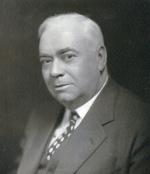
Harry W. Nice was born in Washington D.C., on December 5, 1877 the son of Methodist minister Henry Nice and his wife Drucilla Arnold Nice. The family moved to Baltimore, Maryland soon after and he was educated in the public schools there. He was prepared for college at Baltimore City College and entered Dickinson College in Carlisle, Pennsylvania with the class of 1899 in 1896. He studied at the College for only one year. He left to study law at the University of Maryland, where he graduated with a LL.B degree in 1899.

Nice began a long and distinguished political career with the Republican Party when he was elected to the Baltimore city council in 1903. In swift succession, he served as secretary to the mayor of Baltimore, supervisor of elections in the city, and as a state's attorney. In an initial run for governor in 1919 when he went down to narrow defeat to his law school classmate and grandson of a Dickinsonian in the class of 1853, Albert C. Ritchie. He then distinguished himself as a tax appeal judge between 1920 and 1924 but came to national prominence in 1934 when he defeated the sitting the Democratic governor, his old rival Ritchie, on the unlikely platform that Ritchie was not doing enough in Maryland to aid in President Roosevelt's national recovery efforts. His effective political career came to an end before the end of the decade, however, when he was defeated for re-election in 1938 and again in the 1940 Senate race in Maryland.

College Relationship
Alumnus/Alumna Class Year
Honorary Degree - Year
1935

John Anthony Nicholson (1827-1906)

John A. Nicolson was born in Laurel, Delaware on November 17, 1827. He was educated at a preparatory seminary in Nelson County, Virginia, possibly the Presbyterian school at Lynchburg, and entered Dickinson College in Carlisle, Pennsylvania with the class of 1847 in 1843. He was elected as a member of the Union Philosophical Society but withdrew from the College in 1845. He studied law in with Martin W. Bates in Dover, Delaware and took up practice there in April 1850.

He was briefly superintendent of schools in Kent County in 1851 and extended his civic duties in a very different role in the county when he became brigadier general of militia in 1861. He was elected to the United States Congress in 1864 as a Democrat, beating Republican and Ultimate Unionist Nathaniel Smithers, a fellow Dickinsonian. He served two terms, during the first on the Committee of Elections and in the second the Appropriations Committee. He returned to private practice in Dover in 1869.

In August, 1848, he had married Angelica Killeen Reed of Dover and the couple's son, John Reed Nicholson, served later as the chancellor of the high court of the state of Delaware between 1895 and 1909. John Anthony Nicholson died in Dover on November 4, 1906 and was buried in the Presbyterian Cemetery there.

Image courtesy of the National Archives.

College Relationship
Alumnus/Alumna Class Year

Charles Casper Nickel (1916-1944)

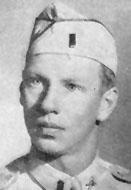
Charles Casper Nickel was born in Loysville, Pennsylvania in 1916 and was a graduate of Duncannon High School. He entered Dickinson College in Carlisle, Pennsylvania in 1933 but left after one year of study in the scientific course. During his time at the College he was a member of Theta Chi fraternity. Eventually, he attended journalism school and became an editor and publisher in Perry County, Pennsylvania.

He joined the army soon after Pearl Harbor and served two years before being commissioned at Fort Eustis, Virginia. He was assigned to an anti-aircraft battery in the Pacific theater. On December 8, 1944, during a Japanese attack on the Buri Airfield on Leyte Island, he was mortally wounded and died the next day. He was buried in Dulag Cemetery on Leyte, Republic of the Philippines.

College Relationship
Alumnus/Alumna Class Year

Charles Nisbet (1736-1804)

Charles Nisbet was born on January 21, 1736 to William and Alison Nisbet; William was a schoolteacher at Long Yester near Haddington, East Lothian County, Scotland. By 1754, Nisbet had completed studies at both the high school of the university in Edinburgh and had entered Divinity Hall to prepare for the ministry. He was licensed by the Presbytery of Edinburgh on September 24, 1760, and began preaching at churches in the Gorbals, near Glasgow. On May 17, 1764, he was ordained in the Presbytery of Brechin and assigned to a church in Montrose, in Forfar. Two years later, he married Anne Tweedie and his first son Thomas was born. The Nisbets had three more children, Mary, Alison (1773) and Alexander (1777).

Active, studious, and blessed with a remarkable memory, Nisbet could speak nine languages, and developed a high reputation in Scotland for scholarship. He became a member of the General Assembly of the Church of Scotland, and was outspoken in his defense of strict Calvinism. He was awarded a doctorate of divinity degree from Princeton University in 1783; it was Nisbet who had recommended fellow Scotsman John Witherspoon for that institution's presidency.

College Relationship
President - Years of Service
1785; 1786-1804
Faculty - Years of Service
1784-1804

Eugene Allen Noble (1865-1948)

Reverend Eugene Allen Noble was born in Brooklyn, New York on March 5, 1865. He prepared for college at Trinity School in New York City and went on to the Centenary Collegiate Institute in Hackettstown, New Jersey. He received a Ph.B. from Wesleyan University in 1891. In 1892, he married Lillian White Osborn, his spouse until her death in 1930. After graduate work at Northwestern University, he became a member of the New York Eastern Conference of the Methodist Church. Noble served in several capacities in the ministry, including a term as the Superintendent of the Methodist Hospital in Brooklyn beginning in 1896. He returned to the Centenary Collegiate Institute as president from 1902 to 1908, and thereafter was named as the president of Goucher College in Baltimore, Maryland. He was the secretary of the First National Peace Congress held in Baltimore in 1911 and was the editor of its proceedings. By this time he had also been awarded honorary degrees from St. John's College, Wesleyan, and Dickinson.

College Relationship
President - Years of Service
1911-1914
Honorary Degree - Year
1906

Wilbur Harrington Norcross (1882-1941)

Wilbur Harrington Norcross was born June 28, 1882 in Ralston, Pennsylvania. He attended Dickinson Seminary in Williamsport, Pennsylvania for two years before matriculating into Dickinson College in Carlisle, Pennsylvania as a student in 1905. At Dickinson, he received both his B.A. (1907) and M.A. (1913). He attended Johns Hopkins University for graduate work, receiving his Ph. D. in psychology in 1920.

During this time he was a Methodist minister for one year in Duncannon, Pennsylvania before returning to the Dickinson Seminary to teach Greek and Latin. He became dean by 1912, but left that post to attend Johns Hopkins in 1914. Norcross joined the Dickinson College faculty in 1916 as an associate professor of philosophy and education. When the war interrupted both his graduate studies and his teaching, he served at Love Field in Dallas, Texas as commander of a medical research laboratory for the air service, rising to the rank of major.

He returned to Dickinson in 1920, and, having completed his degree from Hopkins, switched his teaching fields and became an associate professor of psychology and philosophy. Norcross was instrumental in the creation of two distinct departments for philosophy and psychology. In 1924 he became a full professor, and was named to the R. V. C. Watkins Chair of Psychology in 1929.

College Relationship
Alumnus/Alumna Class Year
Faculty - Years of Service
1916-1941

William Brown Norris (1803-1864)

Birth: May 20, 1803; Mifflin County, Pennsylvania

Death: March 22, 1864 (age 61); Memphis, Tennessee

Military Service: USA, 1861-64

Unit: Paymaster

Alma Mater: Dickinson College, B.A. (Class of 1824)

William Brown Norris received his bachelor of arts degree from Dickinson College in Carlisle, Pennsylvania in 1824 and began to study law in Bellefonte. In 1826 he was admitted to the Centre County Bar and began to practice law. However, a loss of his voice forced Norris to abandon that profession; he then moved to Lewistown and became engaged in the iron industry. After several years in this trade, Norris was a surveyor from 1848 to 1852 and was a surveyor for the port of Philadelphia.

A jack-of-all-trades, Norris then entered the insurance business, in which capacity he served until being appointed paymaster of the United States Army. While serving in the army, Norris died in Memphis, Tennessee on March 22, 1864.

College Relationship
Alumnus/Alumna Class Year