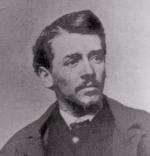
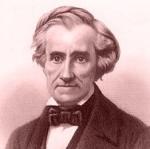
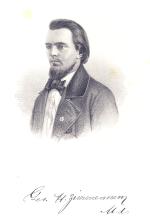
David Flavell Woods (1837-1910)

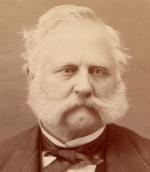
David F. Woods was born in Dickinson Township, Pennsylvania on September 16, 1837, the son of Richard and Mary Jane Sterrett Woods. He was educated in local schools but prepared for higher education in an academy connected with his uncle, the Reverend David Sterrett Woods, in present day Juniata County. He entered Dickinson College in Carlisle, near his birthplace, in 1856 as a sophomore with the class of 1859. He graduated with his class and, for a time, went to Huntington, Pennsylvania to work in the banking house of Bell, Garretson, and Company. He wearied of this career choice quickly and his family funded his study of medicine in Philadelphia, some of it with fellow Dickinsonian and Cumberland County native Dr. R.A.F. Penrose. He graduated from the University of Pennsylvania with a medical doctorate in 1862.

Woods was a resident at the Blockley Hospital for a year and then at the Episcopal Hospital in 1864. He opened his own practice on South Thirteenth Street in Philadelphia in the spring of 1865. He also assisted in instruction with the University of Pennsylvania medical school, though he was forced to give up much of this work when his practice became so successful and popular that he had to move to North Fifteenth Street. In 1872, he gave up teaching completely. He did continue with visiting duties at the Episcopal Hospital and, for a long period, at the Presbyterian Hospital in the city.
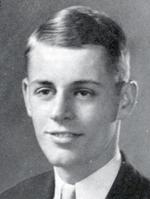
College Relationship
Alumnus/Alumna Class Year

James Sterrett Woods (1793-1862)

James Sterrett Woods was born on April 18, 1793 in Dickinson Township near Carlisle, Pennsylvania, the son of Samuel and Francis Sterrett Woods. He was prepared for college at the Hopewell Academy of John Hooper and entered the local Dickinson College with the class of 1814. Upon graduation with his class, he enrolled at the Princeton Theological Seminary and, in 1817 and 1818, he was licensed to preach, first in New Brunswick, New Jersey and then with the Huntingdon Presbytery in central Pennsylvania.

Woods was offered a half-time position in McVeytown, was ordained as a Presbyterian pastor in April, 1820, and spent much of his time evangelizing among the small town in the hills of the area, preaching in school houses and barns. In April 1824, he also took on the pastorate at Lewistown, Pennsylvania. In 1837, he concentrated his efforts with the latter church, taking on the full term position at $600 per year. He remained in that post for the remainder of his life. Woods had taught at a classical school in McVeytown and was also instrumental in the building and operation of the Lewistown Academy. He was honored with an doctorate of divinity from Princeton in 1850.

College Relationship
Alumnus/Alumna Class Year

Paul V. Woodward (1915-1944)

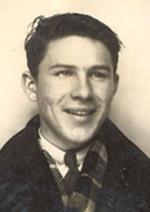
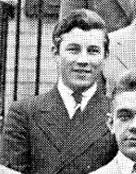
Paul Woodward was born in London on August 2, 1915, where his father, Franklin Woodward, class of 1901, was the European patent attorney for an American company. A fourth generation Dickinsonian, Paul attended high school on Long Island and entered Dickinson College in Carlisle, Pennsylvania in 1932. He graduated with a bachelor of science degree in 1936, played soccer for three years, ran track, and worked on the Dickinsonian. He also served as chapter president of his fraternity, Beta Theta Pi.

Woodward was a civilian worker with the Standard Oil Company in the Philippine Islands at the outbreak of war. With the Japanese invasion at a critical point, he volunteered to drive a truck-load of fuel to besieged Bataan, and was captured when Corregidor fell. Considered a prisoner of war, he was imprisoned in the Philippines until October 1, 1944, when he was to be taken by ship to Hong Kong. The overcrowded ship was too much for the already weakened Woodward and he died a few days into the voyage. He was buried at sea.

College Relationship
Alumnus/Alumna Class Year

Theodore George Wormley (1826-1897)

Theodore George Wormley was born in Wormleysburg, Pennsylvania on April 1, 1826. Shortly thereafter he and his family moved to Carlisle, Pennsylvania where he spent his childhood. Theodore Wormley became a pupil at the Grammar School of the local Dickinson College in 1843. On July 9, 1844, Wormley joined many of his grammar school classmates in the freshmen class of 1848 at Dickinson College. He was active in the Union Philosophical Society but, under the influence of Spencer Fullerton Baird, William Henry Allen, and Thomas Emory Sudler, he excelled in the sciences and mathematics. His skills at Greek and other subjects were a different matter, however, and his marks overall after his sophomore year gave him the lowest ranking in his class. He did not enroll as a full time student in the junior class of 1848 but entered Philadelphia Medical College instead, where he received his degree in 1849.

College Relationship
Alumnus/Alumna Class Year
Honorary Degree - Year
1870

Hendrick Bradley Wright (1808-1881)

Hendrick Bradley Wright was born on April 24, 1808, the oldest child of a farming and merchant family at Plymouth, Pennsylvania. He attended local schools and the Wilkes-Barre Academy. In May 1829, he entered Dickinson College in Carlisle, Pennsylvania with the class of 1831 but did not graduate. Instead, he returned to Wilkes-Barre in early 1831 to study law.

Admitted to the bar later that year, Wright began a legal career in the area. By the age of 26, thanks to his reputation in court and his active support for Andrew Jackson, he was a colonel of militia and district attorney for Luzerne County. He served in the Pennsylvania House and in 1843 was its speaker. Circumstances of politics, including an animus with James Buchanan, halted his national political aspirations, but he was elected to Congress in 1852 and again in 1860 as a Democrat. He returned to private life in 1863, supported George McClellan for president in 1864, and began to write extensively on matters of labor. He drifted slowly from the older elements of the Democratic Party, though he was elected to Congress in 1876 and 1878, with labor support.

He married Mary Ann Bradley Robinson in 1835 and the couple had ten children. Hendrick Bradley Wright died on September 2, 1881 in Wilkes-Barre and was buried in the Hollenback Cemetery.

College Relationship
Alumnus/Alumna Class Year

John Armstrong Wright (1820-1891)

John Armstrong Wright was born in Philadelphia, Pennsylvania, the son of Archibald and Jane Berks Wright, on October 7, 1820. He prepared for college at Wibraham Academy in Massachusetts and entered Dickinson College in Carlisle, Pennsylvania with the class of 1838 in September 1834 when the College reopened under Methodist auspices. A young man of immense size and stature for the time, his career at the College was colorful indeed. He only avoided expulsion for "noise and disrespect" in March 1837 with a direct and formal apology to professor of mathematics Merritt Caldwell, while his membership in Belle Lettres had already seen him fined under society rules for noise and "intoxication." Despite these adventures, the young student also fell under the influence of other professors like John McClintock and John Price Durbin and graduated with an ambition to be a civil engineer and to maintain an abiding connection to the Methodist church.

College Relationship
Alumnus/Alumna Class Year
Trustee - Years of Service
1856-1891

Joseph Payson Wright (1836-1900)

Birth: December 25, 1836; Wilkes Barre, Pennsylvania

Death: October 8, 1900 (age 53); Second Battle of Bull Run

Military Service: USA, 1861-1900

Unit: Regular Army's 4th Artillery

Alma Mater: Dickinson College, B.A. (Class of 1858); Jefferson Medical College, M.D.

Joseph P. Wright, a member of the Sons of the American Revolution, entered Dickinson College in Carlisle, Pennsylvania, where he was elected to the Union Philosophical Society and graduated with the class of 1858 in July of that year. Wright then moved on to study medicine at Jefferson Medical College in Philadelphia.

When the Civil War broke out, Wright enlisted in May 1861 as an assistant surgeon with the rank of first lieutenant. He served with the regular army's Fourth Artillery in Ohio during the remainder of that year. Wright then became medical purveyor for the Department of the Ohio on the staffs of Generals McClellan and Rosencrans. In July 1862, he moved to General Grant's headquarters with the Army of Tennessee, acting as chief of the medical purveyor's department until June 1863. At that time, he became the officer in charge of the army's general hospital in Memphis. Wright was then named assistant medical director for the Army of the Cumberland in March 1864. He served in that capacity until the surrender, when Wright resumed his post as head of the Memphis hospital, a position he held until February 1866.

College Relationship
Alumnus/Alumna Class Year

Vincent Yarashes (1920-1944)

Vincent Yarashes was born in Luzerne, Pennsylvania on August 28, 1920. He was the son of Lithuanian immigrants; his father was a coal miner. He graduated from Luzerne High School and entered Dickinson College in Carlisle, Pennsylvania in September, 1938 with the class of 1942. Yarashes attended Dickinson for two years and was a track and football participant as well as a member of the Commons Club.

He enlisted in the United States Navy in July, 1942 and trained as a naval aviator. Ensign Yarashes died in the South Pacific in a plane crash on July 10, 1944.

College Relationship
Alumnus/Alumna Class Year

James H. Yeingst (1922-1950)

James Yeingst was born in Mount Holly, Pennsylvania, and was a graduate of Carlisle High School. He entered Dickinson College in Carlisle, Pennsylvania with the class of 1943. Excelling in science, he nevertheless left the College while still a sophomore to enlist in U.S. Army Signal Corps in October, 1941. As a student he became a member of Phi Kappa Sigma fraternity.

Yeingst served the first thirteen months of the Second World War in the south Pacific, rising swiftly to the rank of Master Sergeant. He was selected for training as an Army Air Force flight crew cadet and was commissioned a Second Lieutenant in April 1944. Trained as a navigator and as an expert in radar technology, he was sent to England to fly with the 8th Air Force, completing a total of sixty-five missions. Thirty-five of these he flew with the Royal Air Force, most likely as a radar expert on night missions.

Following the war, he contemplated a return to Dickinson but ultimately remained with the Air Force. Yeingst was serving as a radar officer with the rank of captain when he lost his life in the crash of an operational B-36 bomber on November 22, 1950, near Cleburne, Texas.

College Relationship
Alumnus/Alumna Class Year

Seth Hartman Yocum (1834-1895)

Seth H. Yocum was born in Catawissa, Columbia County, Pennsylvania on August 2, 1834. He was educated in rural schools and then went to Philadelphia to learn the printing and editing trade. Yocum entered the class of 1860 at Dickinson College in Carlisle, Pennsylvania. He was a member of the Phi Kappa Pse fraternity and graduated with his class in the early summer of 1860. He then returned to Philadelphia, where he was employed as an editor.

In July 1861, in Philadelphia, Yocum enlisted in Company C, Fifth Pennsylvania Cavalry as a sergeant. He transferred to Company A as second lieutenant in February 1862 and to Company G as first lieutenant in November 1862. Yocum mustered out in September 1864 at the end of his three-year enrollment and took up law studies. He was admitted to the Schuylkill County bar in Pottsville in 1865 and opened a practice.

College Relationship
Alumnus/Alumna Class Year

Henry James Young (1908-1995)

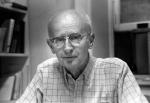
Henry James Young (friends jokingly put a comma between the middle and last names) was born February 16, 1908, in York, Pennsylvania. His family were comfortably placed; in passing he sometimes mentioned a German maid. Orphaned in his teens, he lived for four years at an orphanage in York before entering Franklin and Marshall College. After a varied career, Young in 1957 joined the history department at Dickinson College in Carlisle, Pennsylvania.

At Franklin and Marshall, Young majored in history, but he continued his study of the ancient classics he had begun in high school. He was especially fond of Greek, although his command of Latin was such that his marginalia were often in that language. Young also studied German, having some familiarity with it from home, and Italian. He was president of the college's Goethean Literary Society, the subject of his first book.

When he was twenty, a summer research project took Young to the State Library in Harrisburg. The friend who had promised to drive Young back to York never arrived, so, fortified with a bowl of baked beans at the Alva restaurant, Young proceeded to walk home, across the Susquehanna and down the old Susquehanna Trail, arriving at dawn.

College Relationship
Faculty - Years of Service
1957-1973

Jesse Bowman Young (1844-1914)

Birth: July 5, 1844; Berwick, Pennsylvania

Death: July 30, 1914 (age 70);

Military Service: USA, 1861-64

Unit:  4th Illinois Cavalry, 84th Pennsylvania Volunteers

Alma Mater: Dickinson College, B.A. (Class of 1868); Dickinson College, M.A. (Class of 1871)

Jesse Bowman Young in August, 1861, at the age of seventeen, he joined his uncle, Major Samuel Millard Bowman (1815-1883) in the Fourth Illinois Cavalry and saw action with the Western Army under Grant. When Major Bowman assumed command in 1862 of the 84th Pennsylvania Volunteers - drawn largely from Blair, Lycoming, Dauphin, and Westmoreland counties - he was commissioned in the 84th's Company B. The regiment then fought with distinction in many of the most significant encounters of the war, including Fredericksburg, Chancellorsville, and Gettysburg. When his uncle assumed command of the brigade, Young served as his aide and then became a divisional staff officer, serving in that capacity with Sickles at Gettysburg in the Peach Orchard. Jesse Young left the Army at the end of his enlistment in 1864, having risen to the rank of Captain, but was offered a colonelcy as head of a regiment of African-American volunteers. While Young was waiting for his assignment in Washington D.C., the war ended.

College Relationship
Alumnus/Alumna Class Year
Honorary Degree - Year
1907
Trustee - Years of Service
1882-1888

John Young (1763-1803)

John Young was born on September 4, 1763 in York County, Pennsylvania. Little is known of his early life prior to his enrollment in Dickinson College in Carlisle, Pennsylvania. As a member of the Class of 1788, Young studied under President Charles Nisbet and took fastidious notes. Because of Young's attentiveness, transcripts of Nisbet's lectures on theology, philosophy, and metaphysics survive and are housed in the College's Archives and Special Collections.

After receiving his bachelor's degree in 1788, Young remained at Dickinson to continue his studies in theology with Nisbet, as did several of his classmates. Although he did not earn any advanced degree, Young was licensed to preach by the Philadelphia Presbytery in 1791, and the following year he became the pastor at churches in Timber Ridge and Old Providence, Virginia. His pastorship in Virginia lasted for seven years; he relocated to Greencastle, Pennsylvania in 1799. There he preached until his death in 1803. In 1802, Young became a trustee of Dickinson College.

Young married Mary Fullerton and the couple had at least one son, John Clarke Young, who graduated from Dickinson in 1823 and went on to become president of Centre College in Kentucky. John Young died on July 24, 1803, less than a month before his son John was born.

College Relationship
Alumnus/Alumna Class Year
Trustee - Years of Service
1802-1803

John Clarke Young (1803-1857)

John C. Young was born in Greencastle, Pennsylvania on August 12, 1803 to John and Mary Clarke Young. His father and his uncle were Presbyterian ministers, and he quickly determined to follow that course. To that end, he was educated at home and then at a classical school in New York City, before entering Columbia College there. After three years at Columbia, he withdrew and entered Dickinson College in Carlisle, Pennsylvania, where he graduated with the class of 1823.

College Relationship
Alumnus/Alumna Class Year

George Henry Zimmerman (1838-1898)

George Henry Zimmerman was born to Joshua and Elizabeth Zimmerman on September 20, 1838 in Baltimore County, Maryland. He prepared for undergraduate studies at Washington College in Maryland and then entered Dickinson College in Carlisle, Pennsylvania with the class of 1859. While at the College he became a member of Phi Kappa Sigman fraternity and was elected to the Belles Lettres Society. Following graduation in the early summer of 1859, he studied as a Methodist clergyman and was accepted as a member of the Baltimore Conference.

He filled various pastorates, including Moorefield, West Virginia between 1876 and 1879, at Easton, Maryland from 1879 to 1882, in Woodstock, Virginia 1886-1888, West River, Maryland 1888-1892, and Hyattsville, Maryland 1892-94. He was a presiding elder over the Roanoke District between 1882 and 1886 and over the Moorefield District between 1894 and 1898. In 1898 he took up the editorship of the Christian Advocate, shortly before his death.

In October 1866, he had married Henrietta Ann Rowe of Charles County, Maryland and the couple had three sons. George Henry Zimmerman died on November 3, 1898. He was sixty years old.

College Relationship
Alumnus/Alumna Class Year

John Zug (1818-1843)

John Zug was born in Carlisle, Pennsylvania on March 28, 1818. Little is known of his childhood except that he began to study Latin in 1830. These studies allowed him to enter Dickinson College on September 10, 1834 as a sophomore. During his years at Dickinson College, Zug was an active member of the Union Philosophical Society, giving an address at the society's 47th Anniversary Celebration held July 4, 1836. His oratory skills appear to have been well known in both the community and the College, as he addressed several college and local groups on special occasions throughout his school career. Zug also claimed to have become "religious" on December 6, 1835. What type of event or conversion took place is neither known nor recorded, but presumably his affiliation with the Methodist Church began around that time. Zug graduated from Dickinson with the highest honors on July 20, 1837, and addressed his graduating class at Commencement. He enrolled in the law school on October 3, 1837 and was admitted to the Carlisle Bar on November 9, 1839. While at the law school, he was active in the Pennsylvania Colonial Society, serving as an agent from July 26 to November 26, 1838.

College Relationship
Alumnus/Alumna Class Year