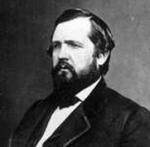
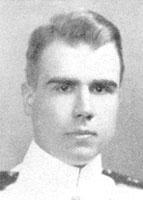
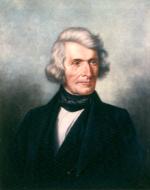
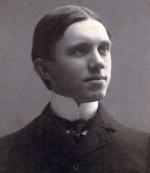
Robert A. Walsh (1920-1943)

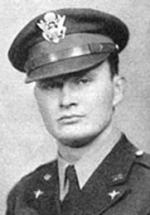
Robert Walsh was born in Plains, Pennsylvania in March 1920 and graduated from Plains High School in 1937. He spent one year at Dickinson College in Carlisle, Pennsylvania as a member of the class of 1941 between his freshman year at Pennsylvania State University and his graduation from the University of Scranton. While at Dickinson he was a pledge of the Phi Kappa Psi fraternity.

He enlisted in the Army Air Corps three weeks after Pearl Harbor; he trained in Alabama before basic flight school at Shaw Field in South Carolina and advanced training at Marianna Field in Florida, where he was commissioned in December 1942. He left the United States for active duty in March 1943. Walsh became part of the India-China Wing and on May 15, 1943 was posted as missing in action when his aircraft failed to return from a flight between India and China. Early in the following year, his parents received word that his body had been found with his crew in the wreckage of his aircraft in northern Burma, the victims of Japanese fire, and he was declared as killed in action.

College Relationship
Alumnus/Alumna Class Year

David Harrison Walton (1830-1876)

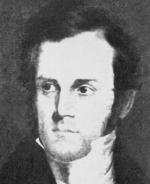
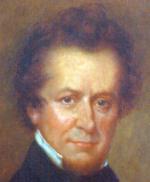
David Harrison Walton was born on October 21, 1830 in Shenandoah County, Virginia, near the town of Woodstock. He entered Dickinson College in Carlisle, Pennsylvania and graduated with his class in the early summer of 1854. He was a superior student and a member of the Union Philosophical Society. Following his undergraduate years, he studied law in Lexington, Virginia.

He practiced law, and when the Civil War broke out he helped raise a company in his home county that became Company K of the 33rd Virginia Infantry, nicknamed the "Shenandoah Sharpshooters," and was commissioned as its first commander. The unit became a part of the Stonewall Brigade that fought famously at the first Battle of Bull Run (Manassas). In June 1862, with the regiment and brigade suffering some discipline and leadership problems, Walton was reduced to the ranks of the 33rd. He fought as an enlisted man and was wounded at the second encounter at Bull Run (Manassas) in August 1862 and was soon restored to the rank of lieutenant before the unit was engaged at Antietam (Sharpsburg) in September 1862. He continued with the 33rd and was wounded in action at Cedar Creek in October 1864.

Following the war, he returned to law practice in Woodstock. David Harrison Walton died in his hometown on July 7, 1876 and was buried in the Massanutten Cemetery in Woodstock. He was forty-five years old.

College Relationship
Alumnus/Alumna Class Year

Francis W. Warlow (1909-2002)

Francis Warlow was born in Philadelphia the son of A. Judson and Mathilde Warlow on July 29, 1909. He was educated at schools in Allentown, Pennsylvania and Baltimore, Maryland before earning his undergraduate degree at the Johns Hopkins University in 1931 with a major in English and a minor in Geology. For almost ten years after his graduation he was an instructor of English at the Carson Long Military Academy in New Bloomfield, Pennsylvania. He was called up for military service in the Army Air Corps in January, 1941 and became an expert on the production of training films in Hollywood. In 1944, he was given command of the Sixth Combat Camera Unit, Thirteenth Army Air Force taking combat footage of fighter and bomber operations in the Pacific. He ended the war with the rank of Lieutenant Colonel.

College Relationship
Faculty - Years of Service
1947-1975

Littleton Quinton Washington (1825-1902)

Littleton Washington was born in Washington D.C. on November 3, 1825, the son of Lund Washington, whose forebears were cousins of the family of the first president. He enrolled with the class of 1845 at Dickinson College in Carlisle, Pennsylvania and, while there, was an active student, gaining election to the Belles Lettres Society. He was forced, though, to withdraw from the College due to family financial difficulties. He found gainful employment instead as a clerk in the U.S. Treasury.

Washington became a freelance journalist and then took the opportunity offered in a job as assistant collector in the United States Customs House in San Francisco, California, traveling by ship via Panama. He landed in the city at the time of the vigilante violence of 1856 and actively stood with the legal city government against the mob violence designed to rid the city of law breakers. With Buchanan's election, his position went to another and he returned to Washington, this time overland by way of Mexico, experiencing sundry adventures along the unruly and dangerous route. Back in the capitol, he drifted somewhat, fighting the occasional duel and moving on the fringes of government. He supported the hard-line Democrats and, when the split came, he followed his states' rights leanings, at one point helping to organize a pro-southern group called the "National Volunteers." When hostilities commenced in April 1861, he left Washington for Richmond.

College Relationship
Alumnus/Alumna Class Year

Norman C. Watkins, Jr. (1919-1944)

Norman Watkins was born in Minersville, Pennsylvania in 1919, the son of a Dickinson Law School graduate. The younger Watkins prepared at Baltimore Polytechnic and entered the Dickinson College in 1940. He withdrew in 1942 to attend the Dickinson School of Law. He withdrew from there in January 1943 to enlist in the United States Army.

Watkins received his commission in July 1943, and in October left for combat duty in Europe as commander of a platoon of Combat Engineers. His unit participated in the D-Day landings, and, after sufficient rest, was then sent back into action in Normandy.

On July 27, 1944, Lieutenant Watkins was killed in action at the head of his platoon.

College Relationship
Alumnus/Alumna Class Year

Richard V. C. Watkins (1888-1927)

Richard Vivian Curnow Watkins was born July 31, 1888 in Mount Carmel, Pennsylvania to Matthew K. and Jennie Curnow Watkins. As a child, he lived at the family’s home at 102 North Hickory Street. He attended Conway Hall, Dickinson College's preparatory school in Carlisle, Pennsylvania, and entered the College proper in 1908 and pursued Special Studies. His brother, M. K. Watkins, was already a student at the College and graduated in 1909. At Dickinson, Watkins became a member of Phi Kappa Sigma, but during his junior year, he was forced to withdraw from school due to his failing health.

After withdrawing, he moved to Brown’s Mills, New Jersey, and later to Burlington. Despite leaving school, however, he maintained a friendship with Professor Wilber H. Norcross, head of the psychology department at the College who had been at College with him in the class of 1907 and a fellow member of Phi Kappa Sigma. On September 12, 1927, at the age of thirty-nine, Watkins died of a lingering illness in his home in Burlington. In 1929, the Richard V. C. Watkins Chair of Psychology was established with $50,000 left to the College in Watkins’ estate. Later that year, his friend Norcross became the first professor to hold the new position.

College Relationship
Alumnus/Alumna Class Year

Frederick Watts (1801-1889)

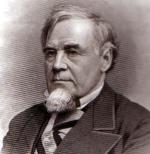
Frederick Watts was born in Carlisle, Pennsylvania, on May 9, 1801. His father was David Watts, a prominent lawyer and member of the first class to graduate from the local Dickinson College. Frederick himself entered Dickinson with the class of 1819 but did not graduate due to the temporary closing of the College in 1816. Frederick went to live with his uncle, William Miles, on Miles' farm in Erie County after the death of David Watts in 1819. However, Henry Miller Watts, Frederick's brother, did graduate from the College in 1824.

College Relationship
Alumnus/Alumna Class Year
Trustee - Years of Service
1828-1833; 1841-1844

Henry Miller Watts (1805-1890)

Henry Miller Watts was born in Carlisle, Pennsylvania, the son of David Watts and the grandson of Revolutionary War generals on both sides of his family. He was educated in the best schools available at the time and entered the local Dickinson College with the class of 1824; his brother, Frederick Watts, had attended earlier, with the class of 1819. Following graduation, Henry studied law with Andrew Carothers, who also trained his brother and, in turn, had trained in the law office of the father of the two as a young man. Henry Watts passed the Cumberland County bar in 1827 and then, perhaps to escape the close professional family he had joined, traveled to Pittsburgh in the west of the state to set up his own practice.

College Relationship
Alumnus/Alumna Class Year

Karl Tinsley Waugh (1879-1971)

Karl Waugh was born on November 30, 1879 in Cawnpore, India. He was the youngest of the seven children born to Reverend J. W. and Jennie M. Tinsley Waugh, both missionaries. Waugh received his early education in India and high schooling in Massachusetts. He graduated from Ohio Wesleyan University in 1900 as a member of Phi Delta Theta fraternity and a member of Phi Beta Kappa. He received his master's degree the following year. He went on to Harvard in 1905 as a Thayer Scholar and then continued as a Weld Fellow until he earned his doctorate in 1907. Following his time at Harvard, Waugh served as an instructor in psychology and philosophy at the University of Chicago and Beloit College. Following war service as a psychologist with the rank of major in the office of the Surgeon General of the Army, he resumed his academic career, holding both teaching and administrative positions at Berea College and also the University of Southern California, where he was named dean of the College of Liberal Arts.

College Relationship
President - Years of Service
1932-1933

Isaac Wayne (1772-1852)

Isaac Wayne was born in 1772, the youngest of two children and the only son of Anthony and Mary Penrose Wayne of Chester County, Pennsylvania. Anthony Wayne was a distinguished Revolutionary War general who had served with Washington at Valley Forge and had contributed to the American victory at the Battle of Monmouth. Young Isaac was educated at the local common schools before graduating from Dickinson College in Carlisle, Pennsylvania in 1792; he may have also attended Princeton for a short time prior to entering Dickinson. After graduation, Wayne studied law and was admitted to the Philadelphia Bar in 1795.

Just as his father had served his country in the military, Isaac Wayne served as representative of the people. He was elected to the Pennsylvania State House of Representatives in 1799 and served a two-year term; he was again elected in 1806. Four years later, he was elected a state senator. At the outbreak of war in 1812, Wayne helped to raise a cavalry troop from Chester and surrounding counties, and became a colonel in the Second Regiment, Pennsylvania Volunteers. When the war ended, he returned to public life, though he ran unsuccessfully as the Federalist candidate for Pennsylvania governor in 1814. He returned to the family farm in Waynesborough in Easttown Township, Chester County to attend to his estate there.

College Relationship
Alumnus/Alumna Class Year

Robert Blaine Weaver (1850-1927)

Robert Blaine Weaver was born in Carlisle, Pennsylvania on March 7, 1850 to John H. and Lacey Davidson McCord Weaver. He attended the local Dickinson Preparatory School, before entering the College proper in 1870. Weaver joined the Theta Delta Chi fraternity at Dickinson and graduated from the College in 1874.

He went on to become a businessman in Carlisle. Throughout his life, he was an active member of the Union Philosophical Society and the Second Presbyterian Church of Carlisle. In his later years, he resided with his sister, Laura Davidson Weaver, at 127 North Hanover St., the house in which the two were born.

On August 12, 1927, Weaver died, bequeathing his entire estate, valued at approximately $65,000, to his sister, with the money to be directed to Dickinson upon her death. On July 15, 1932, Laura Davidson Weaver died, leaving $35,296 and the property on North Hanover St., appraised at $7000, to the College. With this gift, the Robert Blaine Weaver Chair of Political Science was established in 1950.

College Relationship
Alumnus/Alumna Class Year

Edwin Hanson Webster (1829-1893)

Edwin H. Webster was born at Churchville in Harford County, Maryland to Henry and Martha Webster on March 31, 1829. From a Presbyterian family, he prepared for college at the local Academy and later at the famed New London Academy in Chester County, Pennsylvania. He entered Dickinson College in Carlisle, Pennsylvania in 1844 and graduated three years later with the class of 1847.

College Relationship
Alumnus/Alumna Class Year

Erastus Wentworth (1813-1886)

Erastus Wentworth was born in Stonington, Connecticut on August 5, 1813. He was educated at local and Congregationalist schools until at eighteen he converted to Methodism at a revival. He attended the Cazenovia Seminary beginning in 1832 and by 1837 had earned an undergraduate degree at Wesleyan University.

He embarked on his teaching career at Gouverneur Wesleyan Seminary in 1838, serving under the young Jesse Truesdell Peck. He followed Peck to his new post as head of the Troy Conference Academy in Poultney, Vermont in 1841. In 1846 Wentworth himself was named to the presidency of McKendree College in Lebanon, Illinois. In 1850 he was unanimously elected to the chair of Natural Philosophy and Chemistry at Dickinson College in Carlisle, Pennsylvania, replacing Spencer Fullerton Baird who had resigned to accept a position as Assistant Secretary of the Smithsonian Institution in Washington, D.C. His old mentor Peck was again involved in this appointment as he was currently serving as the tenth president of Dickinson. Allegheny College had awarded him a doctorate in 1850, and Doctor Wentworth's combination of preaching skills and a witty but gentle sarcasm made him a extremely popular professor among students at the College over the next four years. But in 1854, he resigned his position to lead a Methodist Mission to Foochow in China, taking with him some of the Dickinson graduating class, notably Otis Gibson.

College Relationship
Faculty - Years of Service
1850-1854

Jesse Wharton (1776-1833)

Jesse Wharton was born in Covesville in Albermarle County in Virginia on July 29, 1776, a year after his brother Austin Wharton (1775-1835). Both attended Dickinson College in Carlisle, Pennsylvania and graduated with the class of 1794. While his brother Austin went on to practice medicine in Cumberland County, Virginia, Jesse studied the law and was admitted to the Bar in his home county. He moved to Nashville, Tennessee with his practice and was elected as a Republican to the Tenth Congress in 1807 serving only one term. He remained prominent in Tennessee Republican circles and five years later was appointed to the United States Senate to fill the vacancy caused by the resignation of George W. Campbell. He served from March 17, 1814 to October 10, 1815, when a successor was elected.

He continued his law practice in Nashville although President Andrew Jackson appointed him as a member of the board of visitors to the United States Military Academy, West Point, New York in 1832. He married and had at least one daughter, Sarah, who married Thomas Jefferson Green of North Carolina. Green was later a general in the Texas forces and a hero of the Texas Revolution. Wharton also raised and educated his brother William's orphaned sons, both of whom also later played a prominent role in the Texas War of Independence. Jesse Wharton died in Nashville on July 22, 1833.

College Relationship
Alumnus/Alumna Class Year

Robert Scott Whitman, Jr. (?-1942)

Robert Whitman was from Binghamton, New York, where he graduated from Central High School. He entered Dickinson with the class of 1938, but spent only his freshman year at Dickinson before transferring to the United States Naval Academy. He graduated from Annapolis in 1939. While at the College, he became a member of Phi Delta Theta fraternity and participated in freshman football. Whitman lost his life on June 4, 1942, while in action as a Navy pilot during the Battle of Midway.

College Relationship
Alumnus/Alumna Class Year

William Wilkins (1779-1865)

William Wilkins was born in Carlisle, Pennsylvania on December 20, 1779, one of ten children of Captain John Wilkins, an influential Presbyterian land-owner who later went into business in Pittsburgh, and his wife Catherine Rowan. His sister, Nancy Wilkins, married Ebenezer Denny, the first mayor of Pittsburgh, and Hamar Denny, who also attended the local Dickinson College, was his nephew. William returned to his birthplace to enter Dickinson's class of 1802 but did not graduate and instead studied the law under David Watts.

He was admitted to the Pittsburgh Bar in December 1801 and began a private practice. He later entered manufacturing and banking, becoming the first president of the Bank of Pittsburgh in 1814. He was elected to the state house as a Federalist in 1821 but resigned soon after to become the presiding judge of the fifth judicial district of Pennsylvania. In 1824, he became a federal judge and in 1831 was selected to the United States Senate as a Jacksonian Democrat. He served until 1834 when he was named Minister to Russia after challenging Van Buren's bid for the vice presidency. When he returned, he served briefly in the House until President Tyler appointed him to be his Secretary of War in February 1844, a post in which he advocated western territorial expansion. When he left this position in 1845, it was his last involvement with politics other than a short term as a Democratic state representative in between 1855 and 1857.

College Relationship
Alumnus/Alumna Class Year

George Short Williams (1877-1961)

George S. Williams was born in Ocean View, Delaware on October 21, 1877 to W.S.H. and Catherine Williams. He was educated at local schools and at the Wilmington Conference Academy, now Wesley College. He entered Dickinson College in Carlisle, Pennsylvania in 1897 and enrolled in the classical course. He was an active student, with the nickname "Ducky," and he participated in varsity track and varsity football on the outstanding teams of 1898 and 1899. He was also elected to the Belles Lettres Society before he graduated with the class of 1900.

Williams began a teaching career in Toddville, Maryland after graduation and, in 1902, moved to Michigan, where he taught at Ironwood High School. He left education to become the superintendent of a lumbar plant in Stearns, Kansas in 1903 and then moved on in the same business to Delaware in 1905 until his business standing found him elected mayor of Millsboro, Delaware between 1921 and 1927. Williams then took on a series of Delaware state positions, including president of the state board of education 1927-1934, treasurer of Delaware 1929-1933, and deputy motor vehicle commissioner 1935-1937. He was active in Republican politics and was elected to the U.S. Congress in 1939. He was not re-elected in November 1941 and returned to Delaware as the state motor vehicle commissioner 1941-1946. He last significant political role was as the administrative assistant to Delaware Senator John J. Williams between 1947 until 1959.

College Relationship
Alumnus/Alumna Class Year

John William Williams (1880-1908)

John William Williams was born on September 12, 1880, in Ocean View, Delaware. He was the son of Reverend W. S. H. and Catharine Williams. He attended preparatory school at Wilmington Conference Academy in Dover, Delaware, before entering Dickinson College in Carlisle, Pennsylvania in 1901 with the class of 1904.

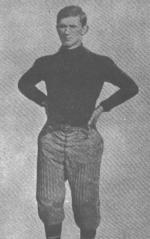
While at Dickinson Williams was a fraternity brother of Phi Kappa Psi, a member of the Sophomore Band, and the Glee Club. He was in Raven’s Claw, and was editor of the Microcosm. Williams also captained the College football team that beat Penn State and Lafayette in 1903. He graduated from Dickinson in 1904.

In the autumn of 1904, Williams enrolled at the University of Virginia to study law. He only remained in Virginia a short time before returning to Dickinson. Williams took a position as the assistant athletic coach to Forrest Craver and later became the head football coach in 1905 and 1906. While coaching at Dickinson, his record was seven wins, eight losses and two games that resulted in a tie. Williams enjoyed his time at Dickinson but his health deteriorated and he was forced to resign in the spring of 1907. He returned to his home state of Delaware that summer.

College Relationship
Alumnus/Alumna Class Year
Faculty - Years of Service
c.1904-1907

Thomas Williams (1806-1872)

Thomas Williams was born in Greensburg, Pennsylvania on August 28, 1806, the son of Robert Williams, a Cecil County, Maryland native. He was educated at local schools and then enrolled in Dickinson College in Carlisle, Pennsylvania, graduating with the Class of 1825. He returned to Greensburg to study law under Judge Richard Coulter and was admitted to the Westmoreland County bar in 1828. Four years later he moved his practice to Pittsburgh. Though his mentor Coulter was a Jacksonian, Williams became a Whig in reaction to Jackson's anti-national bank stance. He edited the Whig journal The Advocate and was elected to the State Senate in November 1838 and served until 1841. He also supported the campaign of William Henry Harrison in 1840. He delivered a widely applauded eulogy in the Pennsylvania Senate when Harrison died soon after taking office. Almost twenty five years later, he delivered another eulogy at the same location for Abraham Lincoln.

College Relationship
Alumnus/Alumna Class Year

Edwin Eliott Willoughby (1899-1959)

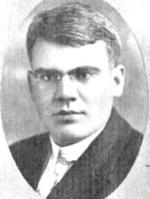
Edwin Willoughby was born in Philadelphia on November 5, 1899, the eldest of the three children of printer Frank Faul Willoughby and his wife Annie. While Edwin was still a child, the family moved to New Jersey. In 1918, Willoughby entered Dickinson College in Carlisle, Pennsylvania with the class of 1922, and participated in the Student Army Air Corps as a private during the First World War. He remained at Dickinson after the war, and was active in the Belles Lettres Literary Society, the New Jersey Club, and the YMCA. He also served as associate editor of the 1922 Microcosm. After receiving his B.A. from Dickinson in 1922, Willoughby earned his M.A. from the University of Chicago two years later while employed as a senior assistant at the Newberry Library of Chicago; ten years later in 1934 he earned his Ph.D. from there as well. He remained at the library until 1929 when he accepted a Guggenheim fellowship to study in London, England for two years.

College Relationship
Alumnus/Alumna Class Year
Honorary Degree - Year
1940

Frances Lois Willoughby (1906-1984)

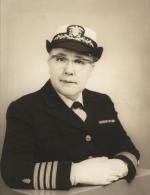
Frances Willoughby was born in Harrisburg, Pennsylvania on July 1, 1905 to Frank and Annie Smith Willoughby. The family moved to Pitman, New Jersey, and Frances was educated at Woodbury High School before entering Dickinson College in Carlisle, Pennsylvania in 1923. Her elder brother Edwin graduated a year earlier as a member of the Class of 1922. While at the College, the younger Willoughby was active in Wilohea, the McIntire Literary Society, and the French Club; she also participated in basketball and volleyball. In addition, she was noted for her musical abilities at the piano and as a member of the Glee Club. After graduation in 1927, Willoughby taught in Shippensburg, Pennsylvania and Camden, New Jersey in order to earn enough money to enter medical school. Receiving her medical degree from the University of Arkansas School of Medicine in 1938, she served her residency at the Traverse City State Hospital, a mental institution in Michigan.

College Relationship
Alumnus/Alumna Class Year

James Wilson (1742-1798)

James Wilson was born in Scotland, near St. Andrews on September 14, 1742. Between November 1757 and June 1765 he studied at St. Andrews, Glasgow, and Edinburgh before he emigrated to Philadelphia. He was engaged as a Latin tutor at the College of Philadelphia for a time before he decided to enter a more lucrative profession and took up the law under the tutelage of John Dickinson. He was admitted to the bar in November 1767. He began his practice in Reading, Pennsylvania before moving to the more Scots-Irish town of Carlisle in 1771. There he quickly began a thriving practice in Cumberland County and seven neighboring counties. By 1774 he was well-known and respected; when in July of that year Carlisle came to open a committee on correspondence he was named as its head and also elected to represent the town at the first provincial conference in Philadelphia. At that time he was a Whig and on the extreme wing of that party; his future career would see him become steadily more conservative, to the point that his fellow Carlislians were to burn him in effigy within two decades.

College Relationship
Trustee - Years of Service
1783-1798

John Winebrenner (1797-1860)

John Winebrenner was born in Glade Valley near Frederick, Maryland on March 25, 1797, the third son of prosperous farmer Philip Winebrenner and his wife Eve Barrick Winebrenner. He was educated first at a country school near his home and then at Frederick before he matriculated at Dickinson College in Carlisle, Pennsylvania with the class of 1818. With the closure of the College in the fall of 1816, he travelled to Philadelphia to study theology under Reverend Dr. Samuel Helfenstein and was ordained in the German Reformed Church in September 1820.

Winebrenner began his ministry soon after, being appointed pastor of four churches in the Harrisburg area. His enthusiastic style, which included favor of revivals and outdoor services, tolerance for neighboring Methodist pastors, and vigorous preaching against theatres, balls, lotteries, gambling, horse racing and, above all, slavery, soon caused dissention within his congregation. By March 1823 he had been locked out of his church - the Stone Church in Shiremanstown - by his own flock and had become estranged from his Synod. In September 1828 he was removed from the Reformed Church.

College Relationship
Alumnus/Alumna Class Year

Herbert Wing, Jr. (1889-1972)

Herbert Wing, Jr. was born on December 8, 1889 in Minneapolis, Minnesota, but grew up in New Bedford, Massachusetts. He graduated Phi Beta Kappa from Harvard University in 1909 and went on to the University of Wisconsin, where he received his Ph. D. in 1915. His career in teaching had already begun by that time, first at the Wilmington High School in Wilmington, Massachusetts in 1909 as an assistant principal, and then at the University of Wisconsin, where from 1910 to 1912 and from 1914 to 1915 he was a student assistant in European history.

Wing came to Dickinson College in Carlisle, Pennsylvania in 1915 as an associate professor of Greek language and literature. In 1920, he became full professor but he had already returned to the teaching of history. While at Dickinson, Wing taught courses in German, Greek, Latin, geography, and all types of history courses. Every freshman entering the College from 1916 to 1946 was required to take Wing's ancient history course and he still is recalled with awe and fondness by generations of alumni. Many, in 2001, still refer to him as "Mr. Three by Five," because of his insistence that students take notes on assigned readings and projected papers on three by five inch index cards.

College Relationship
Honorary Degree - Year
1960
Faculty - Years of Service
1915-1961

Albert Metzger Witwer (1876-1950)

Albert Witwer, or "Wit", was born in Lancaster County on March 3, 1876. He attended the Dickinson Preparatory School in Carlisle, Pennsylvania and then the College proper. He received his B.A. in 1900 and his M.A. in 1905 from Dickinson. While at Dickinson, Witwer was a member of Sigma Chi, Belles Lettres Literary Society, and the track team. He was the manager in chief of the Dickinsonian, manager of the Microcosm, and a winner of the Pierson Prize Junior Oratorical Contest.

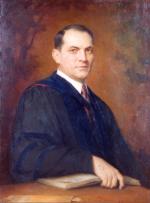
Upon graduation, Witwer became a member of the Philadelphia Conference of the Methodist Church, serving as pastor in a variety of parishes, including the Wharton Street Memorial Methodist Church in Philadelphia. He served as the superintendent of the North District of the Conference for six years. In 1932, Dickinson awarded him an honorary doctorate of divinity.

He served the American Expeditionary Forces in France as an administrator with the Y.M.C.A. in the First World War and after worked and studied in Grenoble. He married Emma Gorsuch in December 1900 and they had three sons, two of whom, Albert and Charles, attended Dickinson. His third son, Russell, pursued a naval career. Albert Witwer died on February 28th, 1950 at the age of 74.

College Relationship
Alumnus/Alumna Class Year
Honorary Degree - Year
1932