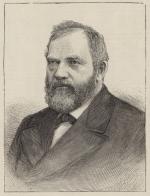
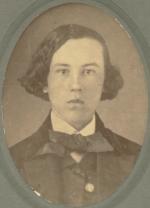
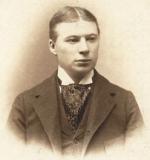
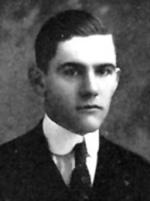
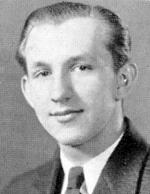
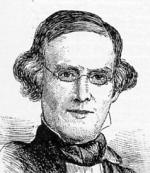
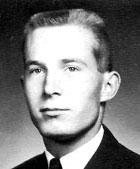
Charles William Super (1842-1939)

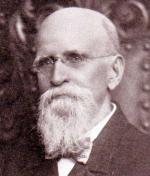
Charles William Super was born near Newport, Pennsylvania to Henry and Mary Diener Super on September 12, 1842. He was educated in local common schools and at the Juniata Valley normal school in Millerstown, before entering Dickinson College in Carlisle, Pennsylvania in 1863. At the College he was elected to the Union Philosophical Society and became a member of Phi Kappa Sigma fratenity. He graduated with his class in 1866. He was the older brother of Ovando Byron Super who later graduated from the College with the class of 1873.

College Relationship
Alumnus/Alumna Class Year
Honorary Degree - Year
1894
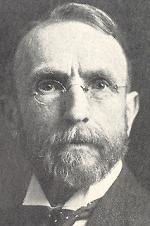
Ovando Byron Super (1848-1935)

Ovando Super was born March 2, 1848 in Juniata Township, Pennsylvania, to Henry and Mary Diener Super. He attended local schools but largely prepared himself for college. He entered Dickinson College in Carlisle, Pennsylvania in 1871 and graduated near the head of the class in 1873. While a student he had been selected to the Belles Lettres Literary Society.

Following graduation, Super taught modern languages at Delaware College from 1873 to 1876. He then traveled to Leipzig and Paris to study German and French. Upon his return to the United States, Super became instructor in languages at the Dickinson Seminary, now Lycoming College; during this time he was awarded his master's degree from Dickinson College. In 1880 he left for Denver College where he took the position of professor of modern languages. While teaching at Denver, he earned a Ph.D. from Boston University. Super returned to his alma mater in 1884, this time as a professor of modern languages, teaching French, German, and Spanish. He also wrote many textbooks for students of the French and German languages. He also edited the Alumni Record at the College. He remained on the faculty at Dickinson until his retirement in 1913. His brother Dr. C.W. Super, class of 1866, had been president of Ohio University.

College Relationship
Alumnus/Alumna Class Year
Faculty - Years of Service
1884-1913

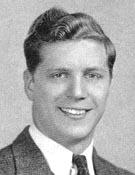
Leonard Peter Supulski (1920-1943)

Leonard Supulski was born in Kingston, Pennsylvania in 1920, one of the twelve children of a Lithuanian immigrant. He graduated from Kingston High School and entered nearby Dickinson College in Carlisle with the class of 1942. He attended the College for four years but fell just short of the credits needed to graduate. He participated in the Commons Club, played basketball and ran track, but his most memorable contribution to campus life was his career as a star football receiver, perhaps the best in College history. His skills as an athlete allowed him to play for the Philadelphia Eagles before enlisting in early 1943.

Supulski entered the Army Air Corps as a private and completed flight navigation training at Selman Field in Louisiana, receiving his commission in July 24, 1943. Following further training at Moses Lake, Washington, and after a short leave to visit his wife of a year, June Lutz Supulski, in her native Boiling Springs, Pennsylvania, he reported in August to the 582 Bomb Squadron for advanced training in Nebraska. Two weeks later, Leonard Supulski was killed in the crash of a routine flight along with seven others near Kearny, Nebraska on August 31, 1943.

College Relationship
Alumnus/Alumna Class Year

William Henry Sutton (1835-1913)

William H. Sutton was born in Haddonfield, New Jersey on September 11, 1835 to Methodist minister Henry Sutton and his wife, Ann Craig Sutton. He went to local schools, then spent a year at the Dickinson Grammar School in Carlisle, Pennsylvania. Sutton entered the college proper in 1852 with the class of 1855. He was elected to the Union Philosophical Society, but in early 1853 there was an outbreak of smallpox at the college, and Sutton did not return when classes resumed. He instead enrolled at Wesleyan College in Connecticut and graduated there in 1857. Sutton taught for a time at the American Institute for the Deaf and Dumb in Hartford and studied law. He entered law school in Albany, New York, but dropped out and finished his legal studies in Philadelphia under William Meredith.

College Relationship
Alumnus/Alumna Class Year
Honorary Degree - Year
1908

George Sweeney (1796-1877)

George Sweeney was born on November 1, 1796 near Gettysburg, Pennsylvania. He entered Dickinson College in Carlisle, twenty five miles to the north, and graduated with the class of 1815. Following his graduation, he studied law in Gettysburg and was admitted to the bar there in 1820.

For ten years Sweeney practiced law in Gettysburg and then moved west to Bucyrus in Crawford County, Ohio in 1830. He was named as the prosecutor of Crawford in 1837 and then was elected in the fall of 1838 as a Democrat to the Twenty-sixth Congress from his district, the 14th of Ohio. Although Sweeney was re-elected to the Twenty-seventh Congress in 1840, he was not a candidate in 1842. He moved for a time to Geneseo, Illinois to practice law in 1853, but returned to Bucyrus in 1856. Sweeney was once again elected as district attorney for Crawford County before he retired.

Sweeney gave up his profession in later years to concentrate on the literary and scientific pursuits that had interested him his whole life. On October 10, 1877, George Sweeney died in Bucyrus, Ohio and was buried in the Oakwood Cemetery there. He was eighty years old.

Editor's note: His surname appears in the Congressional Biography as "George Sweeny" and in the College's 1877 announcement of his death as "George Sweney." Reed's 1905 Alumni Record names him as above.

College Relationship
Alumnus/Alumna Class Year

Mary Buckley Taintor, 1959

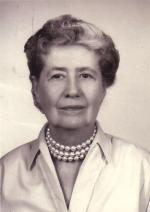
Mary Taintor was born on July 25, 1889 in Rochester, Minnesota. She graduated from Ripon College in 1911 and received a degree from Stanford University in 1918. She was also a student in Italy at the American Classical School in Rome in 1911 and 1912; she also studied at the University of Grenoble in France. Taintor did graduate work at both the University of Chicago (1919) and Columbia University (1926-1928).

Taintor began her teaching career at Milwaukee State Normal School as an instructor of Latin and French from between 1912 and 1917. She also taught Latin and French at Venice High School in California in 1918. In 1919, she returned to Ripon College as a full professor of French.

In 1928, Taintor joined the Dickinson College faculty in Carlisle, Pennsylvania as an associate professor of romance languages in 1928. In 1951 she achieved the rank of full professor, becoming only the third woman to obtain that position at Dickinson College. She later retired in 1959 as professor emerita of romance languages. Mary Taintor died on February 5, 1981, at the age of 90.

College Relationship
Faculty - Years of Service
1928-1959

Roger Brooke Taney (1777-1864)

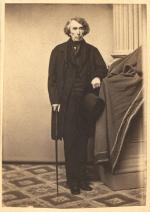
Roger Brooke Taney was born March 17, 1777 on the Taney Plantation along the Patuxent River, in Maryland's Calvert County. The Taney family had come to the colony as indentured servants in the mid-seventeenth century but, after serving out their term of servitude, they later established themselves as prosperous tobacco farmers in the rich agrarian economy of southern Maryland. Taney grew up as a Maryland Roman Catholic with rural gentry privilege, was educated privately and then entered Dickinson College in Carlisle, Pennsylvania in 1792.

While at Dickinson, Taney came under the tutelage of Dr. Charles Nisbet, arguably one of the greatest educators of his day. If the correspondence between Nisbet and Taney’s father throughout 1792-1795 are any indication, the Principal became almost a surrogate father to the young and talented student. Taney was a leading member of the Belles Lettres Society and graduated as valedictorian of the twenty-four students in the class of 1795. This honor he always valued since the students themselves at the time were responsible for such selection.

College Relationship
Alumnus/Alumna Class Year
Honorary Degree - Year
1831

James E. Taylor (1913-1944)

James Taylor was born in 1913 and graduated from high school in Jenkintown, Pennsylvania in 1932. After four difficult academic years, he graduated from Dickinson College in Carlisle, Pennsylvania on June 8, 1936. He was a member of Beta Theta Pi fraternity. After college, he became a credit analyst with the Pennsylvania Company.

The big, red-headed Philadelphian enlisted in the Marine Corps as a private in June 1942 and was commissioned as a second lieutenant that September. He went to the Pacific in January 1944 and served in the Marshalls and on Saipan. Taylor was leading his platoon on the landings against Tinian on July 23, 1944 when he was hit by a round from a Japanese sniper and died on board a hospital ship the following day. He was recommended for the Navy Cross. He left a wife and four year old son.

College Relationship
Alumnus/Alumna Class Year

William Prettyman Taylor, Jr. ( ?-1918)

William Taylor was the son of Rev. W.P. Taylor, class of 1890, and arrived at Dickinson College in Carlisle, Pennsylvania from Georgetown, Delaware. He entered with the class of 1918, enrolling in the Latin-Scientific course. He was a member of Belles Lettres Literary Society, of Phi Kappa Sigma fraternity, and the Y.M.C.A. He was also a companion of Russell Flegal in the Mandolin Club.

Taylor withdrew from his junior year to enlist and entered the aviation service. He trained first at Princeton, New Jersey and then in the Fifth Air Cadet Squadron at Ellington Field outside of Houston, Texas. Taylor died at Ellington of influenza on October 19, 1918.

College Relationship
Alumnus/Alumna Class Year

Arthur J. Thomas, Jr. (c.1918 - 1950)

Arthur Thomas grew up in Kingston, Pennsylvania. He had been a student at the Pennington School in New Jersey and entered Dickinson College in Carlisle, Pennsylvania with the class of 1938. He left the College after his freshman year and served more than four years as an artillery officer during the Second World War.

Thomas lost his life in the crash of a "troop train" on a stretch of railway line near West Lafayette, Ohio on September 11, 1950. In the accident, scores of his fellow members of the 28th Division of the Pennsylvania National Guard being transported west were also killed. He was survived by his wife and four infant children.

College Relationship
Alumnus/Alumna Class Year

Philip Francis Thomas (1810-1890)

Philip Thomas was born the son of a prominent physician in Talbot County, Maryland on September 12, 1810. He attended his home academy in Easton and then went on to Dickinson College in Carlisle, Pennsylvania, entering with the class of 1830. He attended during two of the most chaotic years in the history of the College concerning student discipline. Thomas was involved with the November 24, 1828 incident in which the college janitor was ejected from his apartments in the dead of night and damage was caused to the rooms. In December, Thomas and several others were suspended for a month when the faculty discovered their role in this incident. Thomas served his suspension but then was dismissed for refusing to sign the pledge of good behavior that the faculty was requiring of students, after a late January "riot" caused by the mandatory attendance of daily chapel resulted in the suspension of the entire student body. He returned to Maryland and took to studying the law privately. He was admitted to the Maryland Bar in 1831.

College Relationship
Alumnus/Alumna Class Year

Russell Irvin Thompson (1898-1957)

Russell Thompson was born in Reading, Pennsylvania on December 29, 1898, the son and grandson of physicians, which may account for his undergraduate nickname, "Doc." He attended Reading High School and entered Dickinson College in Carlisle, Pennsylvania with the class of 1920. As an undergraduate he was a member of Belles Lettres Literary Society and Kappa Sigma fraternity, served as a cabinet officer in the Y.M.C.A., and was editor-in-chief of the 1919/1920 Microcosm.

After graduation he taught Greek at the Williamsport Seminary before going on to study education and psychology at Yale. While there he was director of the Wesley Settlement House of the Methodist Episcopal Church in New Haven between 1926 and 1928 before earning his Ph.D. in 1932.

He returned to his alma mater for the 1928 fall term to teach in his two doctoral subjects. He was soon promoted to associate professor and helped to develop the teaching of psychology and education at the College during the 1930s. In 1941,when Professor Wilbur Norcross died suddenly, Thompson became full professor, the Richard V.C. Watkins Chair of Psychology and Education, and head of the department.

College Relationship
Alumnus/Alumna Class Year
Faculty - Years of Service
1928-1954

Egloff von Tippelskirch (1913-1946)

Egloff von Tippelskirch was a German exchange student who spent a year at Dickinson College in Carlisle, Pennsylvania under the auspices of the Institute of International Education and received a degree with the class of 1933. The following year saw Jurgen von Oertzen arrive on a similar program.

Born in Charlottenburg on June 5, 1913 near Brandenburg in northern Germany, Tippelskirch attended boarding school at Dahlen, outside of Berlin. He went on to the Universities of Berlin and Freiburg where he took his law examinations before arriving in Carlisle. In the words of the Dickinsonian, "a tall and unassuming boy," he studied American criminal law and history while at the College. He returned to Berlin and ultimately earned his doctorate.

According to reports from his family, Egloff von Tippelskirch served in the German Army on the eastern front where he was captured. He died in February 1946 in a Russian prisoner of war camp. His name does not appear on the Dickinson Second World War plaque in Memorial Hall.

College Relationship
Alumnus/Alumna Class Year

Glenn E. Todd (1890-1973)

Glenn E. Todd was born in Carlisle, Pennsylvania on January 12, 1890 to Robert R. and Phoebe Routzahn Todd. A life-long resident of Carlisle, he attended Carlisle High School, graduating in 1908, and then enrolled at the local Dickinson College. Todd graduated from Dickinson in 1912, but not before becoming an active member of Sigma Chi. He then entered the family business, the Todd Carpet Manufacturing Company, where he would later become co-owner with his brother. During World War I, Todd served as a corporal in the infantry, and on December 24, 1918, he was honorably discharged.

Returning to Carlisle after the War, he became a successful businessman at Todd Carpet and a well known member of the community. In addition to co-owning the carpet business, he became a partner in the Philadelphia Clay Company and the vice-president of the Board of Directors at the Farmers Trust Company. He was also a member of the boards of the Carlisle Hospital, the Mercersburg Academy, and the Homewood Church Homes; president of both the Carlisle Chamber of Commerce and the Carlisle Rotary Club, and a Carlisle Borough council member for fifteen years. Throughout his life, Todd remained involved in Sigma Chi as well, serving as president of the Harrisburg Area Alumni Chapter and treasurer of the Omicron Chapter before being elected to the organization's highest honor, the Order of Constantine.

College Relationship
Alumnus/Alumna Class Year
Trustee - Years of Service
1950-1973

Lemuel Todd (1817-1891)

Lemuel Todd was born in Carlisle, Pennsylvania on July 29, 1817. He entered the class of 1839 at Dickinson College in his home town, took the classical course, and was elected to the Union Philosophical Society. Upon graduation, he studied law in the offices of General Samuel Alexander, an earlier Dickinson graduate, and, when he was called to the Cumberland County bar in 1841, took up a partnership with Alexander and began a practice in Carlisle.

College Relationship
Alumnus/Alumna Class Year

Jacob Tome (1810-1898)

Jacob Tome was born August 13, 1810 in Hanover, York County, Pennsylvania. After the early death of his father, Tome was forced to quit his education and make his own way in the world. He worked at various jobs throughout the country, even teaching for a short while in a country school, despite the fact he had little formal education. In 1833, he established his permanent home in Port Deposit, Maryland.

Tome found success by investing his labor and money into first a lumber company and then eventually prosperous railroad dealings. He also established banks in Port Deposit, Elkton, and Hagerstown in Maryland, and Fredericksburg, Virginia. Through these ventures, Tome proved to be a remarkable businessman, becoming Cecil County, Maryland's first millionaire.

He would prove to be an ardent philanthropist as well, supporting education in particular. As a trustee of Dickinson College in Carlisle, Pennsylvania, he pledged $25,000 toward the construction of a science building in 1883. The completed Tome Scientific Building was dedicated on June 24, 1885. Four years later he announced plans to establish a school in Port Deposit. The Jacob Tome Institute (later the Tome School for Boys) was formally opened in September 1894. As a final gesture to his namesake institution, Jacob Tome bequeathed $3 million to the school in the hopes that it might continue to prosper.

College Relationship
Trustee - Years of Service
1883-1898

William Trickett (1840-1928)

William Trickett was born on June 9, 1840 in the English Midlands town of Leicester. When he was very young his family moved from England to Philadelphia where he lived until he entered Dickinson College in Carlisle, Pennsylvania in 1866. Two years later he was awarded his bachelor of arts degree. Upon graduation in 1868, Trickett assumed the role of principal of the Dickinson Grammar School for one year, followed by service for two years as adjunct professor of philosophy at the College. He earned his master's degree from Dickinson in 1871 and, immediately following, left to tour Europe for two years.

Trickett returned to Dickinson, teaching modern languages for a year, but in 1875 he was among the three faculty members whose contracts were not renewed by President James McCauley. Trickett then began to focus his energies on the law, and in 1876 he was admitted to the Cumberland County Bar Association. In 1890 he received an honorary degree in law from DePauw University, and in that same year he was selected to serve as dean of Dickinson Law School. Trickett would retain this position until his death on August 1, 1928. Trickett Hall on the campus of the Dickinson School of Law is named in his honor. He never married.

College Relationship
Alumnus/Alumna Class Year
Faculty - Years of Service
1869-1871; 1874-1875
Trustee - Years of Service
1925

John Southgate Tucker (1838-1920)

John Southgate Tucker was born on May 31, 1838 in Norfolk, Virginia, where his family on both sides had been prominent since before the American Revolution. He attended the Episcopal School in Alexandria, Virginia and entered Dickinson College in Carlisle, Pennsylvania in 1853 and joined the class of 1855. While at Dickinson, he was elected as a member of the Belles Lettres Society and also became one of the notorious founder members of the Phi Kappa Sigma fraternity. He graduated with his class in the early summer of 1855 and studied for the law.

For a time he was editor of the Norfolk Virginia newspaper and practiced law in the city. At the outbreak of the Civil War he joined the army of the Confederate States and rose to the rank of captain of artillery. Returning home to Norfolk, he served as city attorney between 1866 and 1868; he was the Mayor of Norfolk from 1876 to 1880. As mayor, he was instrumental in persuading a reluctant city council to build a new public school for African-Americans to replace the dilapidated Bute Street School. Later he was a member on nearby Yorktown's centennial commission celebrating the anniversary of the British defeat there. He also worked as federally appointed examiner of land claims at the main United States Land Office in Washington D.C.

College Relationship
Alumnus/Alumna Class Year

Ruby R. Vale (1874-1961)

Ruby Vale was born in Carlisle, Pennsylvania on October 19, 1874 the son of of Joseph and Sarah Eyster Vale. His father had been a Civil War cavalry officer. Vale attended the Dickinson Preparatory School in Carlisle, Pennsylvania and entered the College proper with the class of 1896 in 1892. He became a member of Phi Kappa Psi fraternity and was elected as a member of Belles Lettres Society. A particularly active and admired student, he edited both the Dickinsonian and the Microcosm. He was also an outstanding athlete who played three years of varsity football as halfback and quarterback and captained the 1895 team.

Following his undergraduate years, he spent a time as the principal of the Milford (Delaware) Classical School. He then enrolled in the Dickinson School of Law and graduated with top honors for his law degree in 1899. Though remaining a resident of Milford, he began his practice before the Pennsylvania bar and developed into a well known lawyer and legal scholar. He also developed his specialty in corporation and insurance law; his offices were by then in Philadelphia. As a legal scholar, he published widely on Pennsylvania law, his best known work was his ten volume Vale's Pennsylvania Digest.

College Relationship
Alumnus/Alumna Class Year
Trustee - Years of Service
1917-1961

Richard H. Vaughan (-1918)

Richard Vaughan was a member of the Law School class of 1918 at Dickinson College in Carlisle, Pennsylvania. A "long, lanky, and lean" man from Royersford in Montgomery County, Pennsylvania, he was a member of Delta Chi fraternity and also served as class vice president in his "middler" year.

Vaughan served in Company A, 111th Infantry of the American Expeditionary Forces and was "mentioned in dispatches" for his actions at Fismette in France, August 1918. The citation read, in part, that Vaughan, though already "severely gassed" and wounded in the scalp on August 9, showed "extraordinary heroism" in refusing "to be evacuated and continued to command his platoon for four days until relieved." The official dispatch concluded that by Vaughan's "bravery and encouragement to his men he exemplified the highest qualities of leadership." He was later killed in action.

John Verban, Jr. (1911-1944)

John Verban, Jr. was born on July 21, 1911, the son of John and Mary Fliszar Verban of Bethlehem, Pennsylvania. He attended Allentown Preparatory School before entering Dickinson College in Carlisle, Pennsylvania in September 1931 as a member of the Class of 1935. During his time at the College he was a member of Theta Chi fraternity. However, Verban withdrew from Dickinson in June 1933 following the death of his father. He took a job in an insurance company, and in October 1939 he married Matilda Borda of Bethlehem. The couple had a son, John Borda Verban, in 1943.

Verban served his country during the Second World War as a private in Company F of the 337th Infantry. Fighting in Italy in October 1944, he was seriously wounded in combat. Family records indicate that Verban died in an Italian hospital near Castello Fiorentino on October 16, 1944, and was buried there. Some years later the body was exhumed and buried in Bethlehem. Further details of his sacrifice are unknown.

College Relationship
Alumnus/Alumna Class Year

Henry Vethake (1791-1866)

Henry Vethake was born in British Guiana, in what was then the county of Essequibo, on May 26, 1791 to a family of Westphalian educators. His father, Fredrich Albert von Vethake, taught for a time at Vassar College. Henry arrived in Boston in 1797 and later moved to New York City where he received some of his early education. He graduated from Columbia College in 1808 and in 1813 taught mathematics and geography for a time at his alma mater. He went that same year to a similar position at Queen's College, New Jersey, now Rutgers University. He moved on to Princeton in 1817 for four years, teaching mathematics and chemistry, until he took up the chair of mathematics and natural philosophy at Dickinson College in Carlisle, Pennsylvania. He also taught chemistry for a time.

College Relationship
Faculty - Years of Service
1821-1830

Ernest Albert Vuilleumier (1894-1958)

Ernest Vuilleumier was born on March 1, 1894 in New York City, New York. He graduated from the University of Pennsylvania in 1914 and obtained his Ph.D. from the University of Berne, Switzerland through a 1916 Rosengarten traveling fellowship. While he was there, the United States entered the First World War and Vuilleumier made his way to France to enlist with the 162nd United States Infantry in Bordeaux in 1918; he later served with the Chemical Service. He had begun his teaching career at the Drexel Institute of Technology in Philadelphia before going abroad and he worked as an industrial chemist between 1919 and 1920 after returning.

College Relationship
President - Years of Service
Acting, 1945-1946
Faculty - Years of Service
1920-1958

Alvah A. Wallace (?-1964)

From Bloomfield, New Jersey, Alvah Wallace was a political science major in the class of 1964 at Dickinson College in Carlisle, Pennsylvania. He was a member of Omicron Delta Kappa honor society, president of Sigma Alpha Epsilon, and a R.O.T.C. graduate.

Lieutenant Wallace died at Brooke Army Hospital Burn Center in San Antonio, Texas in December 1964. He had been critically injured a month before in the crash of his army aircraft at Fort Bragg, North Carolina where he was a pilot with the 82nd Airborne Division. The incident took place just two weeks after his return from his deployment with the United States Peacekeeping Force to the Dominican Republic. An alcove at the Boyd Lee Spahr Library commemorates his life.

College Relationship
Alumnus/Alumna Class Year

James Wallace (1818-1887)

James Wallace was born on March 14, 1818 to a prominent Dorchester County family in Cambridge, Maryland. He entered Dickinson College with the class of 1840 in the autumn of 1836. He was elected to the Belles Lettres Society and graduated with his class in the early summer of 1840. He returned to Cambridge and studied law, gaining admittance to the Maryland bar in 1842 and opened a successful practice.

His success and his local prominence brought him into politics and he served a term in the Maryland house of delegates between 1854 and 1856 and moved on to the state senate between 1856 and 1860. In 1856, having become involved with the American Party, he was a presidential elector, duly casting his ballot for Millard Fillmore. After the outbreak of the Civil War, he helped raise the First Maryland Volunteers (Eastern Shore) in August 1861 and took command as its colonel. The unit was intended to protect Union interests on the Eastern shore and elsewhere in Maryland but in July 1863, the First found itself at Gettysburg fighting on the third day of the battle around Culp's Hill. In the regiment's only day of pitched battle during its entire service, and with Wallace in command, it met and mauled the First Maryland Regiment of the Confederate States Army that contained many of their friends and neighbors from coastal Maryland. The regiment, and its colonel, ended its enlistment and mustered out two days before Christmas in 1863.

College Relationship
Alumnus/Alumna Class Year