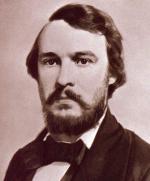
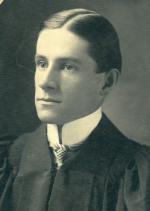
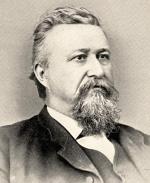
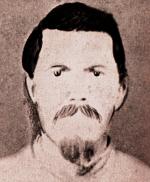
John Fletcher Hurst (1834-1903)

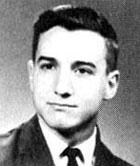
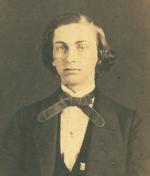
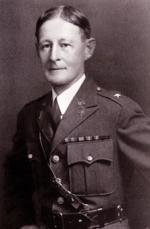
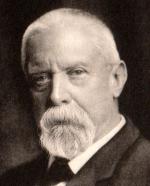
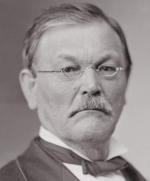
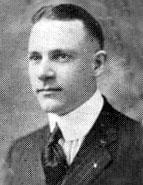
John Fletcher Hurst was born near Salem, Maryland on August 17, 1834, the only son and second child of Elijah and Ann Catherine Colston Hurst. His father was a relatively prosperous slave holding farmer and local magistrate who was active in the Methodist Church. His mother died at thirty-four in 1841, when John was seven years old. He was educated at home, then at the local common school and the nearby Cambridge Academy. He saw President Jesse Peck of Dickinson College in Carlisle, Pennsylvania preach near his home and was invited to attend the College in the fall. He did so, entering in September 1850 with the thirty-six member class of 1854. He became a member of the Union Philosophical Society almost immediately and, though not a great orator, later served in most of its executive offices. Already a serious and devout young man, "Johnnie Hurst" was already publishing small writings in various religious magazines before the end of his freshman year, and soon gained a reputation for gentle dignity and hard work. He graduated with twenty others of his class, not with honors but in the "First Section."
Alumnus/Alumna Class Year
Honorary Degree - Year
1866; 1880
Faculty - Years of Service
1889-1891
Trustee - Years of Service
1888-1891

Charles Huston (1771-1849)

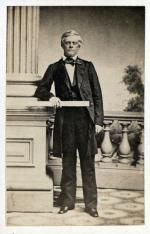
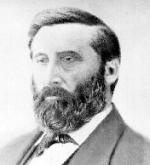
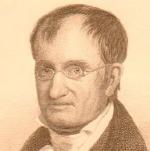
Charles Huston was born on January 16, 1771, in Plumstead Township, Bucks County, Pennsylvania, the eldest son of Thomas and Jane Walker Huston. After a local education, he entered Dickinson College in Carlisle, Pennsylvania with the class of 1789. An accomplished Latin and Greek scholar, he attained honors on graduation and remained in Carlisle to tutor Dickinson students and study law under Thomas Duncan. During 1792-93, he took over as Principal of the college's Grammar School. He continued to tutor undergraduates in Latin and Greek, among them the young first year student, Roger Brooke Taney. He is said to have joined Washington's expedition in 1794 to quell the Whiskey Rebellion. He then gave up his teaching to concentrate on a legal career, was called to the bar, and took himself to the newly laid out Lycoming County where he launched a highly successful career as a land lawyer.

College Relationship
Alumnus/Alumna Class Year

Oscar Maclay Hykes (1894-1918)

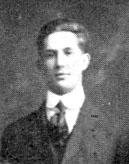
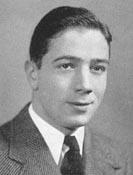
Oscar Hykes was born in Shippensburg, Pennsylvania on March 13, 1894. He had entered the Conway Hall at nearby Dickinson College in 1914 and later studied the Philosophical course at Dickinson as a member of the class of 1918. While at the College he was a member of Belles Lettres Literary Society and Phi Delta Theta fraternity. He also studied transportation at the Wharton School and began work with the Pennsylvania Railroad just before he enlisted in the U.S. Army in the spring of 1918.

He trained at Camp Lee, Virginia until May 1918 when he was assigned to the 37th Division's 146th Infantry Regiment and joined the fourth platoon of Company H in that unit. The 37th left Hoboken, New Jersey on June 15, 1918 and arrived in France a week later. Private Hykes went into action first in the Vosges Mountains in August 1918 and then the 37th joined the Meuse-Argonne battles on September 20, 1918. On September 28, Company H was advancing up a dirt road when an shell struck a small group of the fourth platoon in the rear of the column. They had stopped to refill their canteens at a roadside spring. Oscar Maclay Hykes was seriously wounded and died September 30, 1918 in a field hospital. His body was returned to Shippensburg after the war and buried in Spring Hill Cemetery. The Shippensburg American Legion Post 223, organized in 1919, was named for the fallen infantryman.

College Relationship
Alumnus/Alumna Class Year

Abe Leonard Hymes (1914-1942)

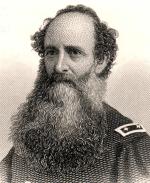
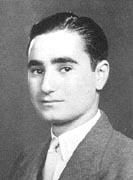
Known during his time at Dickinson as Abe L. Hymowitz*, Hymes was born in New York City in February 1914 and graduated from James Madison High School in Brooklyn. He entered Dickinson College in Carlisle, Pennsylvania in 1932 and graduated Phi Beta Kappa with the class of 1935. While at the College, Hymes was a member of Sigma Tau Phi fraternity. He then studied medicine at New York University and earned his M.D. in June 1939.

A reserve medical officer straight from medical school, Hymes was called to active service after completing his internship in June 1941; he was assigned to the U.S. Army Air Corps. After service in South Carolina, he left for the South Pacific in January 1942. He lost his life on December 31, 1942, when the aircraft in which he was flying from Port Moresby, New Guinea to Australia was shot down into the sea.

When Dickinson's Alumni Gymnasium was converted into the Weiss Center for the Arts in the early 1980s, Leopold Cohen, class of 1935, donated funds for the dedication of a lecture hall to be known as the Hymes Room in honor of his lost friend and classmate.

* Later alumni lists refer to Abe L. Hymowitz but by 1939 he had changed his name to Hymes.

College Relationship
Alumnus/Alumna Class Year

Carl Frederick Hynek III (1945-1967)

Born on August 14, 1945, Carl Hynek was from Willow Grove, Pennsylvania. He graduated from La Salle College High School in Philadelphia and entered Dickinson College in Carlisle, Pennsylvania in the fall of 1963 with the class of 1967. He became a member of Phi Kappa Psi fraternity during his two years but left the College in 1965.

He arrived in South Vietnam in July 4, 1967. Private First Class Hynek was killed in action on October 5, 1967 by automatic weapons fire while fighting as a parachute infantryman with the 101st Airborne in Quang Nam province. He received the posthumous promotion to the rank of corporal.

College Relationship
Alumnus/Alumna Class Year

John Auchincloss Inglis (1813-1878)

John A. Inglis was born in Baltimore, Maryland on August 26, 1813, the son of well known Presbyterian minister James Inglis, then pastor of the First Presbyterian Church in the city. He entered Dickinson College and graduated with the class of 1829 and then taught school for a time in Carlisle, eventually studying law and relocating to South Carolina.

Inglis opened a law practice in Cheraw, Chesterfield County, South Carolina and took on Henry McIver, later a Chief Justice of the State Supreme Court, as a partner. Their small wooden law office still stands in the town, having been preserved and moved to a new location as one of the few buildings in town to survive the Civil War. As devout as his father, he also served as principal of Cheraw Academy and as an elder in the local church. He became one of the four chancellors of the state courts of South Carolina. In 1860, Chesterfield County was a leading voice in the succession crisis and sent Inglis to the South Carolina Convention in December, 1860 as one of its three delegates. He was named chair of the seven man Ordinance Committee and, therefore, he was responsible for drawing up the Ordinance of Secession that the convention passed on a vote of 169-0 on Thursday, December 20, 1860. Though himself a committed secessionist, Inglis later denied being the sole author of the one page document as did fellow member Judge Francis Wardlaw.

College Relationship
Alumnus/Alumna Class Year

Hobart Fabian Irelan ( -1918)

Hobart Irelan was from Atlantic City, New Jersey and enrolled at Dickinson College, in Carlisle, Pennsylvania as a member of the class of 1919. He studied the Philosophical course and participated in an array of campus activities, including the Y.M.C.A., Belles Lettres Literary Society, the Kappa Sigma fraternity, and his class basketball team. A promising musician, he participated in the Glee Club and the College Band. He left his studies at the end of the 1917-1918 academic year to enlist in the military.

Irelan served as a corporal in the Chemical Warfare Service and died on October 18, 1918.

College Relationship
Alumnus/Alumna Class Year

William Irvine (1741-1804)

William Irvine was born of Scots-Irish parents in Fermanaugh, Ireland on November 3, 1741. He attended Trinity College in Dublin and afterwards studied medicine. He became a Royal Navy surgeon and served at sea in the Seven Years' War.

He settled in Carlisle, Pennsylvania in 1764 to practice medicine. When the Revolutionary War broke out he raised the 7th Pennsylvania Regiment and participated in the invasion of Canada where he was captured at Three Rivers. He was exchanged in 1778 and fought at the Battle of Monmouth. Promoted to Brigadier General, he was given command of the western frontier area and was headquartered at Fort Pitt where he served until the end of the war.

After the establishment of the new government, Irvine served in various posts, many involving the distribution of land, and he attended the Continental Congress in 1787. He later represented Cumberland County in the U.S. Congress and commanded Pennsylvania troops in the suppression of the Whiskey Rebellion. His final post was as superintendent of military stores in Philadelphia.

Irvine was one of the original nine trustees to whom the deed for the building of a school in Carlisle had been entrusted. When the Dickinson College charter was passed in the Legislature, six of the nine became trustees of the College. Irvine was one of these and he served until his death.

During his early days in Carlisle, he married Anne Callender. He died in Philadelphia on July 29, 1804.

College Relationship
Trustee - Years of Service
1788-1803

William Howard Irwin (1818-1886)

Birth: 1818; Mifflin County, Pennsylvania

Death: January 17, 1886 (age 65); Anchorage, Kentucky

Military Service: Mexican War, 1847-48; USA, 1861-65

Unit: 11th U.S. Infantry"Juniata Guards", "Logan Guards", 7th Pennsylvania Volunteers, 49th Pennsylvania Infantr, 2nd Division of the VI Corps

Alma Mater: Dickinson College, B.A. (Class of 1840 non-graduate)

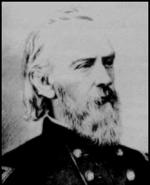
William Howard Irwin was born in Mifflin County, Pennsylvania in 1818. He enrolled with the class of 1840 at Dickinson College in Carlisle, Pennsylvania in the fall of 1836. He was elected as a member of the Union Philosophical Society but left the College after two years to study law at home in Lewistown where he was called to the bar in 1842. In 1843 he married a widow named mar Edmiston Mitchell. His stepson, William Galbraith Mitchell served with him during the civil war, leaving the war as a brevet brigadier general.

College Relationship
Alumnus/Alumna Class Year

Clarence Gearhart Jackson (1842-1880)

Birth: March 25, 1842; Berwick, Pennsylvania

Death: May 13, 1880 (age 38); Berwick, Pennsylvania

Military Service: USA, 1861-65

Unit: Company H, 84th Pennsylvania Volunteer Infantry

Alma Mater: Dickinson College, B.A. (Class of 1860)

Clarence G. Jackson was one of the sons of self-made heavy manufacturer M. W. Jackson and his first wife, Margaret Gearhart Jackson. The younger Jackson grew up in Berwick and at fourteen attended the Dickinson Seminary in Williamsport. He then enrolled in Dickinson College, Pennsylvania at the age of sixteen with the class of 1860. He was elected to the Belles Lettres Society and graduated with honors along with his class.

College Relationship
Alumnus/Alumna Class Year
Trustee - Years of Service
1875-1880

John Jeremiah Jacob (1829-1893)

John Jeremiah Jacob was born on December 9, 1829 in Hampshire County, Virginia (presently West Virginia) to Captain John J. Jacob and Susan (McDavitt) Jacob. From his early childhood, John Jeremiah Jacob was well-educated. In his youth, he attended the Romney Academy in Hampshire County and the classical institute in Hampshire. He later matriculated to Dickinson College in Carlisle, Pennsylvania. While at Dickinson, he was a member of the Union Philosophical Society. He was also co-editor with Moncure Conway and Marcus Parrott of the pioneering student publication at the College, the Collegian. He graduated with his class in 1849. Upon graduation, John Jeremiah Jacob returned home where he taught at a local Hampshire school and practiced law. His next three years passed in this manner until in 1853, he was offered and accepted a position at the University of Missouri. While at Missouri, he served as the professor of logic and political economy. He remained in this position until the outbreak of the Civil War when he opened a law practice in Missouri.

College Relationship
Alumnus/Alumna Class Year

James Henry Jarrett (1832- )

James Henry Jarrett was born in Jarrettsville, Maryland on February 23, 1832 to Luther and Julia A. Jarrett. The town was known as Carman at the time of his birth. His father was a substantial landowner there and the first postmaster, however, and the postal name of the town was changed to Jarrettsville in 1838. The younger Jarrett entered Dickinson College in Carlisle, Pennsylvania in 1849 with the class of 1852 and was elected to the Union Philosophical Society. He left the College in 1850 to enroll at the University of Maryland Medical School, where he earned his degree in 1852 and returned home to practice.

Jarrett was elected to the Maryland House of Delegates from his home area, serving one term from 1855 to 1856. When the Civil War broke out, he declared his intentions to join the Union cause, much to the consternation of his family and the local population. His younger brother, also a physician, served with the Confederate First Maryland Cavalry. Jarrett persisted, however, and mustered into Purnell's Maryland Legion as assistant surgeon in October 1861, transferring in August 1863 to the Seventh Maryland Infantry as surgeon. In December 1863, he became acting surgeon-in-chief of his division, the Third of the First Army Corps of the Army of the Potomac. He mustered out as a major on May 5, 1864.

College Relationship
Alumnus/Alumna Class Year

Herman Merrills Johnson (1815-1868)

Herman Merrills Johnson was born on November 25, 1815 in Butternut Township, New York, near Albany. He attended Casenovia Seminary and then went to Wesleyan University, where he was a member of Phi Beta Kappa and graduated with an A.B. degree in 1839. Following graduation, he became a professor of ancient languages at St. Charles College in Missouri until 1842. At that time he moved on to be a professor at Augusta College in Kentucky where he remained for only two years. In 1844, Johnson began teaching at Ohio Wesleyan University and would remain there until coming to Dickinson in 1850, when he took up the post of professor of English literature under the administrations of Jesse Truesdell Peck and Charles Collins. In 1852, Johnson was granted a D.D. degree from Ohio Wesleyan University.

During his ten years as a professor at Dickinson College, Johnson worked with three students to organize the “Eclectic Society of Dickinson College.” This society became active on May 12, 1852 as a chapter of Wesleyan University’s Phi Nu Theta, a fraternity to which Johnson belonged during his college days. This group marked the first fraternity at the College, but was soon followed by others such as Phi Kappa Sigma in 1854 and Sigma Chi in 1859.

College Relationship
President - Years of Service
1860-1868
Faculty - Years of Service
1850-1868

Harry Rees Jones (1919-1944)

Harry Jones was born in Upper Darby, Pennsylvania in December 1919 and after high school graduation he entered Dickinson in 1937. While at the College, he served on the Student Senate, and was a member of Skull and Key and president of Theta Chi.

On June 9, 1941, Jones graduated and a month later enlisted in the Army Air Corps as an aviation cadet. By July 1942 he received his wings and his commission and then served as an instructor. He applied for an assignment as a combat fighter pilot, and in late June 1943 joined an operational squadron on the island of Adak in the Aleutian Chain.

On March 13, 1944, Lt. Jones died when his aircraft crashed into the side of Mount Adagak near his base while leading his flight.

College Relationship
Alumnus/Alumna Class Year

Thomas Jefferson Jordan (1821-1895)

Birth: December 3, 1821; Walnut Hill, Dauphin County, Pennsylvania

Death:  April 3, 1895 (age 73);  Philadelphia, Pennsylvania

Military Service: USA, 1861-65

Unit: 9th Pennsylvania Cavalry "Lochiel Cavalry," 92nd U.S. Volunteer Cavalry, 3rd Cavalry Division

Alma Mater: Dickinson College, Law Degree (Class of 1842)

Thomas Jefferson Jordan was born at the family home of Walnut Hill in Dauphin County, Pennsylvania the son of Benjamin and Margaret Crouch Jordan. His father had been a county commissioner and was to go to be a state representative and state senator. The son attended local schools and later, in December, 1839, enrolled in the Law Department at Dickinson College in Carlisle, Pennsylvania, then under the leadership of its founder, Judge John Reed. He was enrolled at the College for the following two years and in February, 1843 was called to the Dauphin County bar in Harrisburg and opened a practice.

College Relationship
Alumnus/Alumna Class Year

Frank Royer Keefer (1865-1954)

Frank Royer Keefer was born in Venango County, Pennsylvania on October 10, 1865 to a Presbyterian and military family. His father was Major John D. Keefer and his mother Caroline Royer Keefer; he could also boast a great-grandfather who fought with the Continental Army. He was educated at the Whitman Seminary in Walla Walla, Washington, where his father was stationed, and then at the Dickinson Preparatory School. He entered the College in 1881 and graduated with his class in 1885. While at the College, he was a member of the Union Philosophical Society.

College Relationship
Alumnus/Alumna Class Year
Honorary Degree - Year
1934

Nathaniel Garland Keirle (1833-1918)

Nathaniel Garland Keirle was born in Baltimore, Maryland on October 10, 1833. He was the eldest child of three born to Matthew M. Keirle and Sarah Jacobs Garland Keirle. He was raised by his grandmother, as his father died of typhoid and his mother of tuberculosis before his seventh birthday. Keirle attended St. Mary's Seminary in the city, Public School # 6, and City High School. He then enrolled at the Dickinson College Preparatory School in Carlisle, Pennsylvania for a year. Keirle entered the College proper in 1851. He was elected to the Union Philosophical Society and graduated second in his class in the early summer of 1855. He returned to Baltimore and, because he had wanted to become a lawyer, rather reluctantly entered medical studies. He earned an M.D. in 1858.

College Relationship
Alumnus/Alumna Class Year
Honorary Degree - Year
1911

James Kerr Kelly (1819-1903)

James Kelly was born in Blanchard on the northeastern edge of Centre County, Pennsylvania on February 16, 1819. He was educated at the Milton and Lewisburg Academies and took his undergraduate degree at Princeton University in 1839. He enrolled in the law department at Dickinson College in 1840 and gained his law degree in 1842. He began practice in Lewistown and soon was named under Governor Porter as the deputy attorney general for Mifflin County and then Juniata County when that county was carved from the larger.

College Relationship
Alumnus/Alumna Class Year

Robert Kennedy (1778-1843)

Robert Kennedy was born in Lancaster County, Pennsylvania on July 4, 1778, the ninth of the twelve children of James and Jane Maxwell Kennedy. He was educated in local and classical schools and entered Dickinson College in Carlisle, Pennsylvania with the class of 1797. He was elected to the Union Philosophical Society and graduated with very high standing and then returned to study theology with Reverend Nathanael Sample, pastor of the Lancaster Presbyterian congregation. He was licensed to preach on August 20, 1799 under the auspices of the Upper Octorara Presbytery and spent the next several months as a supply preacher to the vacant churches in the area, including the Presbytery of Carlisle.

College Relationship
Alumnus/Alumna Class Year

Caleb Burwell Rowan Kennerly (1829-1861)

Caleb Burwell Rowan Kennerly was born to Reverend Thomas Kennerly and Ann Susan Carnegy in 1829. Kennerly grew up on his family’s Greenway Court estate in White Post, Virginia. He entered Dickinson College in Carlisle, Pennsylvania with the class of 1849. While an undergraduate, he was elected to the Belles Lettres Literary Society and, more significantly, gained an interest in ornithology after taking the innovative field trip biology classes with Professor Spencer Fullerton Baird. Kennerly graduated in 1849 with a Bachelor of Arts degree and went on to study medicine, gaining his doctorate in 1852 from the University of Pennsylvania.

College Relationship
Alumnus/Alumna Class Year

Andrew Kerr (1878-1969)

Andrew Kerr IV was born in Cheyenne, Wyoming on October 7, 1878 the son of Andrew and Mary Elizabeth Kerr. His family moved east to Carlisle, Pennsylvania and the young Kerr attended most of his secondary schooling there. He entered the local Dickinson College with the class of 1900 in 1896 and graduated in the Latin Scientific section with his class four years later. In the meantime, he had joined the Theta Nu Epsilon fraternity, been active in the Belles Lettres Society, and had been chosen senior class secretary. He had also played three years on the varsity baseball team and still holds the College record in the discontinued "standing high jump" field event at 4 feet 8 inches. Most ironically, as it concerns his future career, he felt himself at 135 pounds too light for football.

Immediately following graduation, Kerr eschewed a minor-league baseball contract and began teaching mathematics at the Rowe School in Johnstown, Pennsylvania. The following year he moved to the Johnstown High School. His began his coaching in Johnstown and when he moved to the Pittsburgh area, he came to the attention of Glenn "Pop" Warner, then at the University of Pittsburgh. In 1914, Kerr left what had already been an extended career as a mathematics teacher and joined Warner's staff at Pitt. He was to coach football for the rest of his life, becoming one of the most influential college football coaches in history as he did so.

College Relationship
Alumnus/Alumna Class Year

George Henry Ketterer (1880-1958)

Born on February 21, 1880 in Somerton, Pennsylvania, George Henry Ketterer attended Dickinson Preparatory School before enrolling in the College in 1904. After graduating from Dickinson with a B.A. degree in 1908, he attended Drew Theological Seminary, where he received a M.A. degree in 1912. Following graduation, he served as a pastor for various churches in Newark, Philadelphia, and throughout Central Pennsylvania, finally settling in Warrior's Mark, Pennsylvania. It was here that Ketterer met Bertha Hutchison Curry, and on November 15, 1916, the two were married.

When the United States became involved in World War I in 1917, Ketterer enrolled in Chaplain's School at Camp Taylor, Kentucky. Upon graduation, he was transferred to Camp Meade, Maryland for active duty and served as a First Lieutenant and Chaplain. After the War, he returned to his work as a pastor, an occupation he continued until 1935. From 1935 until 1940, he served as superintendent of the Altoona School District.

College Relationship
Alumnus/Alumna Class Year
Honorary Degree - Year
1936
Trustee - Years of Service
1937-1958

Jacob Armel Kiester (1832-1904)

Jacob A. Kiester was born in Mount Pleasant in south western Pennsylvania on April 29, 1832. Having prepared for college in the local common schools and at the nearby Mount Pleasant Academy, he entered Dickinson College with the class of 1857 in 1854. Kiester left the college after just a year, although he did have time for election to the Belles Lettres Society. Soon after, he moved west and was admitted to the bar in Indiana in 1855. Kiester moved on to Wisconsin for some months and then settled in April 1857 in Blue Earth City, Minnesota, the county seat of the newly organized Faribault County.

Soon after arriving in Blue Earth City, Kiester was elected as county surveyor of Faribault County in October 1857. The following year he was chosen as county registrar of deeds. Kiester seemingly made a very early impact on the county since, as soon as January 1859, the county supervisors named a small township in the eastern part of Faribault after him. He later served as a Republican representative to the state legislature in 1865, county attorney for 1866-67, and as United States internal revenue assessor in 1868. Kiester was named as a probate judge in 1869 and served in that post for more than twenty years before he was elected as a state senator in 1891, serving there as a Republican until 1895.

College Relationship
Alumnus/Alumna Class Year

Horatio Collins King (1837-1918)

Birth: December 22, 1837; Portland, Maine

Death: November 15, 1918 (age 81);Brooklyn, New York

Military Service: USA, 1861-65

Unit: Army of the Potomac, First Cavalry Division of the Army of the Shenandoah

Alma Mater: Dickinson College, B.A. (Class of 1858); Trustee, 1896-1918

College Relationship
Alumnus/Alumna Class Year
Honorary Degree - Year
1896
Trustee - Years of Service
1896-1918

William T. Kinzer (c.1837-1864)

Birth: 1837; Blacksburg, Virginia

Death: July 15, 1864 (age 29); Point Lookout Prison, Maryland

Military Service: CSA, 1861-64

Unit: Company L, 4th Virginia Infantry

Alma Mater: Dickinson College, B.A. (Class of 1860 non-graduate)

William T. Kinzer was born in Blacksburg, Virginia. In January 1856 he entered the Dickinson College Grammar School and studied there for a semester before entering the freshman class. As a student, Kinzer was a member of the Union Philosophical Society, the VP society, and the Good Templars Temperance Society. He also wrote several articles for his hometown newspaper.

Kinzer’s father died early in the summer of 1857, thereby removing his means of financial support. At the end of the spring semester in 1857, Kinzer and a friend took a train to Hagerstown, Maryland and walked home to Blacksburg from there. He remained and began the study of law under Waller Staples, Esq., in nearby Montgomery.

Kinzer moved to St. Stephens in the Nebraska territory in 1859. He did not enjoy a successful practice, and, falling gravely ill, he returned to Blacksburg after only six months. Kinzer resumed the practice of law there, but he enlisted in Company L, 4th Virginia Infantry on July 16, 1861.

College Relationship
Alumnus/Alumna Class Year