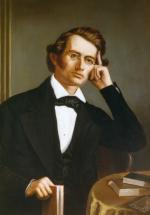
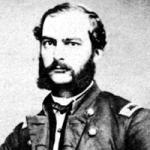
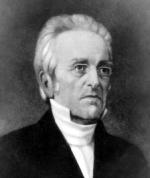
Clement Alexander Finley (1797-1879)

Clement Alexander Finley was born on May 11, 1797 in Newville, Pennsylvania. His family moved very soon after to Chillicothe, Ohio when his father, a cavalry hero of the Revolutionary War, received a sizable plot of land for his war service. Young Clement was educated in local schools and then returned to Cumberland County to enroll at Dickinson College with the Class of 1815. A tall and reputedly handsome young man, he graduated with his class and then studied medicine at the University of Pennsylvania, receiving his M.D. in 1818. That August, he entered the United States Army's First Infantry as a surgeon's mate.

Service in this regiment took him to Louisiana and Arkansas, first at Fort Smith and then at Fort Gibson, and later to Florida, Missouri, and Fort Leavenworth, Kansas. After more garrison duty at Fort Dearborn in Illinois and Fort Howard in Wisconsin, he was assigned as chief medical officer for the operations in the Black Hawk War of 1833 and saw campaigning again during the years of the Seminole War. Peace in 1838 brought him back to garrisons in Virginia and New York, as well as a four year assignment "at home" at the Carlisle Barracks. During the Mexican War, he served as medical director for General Zachary Taylor in Texas and then for General Winfield Scott in the Mexico City campaign. His work on both these assignments was curtailed by illness.

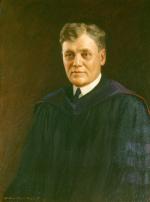
College Relationship
Alumnus/Alumna Class Year

Cornelius Winfield Fink (1893-1955)

Born on November 10, 1893 in Zanesville, Ohio, Cornelius Fink graduated from Muskingum College in 1914 and worked as a journalist from 1914 to 1919. He became an instructor in social science and Latin at the Dresden High School in Dresden, Ohio in 1920; two years later he took the position of instructor in economics at Ohio State University. He also matriculated there as a student to earn his master's degree in 1924. After obtaining this degree, he became an assistant professor of economics at Ohio University. He pursued further graduate work at the universities of Michigan (1928), Wisconsin (1929), and Northwestern (1930).

Fink arrived at Dickinson College in 1930 as an associate professor of economics and political science. Fink became the chairman of the economic department in 1946. At the College, Fink was active with the Debate Club. He was elected president of the Debating Association of Pennsylvania for 1945 through 1946.

College Relationship
Faculty - Years of Service
1930-1955

Mervin Grant Filler (1873-1931)

Mervin Grant Filler was born in Boiling Springs, Pennsylvania on October 9, 1873 to Peter and Elizabeth Filler. He attended grade school in Boiling Springs before entering the Dickinson Preparatory School. In 1889, he enrolled in Dickinson College and graduated as valedictorian in 1893. During that time he became a member of Phi Kappa Sigma and was inducted into Phi Beta Kappa. In addition to his A.B. degree, Filler received his M.A. in 1895.

Following graduation, Filler took a position as an instructor in Greek and Latin at the Preparatory School. He also continued his own studies, taking classes at the University of Chicago in the summers of 1900 and 1901 and later at the University of Pennsylvania in 1906. In 1899, he became the professor of Latin at the College and would retain this position for the following 29 years except for his short graduate study leaves. In 1904 he was elected as dean of the freshman class and in 1914 President Morgan promoted him to dean of the College. On June 30, 1928, Filler was elected as the 18th president of Dickinson College following Morgan’s retirement.

College Relationship
Alumnus/Alumna Class Year
President - Years of Service
1928-1931
Faculty - Years of Service
1899-1928

Frysinger Evans (1871-1955)

Frysinger Evans was born on February 1, 1871 at Sunbury, Pennsylvania to William and Alice Frysinger Evans. In 1888 he entered the Dickinson Grammar School, and eventually matriculated to the College. At Dickinson, Evans was a member of the Belles Lettres Literary Society, the Phi Kappa Psi Fraternity, and Phi Beta Kappa. He graduated with the class of 1892.

From 1892 to 1895, Evans was an assistant professor at the Millersville Normal School, earning a master’s degree from Dickinson in 1895. He briefly studied law at the University of Pennsylvania. During the Spanish-American War, he served on the executive committee in charge of hospital work for the American Red Cross.

In 1899, Evans returned to his alma mater as treasurer. In addition to his duties on campus, Evans gained admittance to the Cumberland County Bar in 1901. Also in 1901, he married Edith Perrin Brewster. He left his position at Dickinson in 1907. Frysinger Evans died on April 15, 1955.

College Relationship
Alumnus/Alumna Class Year

Frank Evans, Jr. (1925-1944)

Born July 6, 1925, Frank Evans was from Brooklyn, New York, where he was an outstanding student at P.S. 93 Boys High School, and the Adelphi Academy. In September 1942 when he had just turned seventeen, Evans enrolled at Dickinson with the class of 1946. He was pursuing a chemistry major when he enlisted in the army in August 1943.

Evans trained at Fort Benning, Georgia and left for Europe to join Company E., 405th Infantry, as its youngest member in August 1944. A devout member of the Episcopal Church, he wrote to his mother in November that "So far I have felt little fear up here. God is closer to the front lines than any place else." Five days later, Frank Evans was killed in action in Germany on November 22, 1944, aged nineteen years and four months.

College Relationship
Alumnus/Alumna Class Year

Robert Emory (1814-1848)

Robert Emory was born in 1814 to Bishop John Emory and his wife. The elder Emory had served as president of the Dickinson College Board of Trustees from 1833 to 1835, and is the namesake of both Emory University in Georgia and Emory and Henry College in Virginia. The younger Emory attended Columbia University and graduated at the top of his class in 1831. He then studied law under Reverend Johnson in Baltimore. In 1836, Emory joined the faculty of Dickinson as professor of Latin and Greek at the Grammar School. He remained at this post until 1840 when he resigned in order to work in the ministry. During President Durbin's trip abroad in 1842 and 1843, Emory returned to Carlisle to serve as Dickinson's acting president; with Durbin’s return, Emory resumed his work in the ministry. Within two years, Durbin resigned, and Emory again was chosen to lead the College.

College Relationship
President - Years of Service
Acting, 1842-1843; 1845-1847
Faculty - Years of Service
1834-1840

Powhatan Ellis (1790-1863)

Powhatan Ellis was born in Amherst County, Virginia and was named for the father of Pocahontas, from whom the family claimed descent. He was a student at Washington Academy and then at Dickinson as a member of the class of 1810. The College has no record of his graduation, however.

He studied law at the College of William and Mary, 1813-1814, and took up a practice in Lynchburg. He served as a lieutenant of volunteers during the War of 1812 but saw no action. By 1815 he had formed a friendship with Andrew Jackson who introduced him to friends in the Mississippi Territory. Relocating to the territory in 1816 as it entered statehood, these friendships made Ellis well- connected, and in 1818 he was appointed to the state Supreme Court. He served in the U.S. Senate for a few months from September 1825 to January 1826 as a replacement but failed to secure the permanent seat. However, he did serve a full term as U. S. Senator between 1827 and 1832. He was then appointed as federal judge of the district of Mississippi by President Jackson. Four years later, Jackson sent Ellis to Mexico City in the highly sensitive position of charge d'affaires; he served as minister plenipotentiary to Mexico under President Van Buren until 1842 when he returned to Mississippi.

Powhatan Ellis married Eliza Rebecca Winn in February 1831, and the couple had a son and a daughter. Later in life, Ellis returned to Virginia and lived in Richmond, where he died on March 13, 1863.

College Relationship
Alumnus/Alumna Class Year

Washington Lafayette Elliott (1825-1888)

Washington Lafayette Elliott was born in Carlisle, Pennsylvania on March 31, 1825. He was the son of Commodore Jesse Duncan Elliott, USN. Before he reached his teens, young Washington accompanied his father on cruises with the West Indies Squadron and on board the USS Constitution, which his father commanded in the Mediterranean for a time. For several years, Commodore Elliott was also a trustee of Dickinson College. The younger Elliott was enrolled in the Grammar School there in 1838, then completed two years as an undergraduate with the class of 1843.

In June 1841, Washington Elliott was appointed as a cadet at West Point. He studied medicine for a period, then took a commission in May 1846 as a second lieutenant of mounted infantry at the outbreak of the Mexican War. Elliott served at Vera Cruz and was appointed full lieutenant in July 1847. He then served at Fort Laramie on the Oregon Trail in Wyoming (1849-1851) and in Texas (1852-1856), receiving a promotion to captain in 1854. Elliott also held assignments in New Mexico during the five years preceding the Civil War, gaining ample experience as a frontier soldier in skirmishes against the Comanche and Navajo tribes.

College Relationship
Alumnus/Alumna Class Year

David Elliott (1787-1874)

David Elliott was born in Sherman Valley, now in Perry County, to Thomas and Jane Holliday Elliott on February 6, 1787. Of Scots Irish heritage, he was raised on his parents' farm in a pious Presbyterian family. He was educated at home and in several neighborhood church schools, including that of the Reverend James Linn at Center Church. He entered Dickinson College in the junior class, and was graduated with the class of 1808, and with high honors and voted valedictorian by his peers.

He then studied theology for three years and was licensed as a pastor in Carlisle, Pennsylvania in 1881 and took his first church at Upper West Conocheague near Mercersburg, Pennsylvania in 1812 and there he remained until 1829. In the meantime, he founded the Franklin County Bible Society and was present at the founding of the American Bible Society in New York in 1816. He also served on the board of trustees of his alma mater between 1827 and 1829.

College Relationship
Alumnus/Alumna Class Year
Trustee - Years of Service
1827-1829

Jesse Duncan Elliot (1782-1845)

Jesse Elliot was born in Maryland on July 14, 1782. He was nine years old when his father was killed in an Indian attack; soon after young Elliot moved to Carlisle, Pennsylvania, where he received his schooling. After studying law for a time, he was appointed midshipman in the United States Navy in April 1804 and was assigned to the U.S.S. Essex. He became an acting lieutenant on the U.S.S. Enterprise and in April 1810 was promoted to permanent rank of lieutenant. At the outbreak of the War of 1812, he was posted to Lake Erie where he captured two armed British brigs, burning one, ostensibly in retaliation for the earlier British capture of Detroit. Becoming second in command under Oliver Perry, and captain of the U.S.S. Niagara, he took what was to become a controversial part in the battle of Lake Erie. Although Perry spoke very highly of Elliot in his official report and Congress decorated him, rumors of Elliot's animosity against his commander and observations from both British and United States experts that Elliot had not backed Perry's boldness as he should created a simmering controversy. Various accusations and cross accusations in the press, including a defense by James Fenimore Cooper, resulted in Elliot challenging Perry to a duel and then facing a court-martial, a situation that the Cabinet desperately wished to avoid.

College Relationship
Trustee - Years of Service
1831-1833