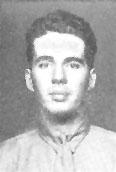
Gerald Lawrence Darr (1917-1943)

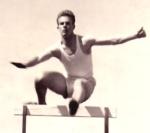
Gerald "Jerry" Darr was born in 1917 in Burnside, Pennsylvania. He graduated from Cherry Tree High School and entered the College in the class of 1940. An outstanding athlete who later entered the College Sports Hall of Fame, he excelled on several teams. He was co-captain in football as a running back, but was renowned for his performances as a hurdler who was never defeated in either the high or low hurdles during his entire four years at Dickinson. He was also a member of Beta Theta Pi fraternity and a four year participant in the German Club. He graduated with a bachelor of philosophy degree in June, 1940.

Darr married his classmate, Marion Englander, of Carlisle, on August 17, 1942, eight months after enlisting in the Army Air Corps. He trained in Alabama, Florida, and Mississippi; he received his wings and a commission as second lieutenant in July, 1942. After bomber training, he was assigned to combat duty in the Solomon Islands area of the South Pacific flying B-24 Liberator bombers. He flew numerous combat missions, and despite struggles with malaria, Darr rose to the rank of aircraft commander.

On November 14, 1943, his Liberator disappeared over the island of Bougainville, most probably after being hit by enemy fire. No wreckage was sighted during subsequent searches and Darr, along with his crew, was posted as missing. Two years later, the War Department officially listed Gerald Darr as "killed in action."

College Relationship
Alumnus/Alumna Class Year

William Daniel (1826-1897)

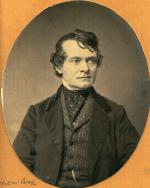
William Daniel was born on remote Deal's Island in Somerset County, Maryland on January 24, 1826. He was educated locally and then matriculated at Dickinson with the class of 1848. While at the College he was a member of the Union Philosophical Society. Following graduation he studied law and began practice in Maryland in 1851. He was elected to the state legislature in 1853 and, following attempts to bring local choice temperance laws to the floor, was reelected as a member of the American Party, moving to serve the Maryland Senate in 1858. He resigned before the year was out, moved to Baltimore, and became an avid anti-slavery Republican. During the Civil War, he took part in the Maryland constitutional convention on the emancipation of the slaves in the state.

College Relationship
Alumnus/Alumna Class Year
Trustee - Years of Service
1864-1876; 1894-1897

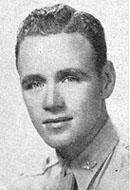
John Edmund Dale, Jr. (1919-1943)

John Dale was born in Philadelphia in 1919 and graduated from high school in Montclair, New Jersey where his father was president of a coal company. He entered the College in September 1936 with the class of 1940 but transferred to Amherst College after his freshman year. He was tapped as a member of Beta Theta Pi during that year.

Finishing his degree at Amherst in 1940 he set out for a career in banking but enlisted in the United States Army Air Corps the day after Pearl Harbor. He won his wings on July 26, 1942 and then trained on B-24 Liberator bombers. In December, 1942, he joined the 480th Anti-Submarine Group in French Morocco then flying against German submarines in the Battle of the Atlantic with such success as to earn it later the coveted Presidential Unit Citation.

On May 11, 1943, first pilot Dale and five others in his ten man crew were killed when their B-24 crashed on take off from their home base. Lt. Dale had previously been awarded an Air Medal. He was twenty four years old.

College Relationship
Alumnus/Alumna Class Year

Andrew Gregg Curtin (1817-1894)

Andrew Gregg Curtin was born April 22, 1817 in Bellefonte, Pennsylvania. He was the son of a Scots Irish immigrant who had begun an iron manufacturing concern in Center County and his second wife, Jean Gregg, daughter of a prominent Pennsylvania political family. He prepared at academies in Harrisburg and Milton and entered Dickinson to study law under Judge John Reed. He graduated with the class of 1837 and began private practice after being admitted to the bar in 1839.

Active in support of Whig candidates, he placed his developing skills as a speaker at the service of an array of candidates, including Harrison, Clay, and Taylor. By 1854, he was regarded highly enough to be offered the Whig nomination for governor, which he refused in favor of his friend James Pollock. Pollock named Curtin immediately as Secretary of the Commonwealth. His work on public schooling added to his name and he stood for governor himself in the pivotal election of 1860 as a strong supporter of Lincoln. He thus became one of the so-called "war governors" upon whom Lincoln depended for support after the outbreak of hostilities.

College Relationship
Alumnus/Alumna Class Year

Mary Rebecca Curran Morgan (1867-1927)

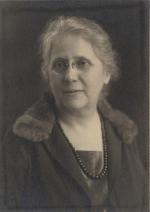
Born in Williamsport, Pennsylvania on April 28, 1867, Mary Curran prepared at Bloomsburg Normal School where her father, Hugh Asbury Curran, taught. In 1886 she entered Dickinson College as a junior, receiving the coveted Pierson Gold Medal for Oratory in the Spring of 1887. She graduated Phi Beta Kappa and salutatorian of her class in 1888, and then received a M. A. from Dickinson in 1891.

On December 30, 1890, Mary Curran married James Henry Morgan, a Dickinson alumnus from the class of 1878. He had begun to teach as head of the Dickinson Preparatory School in 1882, and by the time he and Mary were married, James Henry had been promoted to full professor at the College. He would go on to become the first Dean of the College, and later serve as President of the College for nearly twenty years. Mary and James Henry had three children: Julia, who became a medical missionary in China; Margaret Harris, who married and lived outside of Pittsburgh; and Hugh Curran, who also became a missionary in China.

Mary Curran Morgan was active on campus and in the local community, and was of particular help to the women students of Dickinson. She and others fought hard to establish a local chapter of the American Association of University Women, and Mary became the first president of the Carlisle Branch. She was also active in the fledgling YWCA of Carlisle and was a member of its first board of directors.

College Relationship
Alumnus/Alumna Class Year

George David Cummins (1822-1876)

George David Cummins was born near Smyrna in Kent County, Delaware on December 11, 1822, the son of George and Maria Durburow Cummins. When the younger George was just 4 years old, his father died, leaving him to be raised by his mother and uncles. He received his early education in Newark, Delaware before enrolling in Dickinson College as a member of the class of 1840 at the age of fourteen. While at the College Cummins was an active member of the Union Philosophical Society. However, in the spring of 1840 he suffered from poor health due to an enlarged heart, and was forced to withdraw from the College. After recuperating for a year, Cummins returned to Dickinson and graduated with the class of 1841 as its valedictorian.

Upon graduating, Cummins entered the Baltimore Conference of the Methodist Church but was ordained in the Episcopal Church as a deacon in 1845 and as a priest in 1847. He served parishes in Baltimore, Maryland, Norfolk, Virginia, and Washington, D.C. His skills as a preacher brought him prominence and advancement in the church. He returned to Baltimore in 1858, moved on to Chicago in 1863, and in November 1866 was consecrated as the assistant bishop of Kentucky at age 44.

College Relationship
Alumnus/Alumna Class Year

Joseph Franklin Culver (1834-1899)

Birth: November 3, 1834; Carlisle, Pennsylvania

Death: January 20, 1899 (age 64);  Emporia, Kansas

 Military Service: USA, 1861-65

 Unit:  Company A, 129th Illinois Infantry

Alma Mater: Dickinson College, B.A. (Class of 1857)

Joseph Franklin Culver was born in Carlisle, Pennsylvania on November 3, 1834. He grew up in the town and enrolled in the local Dickinson College with the class of 1857. A popular and involved student, he was elected to the Belles Lettres Society at the college. He withdrew before graduating in order to study law with William J. Shearer of Carlisle. He also studied at the Iron City Commercial College for a time, but then left Pennsylvania for Ohio soon after. He continued his studies in Wooster, Ohio for several years and taught school in Burbank, Ohio before settling in Pontiac, Illinois.

College Relationship
Alumnus/Alumna Class Year

James Culbertson (1803-1854)

James Culbertson was born in Carlisle, Pennsylvania on March 17, 1803, the son of prosperous Presbyterian farmer Samuel Culbertson and his wife. His parents died when he was young, and the neighboring farming family of Thomas Urie took him in. When twelve, Culbertson went to Hopewell Academy in Shippensburg and then returned to his hometown to enter Dickinson College as a sophomore in the class 1824. After graduating with his class, Culbertson took up the study of medicine. He studied with Dr. Adam Hays in Carlisle and then at the University of Pennsylvania, where he received his degree in April 1827.

Culbertson opened his practice in Lewistown, Pennsylvania in 1828 and continued there until his death. He was an admired doctor and scientist, interesting himself in geology and mineralogy. He served as a trustee of the local Lewistown Bank and of the Lewistown Academy. Culbertson was a Whig in politics, but never involved himself deeply. He reattached himself to the Presbyterian Church later in his life.

Culbertson married Mary Steel of Lewistown in June 1839. The couple had two sons, one of whom died in infancy. James Culbertson died suddenly in Lewistown on March 30, 1854, two weeks after his fifty-first birthday.

College Relationship
Alumnus/Alumna Class Year

David Harold Crosby, Jr. (1918-1942)

David Crosby was born in Phillipsburg, New Jersey on January 18, 1918. He prepared for college at the Mercersburg Academy and entered Dickinson with the class of 1940. Two years into his time at the College, during which he had become a member of Phi Kappa Psi fraternity, he transferred to Juniata College where he graduated in 1940. He later earned a master's degree in sociology at the University of Southern California and returned to teach at Juniata during the summer session of 1941.

By this time, however, he had already been accepted as a Marine Corps officer candidate. In October, 1941, he entered training and was commissioned in February, 1942 at Quantico, Virginia. He was assigned to the Pacific a few months later and, in early November 1942, was killed in action on Guadalcanal in the Solomon Islands.

College Relationship
Alumnus/Alumna Class Year

George Richard Crooks (1822-1897)

George Crooks was born on February 3, 1822, the son of George Richard Crooks, Sr. of Philadelphia. He was a member of the class of 1840, and graduated with the highest honors. Crooks served as an itinerant preacher first on the Canton circuit of Illinois in 1841, then on the frontier. He returned to his alma mater in the fall of 1841 as a tutor in the Dickinson Grammar School. In 1843, Crooks was promoted to principal of the Grammar School, a position that he filled until 1848. From 1846 to 1848, he also served as adjunct professor of Latin and Greek in the college.

Crooks resigned from the college in 1848 when his mentor, Professor John McClintock, resigned. He filled posts as a Methodist preacher for the Philadelphia Conference until 1857, when he transferred his affiliation to the New York East Conference. Crooks edited The Methodist from 1860 until 1875; one year later, he retired from the conference. In 1880 Crooks joined McClintock at the Drew Theological Seminary, teaching church history there until 1897. During his lifetime, Crooks received two honorary degrees from Dickinson College: the first in 1857 and the second in 1873.

College Relationship
Alumnus/Alumna Class Year
Honorary Degree - Year
1857; 1873
Faculty - Years of Service
1846-1848