Andrew McElwain Criswell (1824-1899)

Andrew M. Criswell was born near Scotland, Pennsylvania on November 29, 1824 to Robert and Sarah McElwain Criswell. He had some early schooling at the nearby Chambersburg Academy and then entered Dickinson College in Carlisle, Pennsylvania in 1844 with the class of 1847. Criswell was a member of the Union Philosophical Society while at the College. He left his studies in 1845 to take up farming and then school teaching. He was later involved with a store and local real estate dealings in Scotland.

Criswell married Louisa Renfrew of Duffield, Pennsylvania, and the couple had four children: Robert Thompson, Nancy Jane, Henrietta Alice, and John Renfrew. Only the latter married. After Criswell retired from business, the family moved to Chambersburg. Andrew Criswell died there on March 31, 1899. He was seventy-four years old.

College Relationship
Alumnus/Alumna Class Year

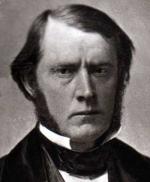
John Andrew Jackson Creswell (1828-1891)

John A. J. Creswell was born on November 18, 1828 at Port Deposit, Maryland, then called Creswell's Ferry. He attended a local academy and then went on to enroll at Dickinson with the class of 1848. He was an excellent student, was elected to the Belles Lettres Society, and delivered the valedictory oration at his commencement.

College Relationship
Alumnus/Alumna Class Year
Honorary Degree - Year
1871
Trustee - Years of Service
1865-1871; 1885-1891

William Creighton (1778-1851)

William Creighton was born in western Virginia on October 29, 1778. He entered Dickinson College with the class of 1795 and studied under Charles Nisbet. (The College Archives holds two notebooks in his hand from Nisbet's lectures in moral philosophy and logic and metaphysics) He was elected to the Union Philosophical Society in 1792. He graduated with his class on September 30, 1795.

Following this, he studied law in Virginia and then moved west to Chillicothe, Ohio in 1799. On March 3, 1803, at age twenty-five, he became the first Secretary of State of the new state and served until 1808. Known as a conservative Republican, he was appointed to a congressional vacancy in 1813 and elected to the following Congress. After a time in private law, he was again elected in 1824 as a supporter of Adams. He served in Congress until his final retirement in 1833 and his concentration on his legal practice.

He had married Elizabeth Meade in September, 1805 and they had six daughters and three sons. William Creighton died on October 1, 1851 in Chillicothe.

College Relationship
Alumnus/Alumna Class Year

Forrest Eugene Craver (1875-1958)

Forrest Craver was born September 24, 1875 one of the four children of Frank and Mary Craver, in Scanlin, Pennsylvania He attended Berwick High School, Wyoming Seminary and Dickinson Preparatory School before entering Dickinson College in September 1895. While at Dickinson College, Craver excelled in both athletics and academics. He was a fine scholar, graduating Phi Beta Kappa, and captained the track and football teams. "Cap" also served the Union Philosophical Society, and as treasurer of the college YMCA, editor of both the Hand Book, and the Microcosm, and president of his class during sophomore year. He was also a member of Phi Kappa Sigma.

College Relationship
Alumnus/Alumna Class Year
Honorary Degree - Year
1947
Faculty - Years of Service
1900-1946

George Leo Cottrell, Jr. (1923-1944)

George Cottrell was born in Wilmington, Delaware in August, 1923 but grew up at the home of his grandmother in Ambler, Pennsylvania. Here he graduated from high school in 1942. He entered Dickinson on the accelerated degree plan with the class of 1946 but withdrew after the fall and winter sessions to enlist with the United States Marine Corps.

Cottrell trained in basic infantry and at radio school in San Diego. He departed for the Pacific in April, 1944 and on July 21 was in the communications detail in the first wave of the Marine assault on the island of Guam. After working for hours under fire to establish and maintain radio communications on the beachhead, Cottrell was struck and killed by mortar fire, one month shy of his twenty-first birthday. He was buried on the island the following day.

College Relationship
Alumnus/Alumna Class Year

Fred Pierce Corson (1896-1985)

Fred Pierce Corson was born to Mary Payne and Jeremiah Corson, a glass manufacturer, on April 11, 1896 in Millville, New Jersey. He graduated from Millville High School in 1913 and enrolled in Dickinson College. While at Dickinson he was a member of Kappa Sigma Fraternity as well as Omicron Delta Kappa, Tau Kappa Alpha and Tau Delta Kappa. He graduated with an A.B. degree in 1917 cum laude and Phi Beta Kappa. His nickname at the College, spawned by his seriousness, was, ironically in light of later events, "the Bishop."

He went on to study at Drew Theological Seminary and earned a bachelor's degree of divinity in 1920. He also received a Master of Arts degree from Dickinson College in 1920. Following his graduation from Drew, Corson entered the New York East Annual Conference of the Methodist church, in which he had been ordained in 1919, and took on pastorates on Long Island, New York , New Haven, Connecticut and Brooklyn, New York. He was elected as the district superintendent in the New York East Methodist Conference in 1929 and received an honorary doctorate of divinity in 1933 from Syracuse University.

Alumnus/Alumna Class Year
President - Years of Service
1934-1944
Honorary Degree - Year
1931; 1944

Thomas Cooper (1759-1839)

Thomas Cooper was born on October 22, 1759 in London. He attended University College, Oxford and though he failed to obtain a degree he was learned in science, medicine, and law. After work at the Inner Temple, he became a barrister in 1787. In England, he was a lawyer, scientist, and philosopher. Though acquainted with men like Pitt, Burke, and Fox, his radical views were not well received at the time. An eventful four month visit to Paris including an address to leading Jacobins in April, 1792 did not aid his reputation even though he and his companion, James Watt, had to flee the country for their lives after standing up to Robespierre in public arguments. He was condemned on his return; his admission into the Royal Society, after his friend Joseph Priestley had nominated him, was rejected. He first visited the United States in 1793 for a few months and returned with the remainder of his family the following year. Along with his friend Priestley, himself seeking quieter surroundings, settled in Northumberland, Pennsylvania.

College Relationship
Faculty - Years of Service
1811-1815

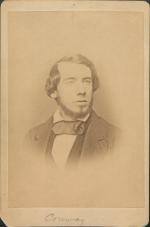
Moncure Daniel Conway (1832-1907)

Moncure Daniel Conway, the second son of a distinguished family from Stafford County, Virginia, was born on March 17, 1832. His father, Walker Peyton Conway, was a prominent slaveholding landowner, a magistrate, and a representative to the Virginia legislature. His mother, Margaret Daniel Conway, could trace her family to the earliest days of the commonwealth. Both his parents had converted to Methodism, he from the Episcopalians and she from the Presbyterians, and the Conway children were exposed at an early age to evangelicalism. Moncure Conway first went to a family school and then attended the thriving Fredericksburg Classical and Mathematical Academy, a school that had educated George Washington and other famous Virginians. He entered Dickinson College in Carlisle, Pennsylvania as a sophomore at the age of fifteen. Conway advanced quickly at the Methodist affiliated college and graduated with the class of 1849. While there he had begun his career as a writer, founding the College's first student publication, fell somewhat under the influence of Professor John McClintock, and had also embraced the Methodist Church. After thoughts about a career in law, and despite emerging doctrinal doubts, the young graduate became a circuit-riding Methodist minister in 1851. Increasingly uncomfortable with conformity, he soon left Methodism for Unitarianism and enrolled at Harvard's Divinity School.

College Relationship
Alumnus/Alumna Class Year
Honorary Degree - Year
1892

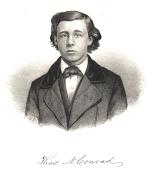
Thomas Nelson Conrad (1837-1905)

Birth: August 1, 1837; Fairfax Court House, Virginia

Death: January 5, 1905 (age 68); Washington, D. C

Military Service: CSA, 1861-65

Unit: 3rd Virginia Cavalry; Secret Service

Alma Mater: Dickinson College, B.A. (Class of 1857)

Thomas Conrad was born on August 1, 1837 in Fairfax Court House, Virginia, to Nelson and Lavinia Thomas Conrad. He attended the Fairfax Academy before enrolling in Dickinson College in 1853. While at Dickinson, Conrad was a member of the Phi Kappa Sigma fraternity, and served as secretary and then president of the Belles Lettres Literary Society. He also formed an enduring friendship with a fellow classmate, Daniel Mountjoy Cloud. Conrad graduated with the class of 1857. From 1857 until 1861 Conrad served as principal of the Georgetown Institute in Washington, D. C. For his efforts, he was awarded a master’s degree from Dickinson in 1860.

Conrad enlisted as a chaplain in the 3rd Virginia Cavalry in 1861, and eventually attained the rank of captain. After three years of service, he accepted a position in the Confederate Secret Service. He was responsible for operating the successful “Doctor’s Line,” that supplied reliable intelligence to Richmond. With the aid of his friend Daniel Cloud, Conrad organized a plot to abduct President Lincoln, but their plans fell through. After Lincoln’s assassination, Conrad was briefly incarcerated.

College Relationship
Alumnus/Alumna Class Year

James Wesley Colona (1872-1946)

James Wesley Colona, son of Robert W. and Anna Ellen Colona was born on January 13, 1872 in Stockton, Maryland. Before entering Dickinson College in 1896, James attended Wilmington Conference Academy, a Methodist preparatory school in Wilmington, Delaware.

While at Dickinson, Colona was heavily involved in campus life. He was a member of Sigma Alpha Epsilon and of the Belles Lettres Society. He also worked in the library. A third baseman for the Dickinson College varsity baseball team in 1897, Colona had a fielding average of .791. Colona was also involved in the Dickinsonian, and was the chairman of the Devotional Committee of the YMCA. A devout Methodist, he is mentioned in the Dickinsonian as preaching at a local church in Mt. Holly Springs on September 17, 1898. He graduated in June, 1899 with a Bachelor of Arts Degree.

Colona then attended Drew Theological Seminary where he graduated with a B.D. in 1902 and began service as a pastor. From 1901 to 1902, he was the pastor at the Methodist Episcopal Church in Round Hill, Connecticut. He then was a pastor at an Annamessex, Delaware church from 1902-1904 and then headed a church in Princess Anne, Maryland. Colona was also a superintendent of the Wilmington School District for six years and pastor of churches in Wilmington and Smyrna, Delaware.

College Relationship
Alumnus/Alumna Class Year
Honorary Degree - Year
1920
Trustee - Years of Service
1923-1946