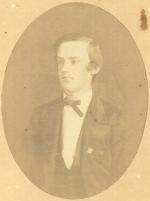
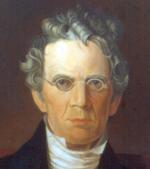
Samuel Brown (1769-1830)

Samuel Brown was born January 30th, 1769 to Rev. John and Margaret Preston Brown in modern-day Rockbridge County, Virginia. Educated in his father's grammar school, Samuel also studied at Rev. James Waddell’s seminary before entering Dickinson College in Carlisle, Pennsylvania in 1787. He was elected to the Belles Lettres literary society, and received his BA in 1789. Preparing for the medical profession, Samuel studied with his brother-in-law Alexander Humphreys in Staunton, Virginia and Benjamin Rush in Philadelphia. In 1792, Samuel went to the Universities of Edinburgh and Aberdeen in Scotland, receiving his medical degree from Aberdeen in 1794.

During his career as a physician, Samuel established himself in Bladensburg (Maryland), Lexington (Kentucky), and New Orleans. From 1799 to 1806 he taught chemistry, anatomy and surgery at Transylvania University in Lexington. In 1800, Samuel joined the American Philosophical Society. He is responsible for bringing the smallpox vaccine to Lexington, inoculating more than 500 people by 1802. In 1819, he abandoned plans for an Ohio medical school in favor of the chair of theory and practice of medicine at Transylvania University. He retired in 1825. Among his other accomplishments, Samuel founded the Kappa Lambda Society of Hippocrates, invented a ginseng clarification process, and promoted the practice of lithotrity, a non-invasive method of breaking up bladder stones.
College Relationship
Alumnus/Alumna Class Year

Philip Auld Harrison Brown (1842-1909)

Philip A. H. Brown was born on January 3, 1842 to John and Sarah Harrison Auld Brown in Baltimore, Maryland. He prepared for his undergraduate years at Lynchburg College in Virginia and then entered Dickinson College in Carlisle, Pennsylvania in the fall of 1857. While at the College, Brown became a member of the Phi Kappa Psi fraternity and was elected to the Belles Lettres Society. He graduated with his class in 1860.

By the spring of 1862, Brown was a sergeant in the Fourth Battery, Maryland Artillery, known also as "the Chesapeake Battery," in the Army of Northern Virginia. He served the Confederacy until the end of the war, mustering out as a sergeant in May 1865. He saw action in some of the larger encounters of the war, including Cedar Mountain, Cold Harbor, and Gettysburg, where his unit lost heavily. Following the war, Brown engaged in the transportation trade. By 1871, he had also completed religious training and was ordained in the Episcopal Church. He served as the seventh rector of Christ Church in Cooperstown, New York between 1872 and 1874. He was also the vicar of the Trinity Parish in Verick Street, New York City from 1875 to 1909.

Brown married Jane Russell Averell Carter of Cooperstown in 1879. The couple had eight children. On September 15, 1909, the Reverend Philip Auld Harrison Brown died and was buried in Cooperstown in the Christ Church graveyard. He was sixty-seven years old.

College Relationship
Alumnus/Alumna Class Year

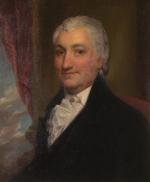
Matthew Brown (1776-1853)

Matthew Brown was born in the White Deer Valley of Northumberland County, Pennsylvania, where his father had removed from Carlisle to become one of the earliest settlers in the area. The father, an elder in the Reformed Presbyterian Church, was an active opponent of colonial rule; he died of fever while serving in the Revolutionary War. The two year old Matthew was taken in by an uncle, William Brown, who lived near Harrisburg. As a prominent figure in Dauphin County, Brown was able to provide his adopted son with an education in local schools before enrolling him in Dickinson College in nearby Carlisle, Pennsylvania. Graduating with the class of 1794, Matthew returned to Northumberland County where he began to teach classical school; his intellectual pursuits brought him into contact with such noted individuals as Joseph Priestley. He also began to study divinity in 1796 and three years later he was licensed to preach by the Carlisle Presbytery. He was ordained in 1801.

College Relationship
Alumnus/Alumna Class Year

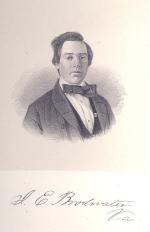
Joseph Emory Broadwater (1837-1899)

Joseph E. Broadwater was born in Accomac County, Virginia to David and Mary Ann White Broadwater on April 29, 1837. He prepared for college at academies in Drummondville, Virginia and Bel-Air, Maryland before entering Dickinson College in Carlisle, Pennsylvania in 1854. Broadwater was elected to the Belles Lettres Society and graduated with his class in July 1858. He then studied medicine at the University of Maryland and was awarded the M.D. there in 1860.

Broadwater returned home to Virginia's Eastern Shore and took up practice in Temperanceville, Virginia. He spent the remainder of his life there as a family physician. Broadwater was also elected to a term in the Virginia House of Delegates in 1889, and he served as a member of the school board for Accomac County.

College Relationship
Alumnus/Alumna Class Year

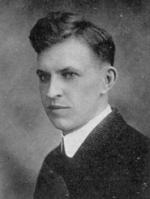
Raymond Rush Brewer (1889-1963)

Raymond Brewer was born on November 23, 1889 to Irvin and Mary Jane Winger Brewer in Sylvan, Pennsylvania. He attended the Dickinson Preparatory School in Carlisle, Pennsylvania before joining the full undergraduate class of 1916. At Dickinson, Brewer studied the Classical course, and was a member of Theta Chi, Union Philosophical Society, the Y.M.C.A., and Phi Beta Kappa. After graduation, he briefly attended Drew Theological Seminary, but the outbreak of the First World War interrupted his studies, and he withdrew to serve as a chaplain in the war. Eventually, Brewer received his bachelor of sacred theology from Boston University in 1921.

College Relationship
Alumnus/Alumna Class Year

Hugh Henry Brackenridge (1748-1816)

Hugh Henry Brackenridge was born in a small village in western Scotland near Cambeltown. His family emigrated to Philadelphia around 1753 and settled in York County, Pennsylvania. He made determined efforts to educate himself, with the help of a local pastor, and by 1768 he was able to enter Princeton, where he was a classmate of James Madison. After graduation he studied divinity and headed an academy in Maryland. During the Revolution he wrote patriotic literature and served as a chaplain. He later gave up the ministry, having never been ordained, and took up the law under Samuel Chase in Maryland. In 1781 he journeyed to Pittsburgh to begin a practice. There he became active in community affairs, including the beginnings of the first Pittsburgh newspaper, bookstore, and most importantly, in 1787, the Pittsburgh Academy which was eventually to become the University of Pittsburgh.

In politics, he became involved with the Whiskey Rebellion, in such balanced measure that he stirred the suspicions of the rebels amongst whom he lived as well as the Federal representatives engaged in restoring order to the West. Nevertheless, he was a loyal Republican and Governor McKean appointed him to the Supreme Court of Pennsylvania in 1799. Two years later, he left Pittsburgh and settled in Carlisle.

College Relationship
Trustee - Years of Service
1803-1816

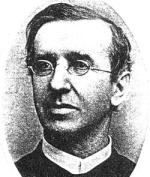
Thomas Bowman (1817-1914)

Thomas Bowman was born in Briarcreek Township near Berwick, Pennsylvania on July 15, 1817. His father was a successful businessman and the family had been Methodists since Francis Asbury had converted, and later ordained, Bowman's grandfather, also named Thomas, in 1780. Young Thomas was educated in the local schoolhouse and then entered Wilbraham Academy in Massachusetts for a year, progressing to the Casenovia Seminary in New York where he studied for three years. He entered Dickinson College in Carlisle, Pennsylvania as a junior in 1835 and graduated as valedictorian of the class of 1837, the first class to graduate under the management of the Methodist Church.

College Relationship
Alumnus/Alumna Class Year
Honorary Degree - Year
1872; 1876

Shadrach Laycock Bowman (1829-1906)

Shadrach Bowman was born on May 2, 1829 in Berwick, Pennsylvania. He attended the Dickinson Seminary in Williamsport, Pennsylvania before entering Dickinson College in 1853. He was a member of Phi Beta Kappa and the Union Philosophical Society. Bowman graduated with the class of 1855, and received his master’s degree from the College in 1864.

From 1855 to 1857 Bowman was a member of the Baltimore Conference of the Methodist Episcopal Church; in 1857, he transferred to the Newark Conference. He then served as pastor in several churches in Pennsylvania until he accepted a position at Dickinson College in 1866. As professor of Biblical languages and literature, Bowman gave instruction in Greek and Hebrew. He completed his doctorate in theology from Rutgers College and another in systematic theology from DePauw University in 1870. Bowman left Dickinson in 1871, having failed to institute a new program of Biblical studies at the college.

Bowman returned to preaching, serving congregations in Lock Haven, Bedford, York, and Morristown, New Jersey. From 1877 until 1882, he served on the Board of Trustees of Dickinson College. In 1882, Bowman accepted the position of dean and professor of systematic theology at DePauw University. After seven years there, he served as pastor for three years at Katonah, New York. He returned to teaching at Drew Theological Seminary in 1903.

College Relationship
Alumnus/Alumna Class Year
Faculty - Years of Service
1865-1872
Trustee - Years of Service
1877-1882

William James Bowdle

William James Bowdle was born the son of Amos Bowdle and his wife in Church Creek, Maryland on October 8, 1834. He entered the Dickinson Grammar School in Carlisle, Pennsylvania in September 1849 and then joined the undergraduate class of 1854 a year later. His classmates remember "Billy" as the fun-loving and well-liked center for mischief on the campus. He was elected to the Belles Lettres Society and graduated with his class. He then went on to study medicine, gaining his degree in Baltimore in 1856.

He removed to Kansas with the determination to help the territory become a slave-holding state but returned somewhat disillusioned in 1859 to Baltimore. He gave up his practice and enlisted in the United States Navy as a surgeon in 1861; he served for a time as hospital surgeon at the naval hospital on Hilton Head , South Carolina. Following the war, he returned to Dorchester County and practiced medicine there until his death.

While in Kansas, he had married a Southern women. Nothing further is known of his family life. William James Bowdle died at his home in Church Creek, Maryland on August 1, 1876. He was forty-one years old.

College Relationship
Alumnus/Alumna Class Year

James Iverson Boswell (1837-1926)

James Iverson Boswell was born in Philadelphia on November 3, 1837. He attended the central high school in that city and enrolled at Genesee College in New York in 1856. A year later, Boswell enrolled at Dickinson College in Carlisle, Pennsylvania as a junior. In the year he was at the College, he was elected to the Belles Lettres Society. Boswell graduated with his class in the early summer of 1858.

Boswell then attended the Union Theological Seminary in New York City in 1861 and was later ordained as a Methodist minister. As a member of the Newark Conference, he had a long career as pastor at a string of New Jersey churches located in the following towns: Westfield, Palisade, Mount Hermon, Somerville, Elizabeth (Fulton Street), Newark (Trinity), Newtown, Montclair, Paterson (Cross Street), Jersey City (West Side Avenue), Nyack, Madison, South Orange, Englewood, and Verona. Boswell retired from this particularly mobile ministry of more than four decades in 1903.

In May 1863, Boswell married Cynthia Copeland. James Iverson Boswell died in Ocean Grove, New Jersey on November 30, 1926. He was three weeks past his eighty-ninth birthday.

College Relationship
Alumnus/Alumna Class Year
Honorary Degree - Year
1888