Robert Cathcart (1759-1849)

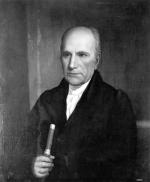
Robert Cathcart was born in 1759 to Alexander and Mary Cathcart near Colerain, Londonderry, Northern Ireland. He studied science and theology at the University of Glasgow and graduated in 1780. Cathcart immigrated to the United States, arriving in Philadelphia in 1790. For the next three years, he served the Presbytery of Philadelphia. In 1791, Cathcart was sent to York County to preach at the churches of Yorktowne and Shrewsburg, now Round Hill. He was officially transferred to the Presbytery of Carlisle on April 9, 1793, and was again installed as paster at York and Shrewsburg in October of that year. Cathcart lived in York, riding out every other Sunday to preach at Shrewsburg. During his many years of service to both congregations, he only missed one Sunday sermon.

In 1794 Cathcart was appointed a trustee of Dickinson College. He served until the Methodist transition in 1833, and never missed a commencement during those thirty-nine years. When “New College” burned in 1803, Cathcart traveled to Philadelphia to solicit donations for the rebuilding of the college. In addition to his dedication to Dickinson, Cathcart helped to found the York County Academy, now York College, serving on the York Board of Trustees for fifty years. He also served as commissioner to the General Assembly of the Presbyterian Synod for thirty years; for twenty of those he was the clerk of the Assembly. Robert Cathcart died on October 19, 1849.
College Relationship
Trustee - Years of Service
1794-1833

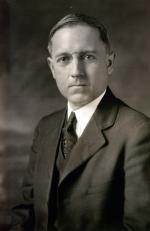
Clarence Johnson Carver (1884-1940)

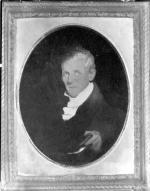
Clarence Johnson Carver was born in Buckingham, Pennsylvania on May 13, 1884. He attended the Hughesian Free School and later Colorado College for one semester. He later came to Dickinson College where he graduated in 1909. Continuing his education, he completed graduate work at the University of Pennsylvania and New York University. He received his M.A. (1915) and Ph. D. (1917) from New York University.

He began his teaching career at the Upper Black School in Eddy, Pennsylvania from 1901 to 1902 and the West Grove School from 1906 to 1907. After his graduation from Dickinson College he taught at the Norristown High School for two years and then joined the Paterson High School faculty in Paterson, New Jersey from 1911 to 1918. From 1918 to 1920, Carver was the Vocational Director of the International Y. M. C. A. at New York.

In 1920 Carver joined the Dickinson College faculty as Associate Professor of the Bible. A year later he became Associate Professor of Education and in 1924 full Professor of Education. Carver was very organized and therefore in demand as secretary to many clubs and committees. He was the secretary of the Dickinson Chapter of Phi Beta Kappa from 1921, secretary of the Dickinson College Library Guild from 1928, and secretary of the faculty from 1929 until his death in 1940. Carver was a charter member of the fraternity, Theta Chi and served as an alumnus counselor.

College Relationship
Alumnus/Alumna Class Year
Faculty - Years of Service
1920-1940

James William Carson (1925-2005)

James W. Carson was born in Ohio in October, 1925 and graduated from Miami of Ohio in 1949. He remained to earn a M.A. in History in 1951, then served as a reference librarian and taught as an instructor in history there. He left to pursue further graduate work at Syracuse University in 1953, teaching in the history department there as well. He also had taught at Western College. He later continued graduate studies at the University of Pennsylvania.

He came to Dickinson in July, 1956, and taught in the Department of History as an assistant and associate professor until his retirement in 1991. He offered a remarkable array of courses during his tenure but is mostly remembered for his contributions to the curriculum in comparative history, especially in the area of South Asia. As his chairman related on his retirement, "the first non-western civilization class at Dickinson was taught in 1935 (but) twenty five years later, colleagues like Donald Flaherty and Jim Carson, along with just a few others, still struggled to nurture this worthy and vital tradition. Today, we know, of course, that they succeeded and that a new generation stands gratefully on these broad shoulders." To commemorate his work, the Department of History instituted in 1992 the James W. Carson Prize for Non-Western and Comparative History, funded from very generous contributions from his friends, his colleagues, and generations of his students.

College Relationship
Faculty - Years of Service
1956-1991

Andrew Carothers (1778-1836)

Andrew Carothers was born in 1778 to John and Mary Carothers of Cumberland County, Pennsylvania. He attended the McHose schoolhouse until he was about 14 years old. As a younger son, Andrew would not inherit the family’s large farm; to provide for his future, the family apprenticed him to a cabinet maker.

But these plans changed dramatically in January 1798, when the entire family became terribly ill. A servant named Sarah Clark later confessed to putting arsenic in the family’s bread and butter. She claimed to be a rival of a Carothers’ daughter for the love of local man. Finding no way of poisoning only the girl, Clark resorted to poisoning the entire family. Sarah Clark was hung for her crimes, but not before both of Carothers’ parents died of arsenic poisoning. Andrew Carothers survived, but suffered from a form of nerve paralysis that left his limbs and hands crippled.

No longer able to pursue cabinet making as a livelihood, Carothers attended Dickinson College as a member of the Class of 1800. From 1802 to 1805, Carothers studied law under David Watts in Carlisle. In December 1805, Carothers was admitted to the Bar of Cumberland County and established a law firm in Carlisle. He also served on the board of the Carlisle Bank, and was eventually elected to the Town Council. Carothers married Catherine Louden in 1812. After her death in 1820, he married Isabella Creigh Alexander.

College Relationship
Alumnus/Alumna Class Year
Trustee - Years of Service
1814-1833

Andrew Carnegie (1835-1919)

Andrew Carnegie was born November 25, 1835 in Dunfermline, Scotland. In 1848, his family moved to Allegheny City, Pennsylvania to live with relatives in a small Scottish community. Andrew began working at a bobbin factory but by 1850 had managed to secure a job as a messenger for the telegraph company in Pittsburgh, Pennsylvania. From here he would launch a career that made him a man of legendary wealth. During the American Civil War, Carnegie was employed in the railroad industry. Immediately following the war, he traveled to Great Britain to study the railroads there. Upon his return, Carnegie combined his knowledge of the British railroad system with the American steel industry to create a modern industrial empire, catapulting the United States into world leadership in steel production. In doing so, he became one of the wealthiest men in the world.

College Relationship
Trustee - Years of Service
1892-1894

Richard Bennett Carmichael (1807-1884)

Richard Bennett Carmichael was born the only son of William and Sarah Downes Carmichael to an old and wealthy Maryland family in Centreville, Queen Anne County on December 25, 1807. His father had shared rooms in Annapolis with future chief justice Roger Brooke Taney and the two men remained friends till William died in 1853. Richard was schooled locally and then entered Dickinson College in Carlisle, Pennsylvania with the class of 1827. While at the College he was elected to the Union Philosophical Society in 1825 but withdrew later to attend Princeton, where he graduated in 1828. He subsequently studied law and opened a practice in his home town in 1830.

Almost immediately after starting his legal career, he was elected to the Maryland house of delegates and two years later, at the age of twenty five, was elected to the United States Congress as a Jacksonian Democrat. He served one term, returned to Centreville, and later, in 1841, went again to the state house, where he served multiple terms over more than two decades. He remained very active in Democratic politics, acting as a delegate to the party's national convention. in 1856. In 1858 he was appointed an associate justice on the 10th Judicial Circuit that encompassed four local counties on the Eastern Shore of Maryland, including his own.

College Relationship
Alumnus/Alumna Class Year

Thomas Care (1832-1864)

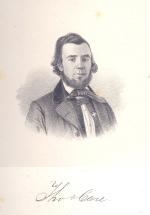
Thomas Care was born at St. Mary's in Chester County, Pennsylvania on July 10, 1832. He was prepared at the Williamsport Seminary and entered Dickinson College in Carlisle with the class of 1858. He was elected to the Union Philosophical Society, was an active debater, and served as treasurer of the society for a time. He graduated with his class in the early summer of 1858 and determined on a career in the Methodist Episcopal Church.

From 1859 to 1863, Care was a pastor and circuit rider with the East Baltimore Conference, riding for a time in 1859 in Huntingdon County. He then took a post in 1863 as instructor of natural science at his old school, the Williamsport Seminary, which he held for a year. In late 1863, he was again a missionary and circuit preacher, this time in Elk County, Pennsylvania.

No information is available at this time on his family situation. Thomas Care died in Harrisburg on March 18, 1864. He was thirty-two years old.

College Relationship
Alumnus/Alumna Class Year

John B. Care (1915-1946)

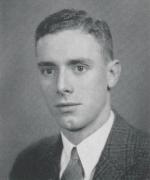
John Care was born in Linglestown, Pennsylvania on June 22, 1915. He attended high school in Lower Paxton and entered Dickinson College with the class of 1936. His ambition was to become a teacher; he had practiced teaching at Boiling Springs High School. After graduation, however, he was mostly employed as a clerk, first with the U.S. Treasury and then with the Pennsylvania Supply Company.

Care enlisted in the Army in April, 1942 and became an officer that November; he was sent to Europe in late 1944. He served in Europe with the advance as a member of the 468th Anti-Aircraft Artillery Automatic Weapons Battalion attached to the Ninth and Third Armies.

On February 10, 1946, while serving with the Army of Occupation in Austria, John Care died of gunshot wounds.

College Relationship
Alumnus/Alumna Class Year

William Laws Cannon (1839-1863)

Birth: April 6, 1839; Bridgeville, Delaware

Death: August 18, 1863 (age 24); Bel Air, Maryland

Military Service: USA, 1861-62

Unit: 1st Delaware Calvary 

Alma Mater: Dickinson College, B.A. (Class of 1860)

Cannon was born on April 6, 1839 at Bridgeville, Delaware. His father, William Cannon, was a successful merchant who later became governor of Delaware during the war. At Dickinson, Cannon was a member of the Union Philosophical Society as well as Phi Kappa Sigma. He received his bachelor of arts degree in 1860. After graduation he obtained a position at the Census Bureau in Washington, D.C.

Cannon became a captain of the 1st Delaware cavalry in the Army of the Potomac and was placed in command of Company B of that unit. He contracted typhoid fever during the occupation of Bel Air, Maryland, dying there on August 18, 1863.

On news of his death, the towns two publishers, the 'Southern Aegis" a southern sympathizing publication and the "Bel Air American," the unionist post joined together to publish a tribute to him.  It read,

"... and from the gentlemanly deportment endeared himself to many of our citizens who deeply and sincerely mourn his loss, and sympthazie with his afflicted family, several members of which were with him when he died. His men were deeply troubled at their loss, many of them being affected to tears when the sad announcement was made to them."

College Relationship
Alumnus/Alumna Class Year

John Farr Campbell (1917-1943)

John Campbell was born on the fourth of July, 1917, in Hightstown, New Jersey. The son of a carpet weaver who never finished high school, he attended the Peddie School in his home town and entered Dickinson on September 16, 1937 as a member of the class of 1941. While at the College, he participated in soccer, baseball, and basketball. Nicknamed "Soupy," he was also very active in campus organizations, including the Student Senate, the Athletic Association, Microcosm, and Omicron Delta Kappa. He was a member of Sigma Alpha Epsilon, serving as treasurer and president, and of Raven's Claw.

Shortly after graduation, he enlisted in the United States Army Air Corps and after being accepted as a flying cadet was commissioned in the fall of 1942. He was assigned to North Africa following the landings there and was posted as missing on March 31, 1943 when a flight he was on did not return. He was later declared as killed in action.


College Relationship
Alumnus/Alumna Class Year