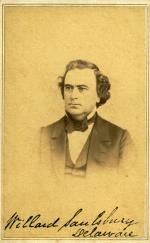
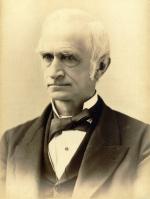
Rufus Edmonds Shapley (1840-1906)

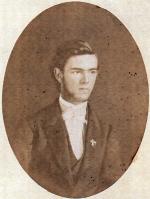
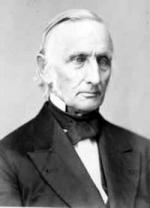
Rufus Edmonds Shapley was born in Carlisle, Pennsylvania on August 4, 1840, the son of Rufus and Susan Shapley and the older brother of William Wallace Shapley. He was educated locally and entered Dickinson College in Carlisle with the class of 1860. While attending he became an active member of the Union Philosophical Society and later on its hundredth anniversary in 1889 returned to give the keynote speech for the occasion. Following his graduation with his class he studied law in the office of William Penrose in Cumberland County. He very briefly served as a private in Company I of the militia's First Regiment of Pennsylvania Volunteers but this emergency unit was in being for only two short weeks in September 1862 before being broken up.
College Relationship
Alumnus/Alumna Class Year
Honorary Degree - Year
1900

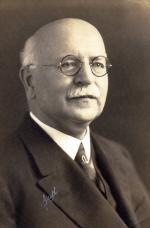
Montgomery Porter Sellers (1873-1942)

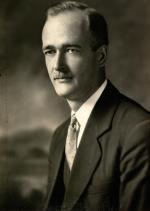
Montgomery Porter Sellers was born on August 26, 1873 to Francis Benjamin and Martha Porter Sellers. He grew up in Carlisle and graduated from Carlisle High School. Sellers entered the local Dickinson College in 1889. While a student at Dickinson, Sellers took courses in the modern language curriculum. He was a member of the Belles Lettres Literary Society and won that organization's Sophomore Prize, a gold medal awarded to a member outstanding in composition and declamation. In addition, Sellers was a member of the Phi Kappa Psi fraternity and the Phi Beta Kappa honor society. He graduated with his class in 1893.

Upon graduation, Sellers began teaching in the Preparatory School. Following this, he served as an adjunct professor of history and German at the College until 1904, and then from 1904 to 1942 he was a professor of rhetoric and English. Also during this time, Sellers served as dean of the freshman class and finally as dean of the College from 1928 to 1933. Outside of the classroom, Sellers traveled extensively in Europe, studying in both England and Germany. He also pursued graduate work at the University of Chicago.

College Relationship
Alumnus/Alumna Class Year
Faculty - Years of Service
1893-1942

Charles Coleman Sellers (1903-1980)

Charles Coleman Sellers was born in Overbrook, Pennsylvania on March 16, 1903. He attended Haverford College until 1925, graduating Phi Beta Kappa, and went on to earn his master of arts degree from Harvard in 1926. He then went on to a career as an historian and librarian. From 1937 to 1949 Sellers was the bibliographic librarian at Wesleyan University. He became a research associate for the American Philosophical Society of Philadelphia in 1947 and remained there until 1951.

By then, he was already curator of the Dickinsoniana collection at Dickinson College in Carlisle, Pennsylvania, a post he took up in 1949. He became the Librarian of the College in 1956 following the retirement of May Morris. He had also earned his doctorate at Temple during this time and it was awarded in 1957. He also became the librarian of the Waldron Phoenix Belknap Jr. Research Library of American Painting in Wintherthur, Delaware in 1956, remaining in this position for three years. In 1959 he became editor of the American Colonial Painting. With the opening of the May Morris Room in the new Spahr Library, Sellers once again became historian and curator of the Dickinsoniana in 1968. He held this post till his retirement. A grateful Dickinson College awarded him an honorary doctorate of letters in 1979.

College Relationship
Honorary Degree - Year
1979
Faculty - Years of Service
1949-1969

Levi Scott (1802-1882)

Levi Scott was born on October 11, 1802 in Newcastle County, Delaware near Odessa. Little is known of his early life and education except that he was converted to the Methodist faith on October 16, 1822 at Fieldboro, Delaware and began to study in the church. He was appointed officially as a preacher and joined the Philadelphia Conference in April 1826. He served in various circuits and parishes in the region and was appointed as an elder of the Methodist Episcopal Church in 1834.

After having served as a trustee of Dickinson College in Carlisle, Pennsylvania on behalf of the Methodist Conference between 1839 and 1841, Scott became the principal of Dickinson's Grammar School in 1840. During this time, the Grammar School was viewed as a preparatory division for admittance to Dickinson College, offering instruction to between forty and fifty students each year. He resigned from this position in 1843 and returned to his work with the church, although he maintained his contacts with the College and later rejoined its board from 1858 to 1882.

College Relationship
Trustee - Years of Service
1839-1841; 1858-1882

Samuel Simon Schmucker (1799-1873)

Samuel Simon Schmucker was born in Hagerstown, Maryland on February 28, 1799, the son of a Lutheran minister John George Schmucker, an immigrant from Germany, and Catherine Gross. His father transferred to York, Pennsylvania in 1809 and Samuel completed his early schooling there at the York Academy. He went on to study at the University of Pennsylvania, entering at fifteen. After a time teaching at York Academy - he was seventeen - and embarking on a missionary journey to Ohio and Kentucky, he entered the Princeton Theological Seminary, and was himself ordained as a Lutheran pastor in 1820.

The impact of the precocious young pastor was immediate. Schmucker helped to organize the General Synod of the church in 1820, writing its constitution and hymnal. Just six years later he founded the Lutheran Theological Seminary in Gettysburg, Pennsylvania as the first institution of its kind in the United States and became its first president and a faculty member for almost four decades. He also served, in the spirit of ecuminicalism for which he was later to become famous, as a member of the board of trustees of the nearby, Presbyterian dominated, Dickinson College in Carlisle from 1828 to 1832. When Dickinson temporarily closed its doors in 1832 he became the leading founder of Pennsylvania College, later known as Gettysburg College, and remained on its board until his death.

College Relationship
Trustee - Years of Service
1828-1833

Alexander Jacob Schem (1826-1881)

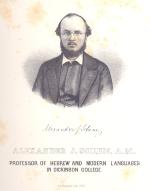
Alexander Jacob Schem was born on March 16, 1826 in Wiedenbruck in Westphalia to a vinegar manufacturer named Freidrich Schem and his wife Adolphine von Felgenhauer. He was educated first at the Paderborn Gymnasium and then went on to the Universities at Bonn and Tubingen, studying Catholic theology. He was ordained as a Catholic priest in April 1849 and served a parish in Bielefeld for two years. He became disaffected from the Church of Rome, however, and emigrated to the United States in 1851.

College Relationship
Faculty - Years of Service
1854-1860

Ralph Schecter (1893-1980)

Ralph Schecter was born on September 28, 1893 in Riola, Illinois, and attended public schools in nearby Danville. He graduated from the University of Illinois in 1916. Following service with the American Expeditionary Force in France as an engineer and conductor of the 243rd Engineers Band, he studied conducting in London under Sir Henry Wood. He taught English at various mid-western high schools before coming to Dickinson College in Carlisle, Pennsylvania as an instructor in English in 1922.

James Henry Morgan, president of the College, appointed Schecter to be the director of music and the director of the orchestra and band. Serving under six presidents, he was a versatile faculty member teaching music and public speaking as well as English.

He was largely responsible for the institution of the music department. Many students involved with the band and orchestra were unskilled in their instruments and it was often up to Schecter to teach them how to play. Every school day for more then twenty-five years, Schecter conducted his ensemble in two new pieces at daily chapel, a total of almost 10,000 pieces without a single repetition. He also arranged some of his own music. In 1958, Schecter became the Thomas Beaver Chair of Literature and three years later was granted emeritus status upon retirement. He was one of the earliest recipients of the Lindback Distinguished Teaching Award in 1961.

College Relationship
Faculty - Years of Service
1922-1961

John O. Saxton (1833-1903)

John Saxton was born on July 3, 1833 in Silver Spring Township near New Kingston, Pennsylvania. He was the only son of John and Nancy Saxton. Although his farmer father died when John was ten years old, he attended the New Kingston Academy and entered Dickinson College in nearby Carlisle in 1852 with the class of 1855. He was elected to the Belles Lettres Society, but left the College after three years and returned home to run the family farm.

Saxton was a prosperous farmer who, after his marriage, controlled 345 acres in the area. He moved into the nearby town of Mechanicsburg, Pennsylvania, where he was active in civic affairs. Saxton sat for twenty years on the school board, held office for two terms on the city council, and served as chief burgess of the town. He was active in the Cumberland County Agricultural Society and, as an active Presbyterian, was a founder and treasurer of the Mechanicsburg Bible and Tract Society from 1871. Saxton was also a Democrat and was a presidential elector from the Nineteenth Congressional District in 1880.

In November 1866, Saxton married Ellen Dunlap of Lower Allen Township, Cumberland County. The couple had six children. Three of these reached maturity, including Lynn M. Saxton, who attended Dickinson with the class of 1896. John Saxton died at this home on the corner of York and Main Streets in Mechanicsburg in 1903. He was seventy years old.

College Relationship
Alumnus/Alumna Class Year

Willard Saulsbury (1820-1892)

Willard Saulsbury was born as the youngest of three sons of William and Margaret Smith Saulsbury, wealthy landowners in Kent County, Delaware, on June 2, 1820. Saulsbury prepared at Delaware College at Newark, and attended Dickinson College in Carlisle, Pennsylvania between 1839 and 1840 in the class of 1842 before leaving to study law. His middle brother, Eli Saulsbury, also attended Dickinson.

He opened a practice in Georgetown, Delaware in 1845. He became the attorney-general of Delaware in 1850, thus launching a career in politics as a Democrat. He was present at the Democratic convention in Cincinnati in 1856 that nominated James Buchanan for the presidency; for his support he was appointed to the United States Senate in 1859. He defended slavery but supported the preservation of the Union. He vigorously opposed arrests for disloyalty in Delaware, supported Senator Bright of Indiana in his fight against expulsion for treason in 1862, and protested Lincoln's suspension of the writ of habeas corpus.

In 1871, the three Saulsbury brothers vied for the Senate seat Willard held and he eventually gave his support to Eli, who was elected. In 1873, he was appointed as Chancellor of Delaware and remained in this post for the rest of his life.

College Relationship
Alumnus/Alumna Class Year

Eli Saulsbury (1817-1893)

Eli Saulsbury was born as the middle child of three sons of William and Margaret Smith Saulsbury, wealthy landowners in Kent County, Delaware, on December 29, 1817. He was schooled locally and entered Dickinson College in Carlisle, Pennsylvania with the class of 1843 in 1839. A member of Belle Lettres Literary Society, he remained at the College for only one year before returning to the family estate.

He became a representative for his home state in 1853 and was admitted to the Delaware Bar in 1857, beginning a law practice in Dover. The three Saulsbury siblings, all staunch democrats, were active in politics. His younger brother Willard, Dickinson class of 1842, served as a United States senator and his elder brother, Gove, was governor of Delaware. In 1871 Willard retired, and supported Eli in his successful bid against Gove to fill the vacancy.

Eli Saulsbury served three terms in the United States Senate, including a stint on the Committee on Privileges and Elections. His public service came to an end in the election of 1888, when political divisions enabled the Republicans to claim the seat. Defeated, he returned to his estate in Delaware. Eli Saulsbury died on March 22, 1893. He was never married.

College Relationship
Alumnus/Alumna Class Year