Lewis Guy Rohrbaugh (1884-1972)

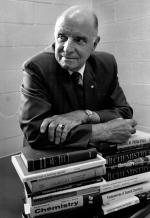
Lewis Guy Rohrbaugh was born on February 24, 1884 in Fowblesburg, near Baltimore, Maryland. He graduated from Franklin High School in Reisterstown in 1903 and entered Dickinson College in Carlisle, Pennsylvania. During his college years, Rohrbaugh became a member of Alpha Chi Rho, Omicron Delta Kappa and the Union Philosophical Society. He graduated in 1907, studied at Drew Theological Seminary for his B. D. degree and earned his Ph.D. at the State University of Iowa in 1922 in philosophy and religion.

He returned to Dickinson as an associate professor of philosophy and religious education that same year and, in 1930, became professor of philosophy and religion. Rohrbaugh was appointed as the dean of the freshman class in 1933. He later also chaired his department. An ordained Methodist minister, Rohrbaugh was also a theology scholar, publishing books and essays such as Religious Philosophy, The Science of Religion, and A Natural Approach to Philosophy. In 1951, he was appointed to the newly endowed Thomas Bowman Chair of Religion, named for the first graduate of the College to be named a Methodist bishop.

Rohrbaugh married Lillian Mae Heffelbower in 1907 and they had one son, H. Lewis Rohrbaugh, who graduated from Dickinson in 1930. He taught at the College until 1953 when he was accorded professor emeritus status. Lewis Guy Rohrbaugh died on June 30, 1972.
College Relationship
Alumnus/Alumna Class Year
Honorary Degree - Year
1954
Faculty - Years of Service
1922-1953

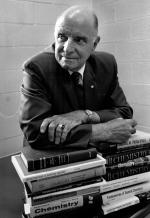
Horace Elton Rogers (1902-1987)

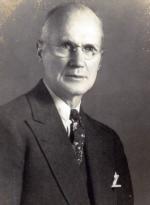
Horace Rogers was born on December 5, 1902 in Philadelphia, Pennsylvania. He entered Dickinson College in Carlisle, Pennsylvania in 1920 and graduated Phi Beta Kappa four years later in 1924. He had also become a member of the Kappa Sigma fraternity. His mentor, Dr. Ernest A. Vuilleumier encouraged him to remain at the College and after he turned down an offer from Eastman Kodak in Rochester, New York, Rogers was able to secure a position as a faculty member. He began as an instructor of physics and chemistry in 1925. Apart from the three years in which he pursued graduate studies, earning a master's degree from Lafayette and a doctorate from Princeton in 1930, he devoted his working life to his alma mater. By 1930 Rogers held the position of associate professor of chemistry and then became a full professor of analytical chemistry in 1941. He was named Alfred Victor duPont Professor of analytical chemistry in 1952. He became chairman of the chemistry department after the death of Dr. Vuilleumier in 1958.

College Relationship
Alumnus/Alumna Class Year
Faculty - Years of Service
1925-1971

Allan Scott Rogers (1924-1944)

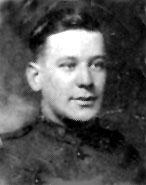
Born on March 24, 1924, Allan Rogers was from Jenkintown, Pennsylvania and was a graduate of Abington High School. He transferred to Dickinson College in Carlisle, Pennsylvania in 1942 from Duke University but was called to active duty after only the fall and winter sessions at the College. He had been a pledge of Phi Kappa Psi fraternity.

Rogers was trained in Alabama and Arkansas as a pilot and was commissioned in January 1944. In June 1944 he joined the Eighth Air Force in England, flying co-pilot in B-17 bombers.

On July 29, 1944, on his fourteenth mission, his B-17 was one of a group sent to bomb a synthetic oil plant in Germany. En route to target over Holland, the plane was struck by anti-aircraft fire, which caused it to explode. Rogers was initially declared as missing in action but subsequent information gained toward the end of the war stated that the badly injured young lieutenant had been taken to a German military hospital in Holland and did not survive the day. He was twenty years old.

College Relationship
Alumnus/Alumna Class Year

Thomas Lloyd Rockwell (1923-1944)

Thomas Rockwell was born in Wellsboro, Pennsylvania in May 1923 and attended the Carson Long Military Institute. He entered Colgate University and transferred to Dickinson College in Carlisle, Pennsylvania after a year, but withdrew before the end of his first term in the fall of 1941.

He enlisted in the Army Air Corps in December 1941 but ultimately trained as an infantry officer at Fort Benning, Georgia, earning his commission in November 1943. Rockwell later trained as a paratrooper and toured the country with a group of parachute infantry jumpers promoting war loans. He was assigned to Europe in August 1944. Rockwell was reported as missing in action on December 24, 1944 and confirmed as killed in action on January 12, 1945.

College Relationship
Alumnus/Alumna Class Year

Thomas Paschall Roberts (1843-1924)

Thomas Paschall Roberts, known as Colonel, was born in Carlisle, Pennsylvania on April 21, 1843 to William Milnor Roberts and Anna Gibson Roberts. His grandfather was John Bannister Gibson, Chief Justice of Pennsylvania. Roberts began classes at Farmers’ High School in 1859, then left in 1861 to attend the local Dickinson College, where he was elected President of the Union Philosophical Society.

He left Dickinson in 1863 to join his father in Brazil as an engineer on the Dom Pedro II railroad, and remained there until 1865. In 1872, on a U.S. government survey of the Missouri River, Roberts named Black Eagle and Rainbow Falls. During his career he worked on projects all over the United States, from the Montana Division of the Northern Pacific Railroad to the Louisville & Nashville system in Kentucky, and worked for many years for the Monongahela Navigation Company. From 1912 until his retirement on August 20, 1922 Roberts worked as an engineering consultant for the U.S. Engineer Office in Pittsburgh.

A regular contributor to newspapers and magazines, Roberts also wrote the Memoirs of John Bannister Gibson in 1890 and was one of the founders of the Engineers’ Society of Western Pennsylvania in 1880. Roberts had seven children with his wife Juliette Emma Christy, who he married on June 8, 1870. He died on February 25, 1924 at his home at 561 North Craig Street, Pittsburgh.

College Relationship
Alumnus/Alumna Class Year

Henry Milton Ritter (1847-1904)

Henry Milton Ritter was born on February 6, 1847 in Carlisle, Pennsylvania. He was one of the eight children of Henry and Mary Wonderlich Ritter, who opened the first merchant tailor establishment in the town in 1837. The younger Ritter was educated at the town schools and then entered the local Dickinson College with the class of 1867. He withdrew after one year, however, and completed business school training at the Eastman Business College in New York soon after. Ritter returned to Carlisle, entered his father's business, and ran the store in Carlisle for many years.

In January 1868, Ritter married M. Maybury Hassler of Carlisle, and the couple had three children. Henry Milton Ritter died in Carlisle on December 17, 1904. He was fifty-seven years old.

College Relationship
Alumnus/Alumna Class Year

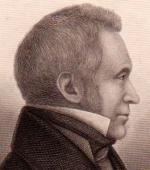
Henry Moore Ridgely (1779-1847)

Henry Moore Ridgely was born in Dover, Delaware on August 6, 1779. His father, Charles, was a doctor and Delaware colonial and state legislator who had been a delegate to the first state constitutional convention in 1776. His mother, Ann Moore, his father's second wife, kept a large and strict household that included her four step-children along with her own five. Ridgely studied at New Ark Academy, in Newark, Delaware in 1794 and left for Dickinson College in Carlisle, Pennsylvania a year later. While at the College he was active in the then fledgling Union Philosophical Society. He graduated in 1797 and studied law, first in Lancaster under Charles Smith and then with his elder step-brother Nicholas in Dover. He was admitted to the Delaware bar in 1802.

College Relationship
Alumnus/Alumna Class Year

John Taylor Richards, Jr. ( -1918)

John Richards was from Hazleton, Pennsylvania and a member of the class of 1918 at Dickinson College in Carlisle, Pennsylvania, studying the Philosophical course. He was active at the College in the Y.M.C.A, and was also a member of Phi Kappa Sigma fraternity and a participant in freshman football.

Richards left to enlist in the spring of 1917 and served as a sergeant in the Quartermaster Corps of the American Expeditionary Forces. He arrived in France in November 1917 and died there on October 22, 1918.

College Relationship
Alumnus/Alumna Class Year

Robert Fleming Rich (1883-1968)

Robert Fleming Rich was born in Woolrich in Clinton County, Pennsylvania on June 23, 1883. His parents were Michael Bond Rich, from the famous Pennsylvania textile family, and Ida Belle Shaw. He was schooled at Mercersburg Academy and the Williamsport Commercial College before he entered Dickinson College in Carlisle, Pennsylvania in 1903 with the class of 1907. He joined Phi Kappa Psi during his freshman year and played two years on the football team, but left the College in 1906 without graduating to take up a position in the family's Woolrich Woolen Mills. Thus began a long and successful commercial career which saw him become general manager from 1930 to 1959, then president and chairman of the board of Woolrich Woolen Mills. He also engaged in other ventures in banking, manufacturing and utilities.

Rich became active in Republican politics, representing his district as a delegate to the national convention in 1924. In November 1930 he was elected to the Seventy-First Congress to fill the vacancy caused by the death of Edgar R. Kiess. He served for the next twelve years until 1942 when he did not seek renomination, but he returned to the House of Representatives in the Seventy-ninth Congress in 1945 and served another three terms. He retired from politics in early 1951 and devoted himself from then on to his work at Woolrich.

College Relationship
Alumnus/Alumna Class Year
Honorary Degree - Year
1941
Trustee - Years of Service
1917-1968

John Cromwell Reynolds (c.1810-1849)

John C. Reynolds was born the son of Reuben Reynolds in Cecil County, Maryland around 1810. He studied at an early age at the Nottingham Academy in his home county and then entered Dickinson College in Carlisle, Pennsylvania with the class of 1825. When he graduated with honors, Reynolds was still only sixteen years old. He then went on to study medicine with Dr. Nathan Smith in Baltimore.

Reynolds interned in the hospitals of Baltimore and then became a commissioned surgeon in the United States Army. He saw his first action in the second Seminole War, fought between 1835 and 1842 in Florida. Reynolds also was involved with the Cherokee unrest. This included the subsequent treaty signing authorizing the final removal of that tribe in 1835, and the escorting of 5000 tribe members across the Mississippi in the infamous "Trail of Tears" in 1838. He went on to serve under General Winfield Scott in the Mexican War in 1846.

Reynolds married Eleanor Moore of Lewistown, Pennsylvania and from then on called Mifflin County his home. John Cromwell Reynolds died on February 20, 1849 in Lewistown. He was thirty-eight years old.

College Relationship
Alumnus/Alumna Class Year