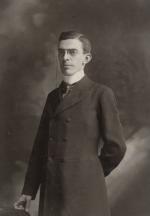
Leon Cushing Prince (1875-1937)

Leon Prince was born on May 15, 1875 to Morris Watson and Katherine Farnham Buck Prince in Concord, New Hampshire. He attended Bordentown Military Academy and then enrolled in New York University in 1894. During his time at military school, Prince was struck with muscular dystrophy which would confine him to a wheelchair for the rest of his life. In 1896 his father became a professor at Dickinson College in Carlisle, Pennsylvania and Prince transferred to the school shortly after in 1897. While at Dickinson, he was a member of Phi Beta Kappa honorary society and an officer in Belles Lettres Literary Society.

He graduated in 1898 and enrolled in the Dickinson School of Law. He graduated with a L.L.B. in 1900 and joined the Cumberland County Bar Association the same year. Also in 1900, Prince became an ordained clergyman of the New York Conference of the Methodist Episcopal Church and began a career as a librarian and instructor at Dickinson. Three years later he was promoted to the position of adjunct professor of history and economics. He held this position until 1910, when his father retired and Prince became a full professor of history and economics.
College Relationship
Alumnus/Alumna Class Year
Faculty - Years of Service
1900-1937

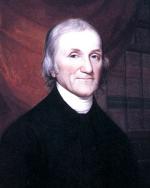
Joseph Priestley (1733-1804)

Joseph Priestley was born on March 13, 1733 to Jonas and Mary Swift Priestley. Jonas Priestley was a dyer and dresser of woolen cloth. Joseph's mother died when he was young, so much of his early education was provided by his aunt, Sarah Keighley. He went on to study at a local grammar school, and in 1751 entered Daventry Academy.

In September 1755 he obtained a parish in Needham Market, Surrey, and he was finally ordained on May 18, 1762. He was called as a tutor to Warrington Academy and taught modern history and languages from 1762 to 1767. He married Mary Wilkinson on June 23, 1762, shortly after beginning work at Warrington. For reasons regarding Mary's health, the two moved to Mill Hill in 1767 where Joseph obtained another congregation.

Lord Shelburne (William Petty) hired Priestley as his librarian in 1772, retaining his services until 1780. Priestley then moved on to the New Meeting congregation in Birmingham where he remained until the Birmingham Riot of July 1791. During the riot, Priestley's home and laboratory was burned, while he and his family narrowly escaped. The family settled in London for a few years, but sailed for the United States in 1794.

Cornelius William Prettyman (1872-1946)

Cornelius Prettyman was born on July 21, 1872 in Leipsic, Delaware, the son of the Reverend Cornelius Witbank Prettyman of the Dickinson class of 1872 and his wife Emma Elizabeth. He prepared at the Newark Academy in his home state and then entered Delaware College in 1886. That same year he transferred to Dickinson College in Carlisle, Pennsylvania, where he excelled in the modern languages, played tennis, edited for the Dickinsonian, joined the Union Philosophical Society, and pledged with Beta Theta Pi fraternity, of which his father had been a charter member. He graduated in 1891 as a member of Phi Beta Kappa. His brother, Virgil, graduated the following year.

College Relationship
Alumnus/Alumna Class Year
President - Years of Service
1944-1946
Faculty - Years of Service
1900-1946

William W. Potter (1792-1839)

William Wilson Potter was born into a distinguished Revolutionary family at Potter's Mills - in what is now Centre County, Pennsylvania - on December 18, 1792. He was one of seven siblings, which includes, George Latimer Potter, his younger brother. He attended a Lewisburg, Pennsylvania Latin School under the Reverend Thomas Hood and then, along with his brother George, entered Dickinson College in Carlisle, Pennsylvania with the class of 1812. He did not graduate but returned to Bellefonte in Centre County to read law with Charles Huston, his future brother-in-law.

Called to the Centre County bar in 1814, Potter built a large practice and a reputation as a hard-working advocate. In 1836, Potter was nominated as the Democratic candidate for a seat in the Twenty-Fifth Congress of the United States and was overwhelmingly elected. He gained a name for himself in Washington D.C, especially concerning the thorny matter of the United States Bank, and was re-elected in 1838.

Potter married Lucy Winter in March, 1816. At what appeared to be the point of a rising national notice, he died suddenly on October 28, 1839 in Bellefonte. He was forty-eight years old.

College Relationship
Alumnus/Alumna Class Year

George Latimer Potter (1795-1822)

George Latimer Potter was born into a distinguished Revolutionary family at Potter's Mills in what is now Centre County, Pennsylvania on June 13, 1795. He was one of seven siblings, including his elder brother, William Potter. He entered Dickinson College in Carlisle, Pennsylvania with the class of 1812, along with his brother but, unlike William, graduated with his class. Like his brother, he then studied law and passed the Centre County bar.

He moved to Danville, Pennsylvania to open a law practice. He also commanded briefly a Danville militia company called the "Columbia Guard." George Potter died on February 15, 1822 at the young age of twenty-six.

College Relationship
Alumnus/Alumna Class Year

Esther Popel Shaw (1896-1958)

Esther Popel was born on July 16, 1896 to Joseph Gibbs and Helen King Anderson Popel of Harrisburg, PA. Esther had an older sister, Helen, and a younger brother, Samuel. The 1900 census indicates that her father was a letter carrier and the family lived at 703 State St. According to Esther’s memories, there had been Popels in Harrisburg since 1826 when her paternal grandfather and his free-born parents settled there.

Esther graduated from Central High School in Harrisburg in 1915 and enrolled at Dickinson the following fall. She was the first African American woman to enroll at the college. Esther commuted to campus daily, as Dickinson did not permit African Americans to live on campus at the time. Esther elected to pursue the Latin Scientific curriculum, which emphasized modern languages. She studied French, German, Latin, and Spanish. While at Dickinson, Esther received the 1919 John Patton Memorial Prize, an academic award granted annually to one student from each class.

Esther graduated from Dickinson in 1919. Her academic achievements earned her the distinction of being initiated into the national academic honor society Phi Beta Kappa.

College Relationship
Alumnus/Alumna Class Year
Honorary Degree - Year
2012

Bibliography of Works Written about Esther Popel Shaw


Bibliography of Writings About Esther Popel Shaw

Primary Sources

"2 Students Get Scholarships." Baltimore Afro-American, Mar 25, 1939.

"3,743 DIPLOMAS GO TO WEST SIDE HIGH SCHOOL GRADUATES." Chicago Daily Tribune, Jun 23, 1940.

Alston, Mabel. "In the Capital." Baltimore Afro-American, Dec 6, 1941.

College Relationship

Arthur Dwight Platt (1907-1988)

Arthur Platt was born on July 14, 1907 on the island of Luzon in the Philippines, where his parents were medical missionaries. He attended the Mount Hermon School in Massachusetts and graduated in 1924. He went on to Trinity College were he received a degree in chemistry and mathematics in 1928. After college Platt attended the Teacher's College, Columbia University, for his master's degree which he earned in 1935. He later took classes in educational administration at Harvard University's graduate school.

In 1928, Platt returned to the Mount Hermon School as a teacher. His tenure there lasted more than thirty years, from 1928 to 1959. He began as a teacher of mathematics and by 1934 he was the dean of students. He was the Director of Studies from 1942 to 1959; during this tenure he also served as the College counselor (1942-1945) and the assistant headmaster (1945-1959). He then became the Executive Assistant to the President and Chief Fiscal Officer and Clerk of the Board of Trustees. In this capacity, he supervised the reorganization of the corporation's internal management policies and practices. The president of the Northfield Schools at this time was Howard Rubendall.

Noah Pinkney (1846-1923)

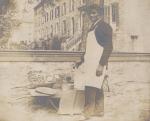
Though never an employee of Dickinson College in Carlisle, Pennsylvania, Noah Pinkney was one of its most famous names for forty years. Known to Dickinson students as "Pink" or "Uncle Noah" for all of that time, Pinckney was born a slave in Frederick County, Maryland on December 31, 1846. During the war he became "contraband" and in 1863, he travelled to Harrisburg, Pennsylvania to enlist in the Union Army. He served under General Butler and, according to the Dickinsonian, was present at the Appomattox Court House in April 1865 when General Lee surrendered.

Following the war he made his home in Harrisburg where he lived until he moved to Carlisle in 1884. From the next twenty years, "Pink" sold pretzels, sandwiches, ice cream, cakes, and pies from under the steps of East College and also made nightly rounds of the undergraduate rooms. On the coldest of winter days he would sell his treats from his three room house on West Street. Students would listen for his common line of "Fine as silk, sah. Dickinson sandwitches, fine as silk." In 1894, he was forbidden to sell his treats on campus, and after a time serving students from outside of the East College gate, he suspended his operations for a few months. By the next spring, though, his catering had once again recommenced from his home on 137 North West Street. The May 1895 issue of the Dickinsonian celebrated the fact that "Once more is heard, the old, familiar cry, 'Let's go to Pinkney's'".