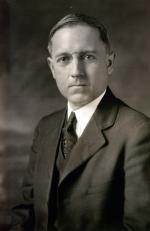
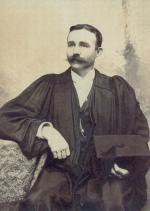
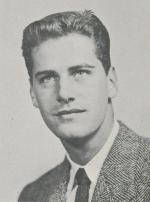
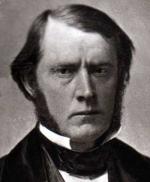
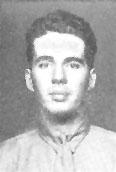
Clarence Johnson Carver (1884-1940)

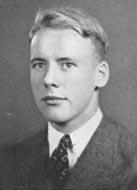
Clarence Johnson Carver was born in Buckingham, Pennsylvania on May 13, 1884. He attended the Hughesian Free School and later Colorado College for one semester. He later came to Dickinson College where he graduated in 1909. Continuing his education, he completed graduate work at the University of Pennsylvania and New York University. He received his M.A. (1915) and Ph. D. (1917) from New York University.

He began his teaching career at the Upper Black School in Eddy, Pennsylvania from 1901 to 1902 and the West Grove School from 1906 to 1907. After his graduation from Dickinson College he taught at the Norristown High School for two years and then joined the Paterson High School faculty in Paterson, New Jersey from 1911 to 1918. From 1918 to 1920, Carver was the Vocational Director of the International Y. M. C. A. at New York.

In 1920 Carver joined the Dickinson College faculty as Associate Professor of the Bible. A year later he became Associate Professor of Education and in 1924 full Professor of Education. Carver was very organized and therefore in demand as secretary to many clubs and committees. He was the secretary of the Dickinson Chapter of Phi Beta Kappa from 1921, secretary of the Dickinson College Library Guild from 1928, and secretary of the faculty from 1929 until his death in 1940. Carver was a charter member of the fraternity, Theta Chi and served as an alumnus counselor.
College Relationship
Alumnus/Alumna Class Year
Faculty - Years of Service
1920-1940

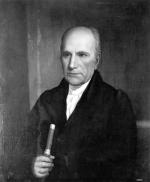
Robert Cathcart (1759-1849)

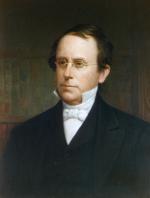
Robert Cathcart was born in 1759 to Alexander and Mary Cathcart near Colerain, Londonderry, Northern Ireland. He studied science and theology at the University of Glasgow and graduated in 1780. Cathcart immigrated to the United States, arriving in Philadelphia in 1790. For the next three years, he served the Presbytery of Philadelphia. In 1791, Cathcart was sent to York County to preach at the churches of Yorktowne and Shrewsburg, now Round Hill. He was officially transferred to the Presbytery of Carlisle on April 9, 1793, and was again installed as paster at York and Shrewsburg in October of that year. Cathcart lived in York, riding out every other Sunday to preach at Shrewsburg. During his many years of service to both congregations, he only missed one Sunday sermon.

In 1794 Cathcart was appointed a trustee of Dickinson College. He served until the Methodist transition in 1833, and never missed a commencement during those thirty-nine years. When “New College” burned in 1803, Cathcart traveled to Philadelphia to solicit donations for the rebuilding of the college. In addition to his dedication to Dickinson, Cathcart helped to found the York County Academy, now York College, serving on the York Board of Trustees for fifty years. He also served as commissioner to the General Assembly of the Presbyterian Synod for thirty years; for twenty of those he was the clerk of the Assembly. Robert Cathcart died on October 19, 1849.

College Relationship
Trustee - Years of Service
1794-1833

Rudolphus N. Cecil (c.1838-1864)

Birth: December 31, 1836

 Death: June 22, 1864 (age 28); Richmond, Virginia; Hollywood Cemetery

 Military Service: CSA, 1861-64

 Unit: Company K, Second Division

Alma Mater: Dickinson College, B.A. (Class of 1858 non-graduate)

Rudolphus Cecil was prepared at the Dickinson Grammar School for the year 1853-1854 and entered the College proper the following year with the class of 1858. Cecil joined the Belles Lettres Society, but eventually withdrew from the College. He moved to Anne Arundel County, Maryland and became a farmer in Millersville where he married Elizabeth Gosnell in January of 1861 with whom he has one son, William Edwin Cecil.

Cecil enlisted in the Maryland unit that eventually became Company K, First Virginia Cavalry of the Confederate States Army at Romney as a private on July 10, 1861. A promotion to 3rd lieutenant came less than a year later on April 23, 1862. Cecil was wounded in the left foot at Kennon’s Landing on May 24, 1864; the foot had to be amputated at a Richmond hospital, but Cecil nevertheless died of his wounds on June 22. He was buried in the Hollywood Cemetery in Richmond.

Cecil is believed to have been a favorite of General Fitzhugh Lee, as Lee often made special mention of Cecil's bravery in his official reports, remarking on his death that he was "an officer possessing a daring bravery I have rarely seen equaled."

College Relationship
Alumnus/Alumna Class Year

Jeremiah Chamberlain (1794-1851)

Jeremiah Chamberlain was born on January 5, 1794, the son of a Revolutionary War colonel named James Chamberlain. Young Jeremiah grew up at "Swift Run," the family farm near Gettysburg, Pennsylvania. He prepared at a classical school in York County before attending Dickinson College, where he graduated in 1814. In 1817 he was a member of the first graduating class of Princeton Theological Seminary, and upon his return to Carlisle, was ordained by the Carlisle Presbytery. Chamberlain spent the next year performing missionary work in the Southwest. He returned to Pennsylvania in 1818 and began preaching in Bedford, Pennsylvania.

College Relationship
Alumnus/Alumna Class Year

Asbury Jones Clarke (1841-1907)

Asbury Jones Clarke was born in Highland County, Virginia on September 14, 1841, the son of James M. and Mary K. Clarke. After preparing at the Baltimore City College and the Light Street Institute, he entered Dickinson in 1862. While at the College, he became a member of Phi Kappa Psi, and just a year after arriving at Dickinson, he graduated with Phi Beta Kappa honors. From Dickinson, Clarke attended Albany Law School, where he received a degree in 1866. On September 17, 1872, he married Nannie McElhenney of Wheeling, West Virginia, and the couple had two children, Martha McElhenney and James Morgan. Like his father, James also attended Dickinson, graduating in 1900. A successful lawyer in Wheeling, Clarke served as a trustee of Dickinson from 1903 until his death in 1907.

In 1918, Clarke’s widow donated $50,000 to Dickinson in order to establish the Asbury Jones Clarke Chair of Latin Language and Literature. At the time, this was the largest single gift to the College by a living donor. Under the terms of the professorship, money from the endowment fund was used to pay the chosen professor's salary, with any surplus used to purchase equipment for the Latin department. In 1940, with the permission of Clarke’s son, the name of the chair was changed to the Asbury J. Clarke Chair of Classical Languages and Literature. Today, it exists as the Asbury J. Clarke Chair of Latin.

College Relationship
Alumnus/Alumna Class Year
Trustee - Years of Service
1903-1907

Joseph Clemens (1862-1936)

Joseph Clemens was born on December 9, 1862, in the rugged county of Cornwall in England. His family of Cornish iron miners migrated to Williamsport, Pennsylvania, and then to Eichelberger, Pennsylvania. He was the only one of five brothers who did not follow the family tradition and become a miner.

In 1890, at the age of 28, Clemens entered Dickinson College in Carlisle, Pennsylvania after preparation at the Williamsport Seminary. At Dickinson, he pursued the philosophical course and studied to be a missionary. While at Dickinson, he was a charter member of the Sigma Chi chapter of Sigma Alpha Epsilon. A very hard-working student, he was the treasurer for the Union Philosophical Society and the treasurer of the Dickinson Prohibition Club. He also played in the College orchestra and sang in the College choir, at the same time serving as a member of the Missionary committee of the college Y.M.C.A. and as class poet.

After graduation in 1894, Clemens was a pastor for the Central Pennsylvania Methodist Episcopal Conference; until 1900 he served as circuit minister for such towns as Mont Alto, Rouzerville, and Blue Rock. In 1896 he married Mary Knapp Strong, whom he had met at the Williamsport Seminary. The following year he earned his master's degree in cursu from Dickinson.

College Relationship
Alumnus/Alumna Class Year

Charles Dexter Cleveland (1802-1869)

Charles Cleveland was born on December 3, 1802 in Salem, Massachusetts. He graduated from Dartmouth College in 1827. Three years later, he came to Dickinson College as professor of Greek and Latin. On his own initiative he added history and literature to his classes. From 1830 to 1832, Cleveland also served as librarian of the College. By all reports, he was well liked by the students, but not by the college president and other faculty members. His views on the method of instruction conflicted with those of his colleagues; the tensions that arose led to his resignation in 1832. Before leaving Carlisle, however, in 1831 Cleveland married Alison Nisbet McCoskry, the granddaughter of the College’s first president, Charles Nisbet.

Cleveland then moved to the University of New York as professor of Latin. From 1834 to 1861, he was principal of a young ladies’ school in Philadelphia. He served as United States Consul at Cardiff, Wales in 1861. Cleveland was a member of the American Philosophical Society, and was active in the causes of international peace and the abolition of slavery. In 1866, he was awarded and honorary doctorate from Dickinson College. Charles Dexter Cleveland died on August 18, 1869.

College Relationship
Honorary Degree - Year
1866
Faculty - Years of Service
1830-1832

John "Jack" R. Cliffe (1929-1951)

Born in April, 1929 in Bellefonte, Pennsylvania, this U.S. Navy Air cadet was killed on December 4, 1951 at Cabaniss Field near Corpus Christi, Texas, when his Bearcat fighter aircraft went into a spin and crashed beside a runway. He was twenty-two years old, had enlisted in September 1950, and was within three weeks of receiving his fighter pilot's wings.

While at Dickinson he was a popular member of the varsity swim team and Phi Delta Theta. Called "Long John" because of his six foot three inch height, John Cliffe graduated with the class of 1950.

College Relationship
Alumnus/Alumna Class Year

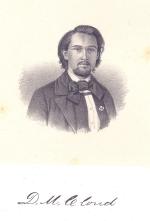
Daniel Mountjoy Cloud (1837-1871)

Birth: June 29, 1837; Warren County, Virginia

Death: May 31, 1871 (age 34); Vicksburg, Mississippi

 Military Service: CSA, 1861-65

 Unit: 7th Virginia Cavalry; Secret Service

Alma Mater: Dickinson College, B.A. (Class of 1858)

Daniel Cloud was born on June 29, 1837 in Warren County, Virginia. He entered Dickinson College, where he was a member of the Phi Kappa Sigma fraternity and the Belles Lettres Literary Society. He graduated with the class of 1858. From 1858 to 1859 Cloud taught at Charlotte Hall, Maryland, and from 1859 to 1860 he taught at Salina, Alabama. In 1860, he accepted a position at the Biblical Institute in Conrad, New Hampshire.

With the start of the Civil War, Cloud returned to Virginia where he joined the 7th Virginia Cavalry under Captain Ashby. After being promoted to captain in 1863, he transferred to the Secret Service of the Confederacy. Under the command of his college roommate, Captain Thomas N. Conrad, Cloud helped to coordinate Confederate spies in Washington, D. C. and the transportation of intelligence to Richmond. At one point Cloud and Conrad planned to abduct President Lincoln, but their plans fell through.

After the war, Cloud became superintendent of public schools in Vicksburg, Mississippi in 1865. He was later admitted to the Bar in Vicksburg, where he remained for the rest of his life. Daniel Mountjoy Cloud died on May 31, 1871.

College Relationship
Alumnus/Alumna Class Year

John Owings Cockey, Jr. (1928-1944)

John Cockey was from Glyndon, Maryland and was the 1936 class president of Franklin High School in Reisterstown, Maryland. He entered Dickinson College that autumn. While at the College he was a varsity soccer player and a member of Phi Kappa Sigma, Skull and Key, and Raven's Claw. He graduated with his class in June 1940 and enrolled at Duke University Law School.

He enlisted in the Army Air Forces in June, 1941 and a month after Pearl Harbor he had already earned his pilot's wings and a commission at Kelly Field in Texas. He became a basic flying instructor in Kansas and in Texas as the Air Corps grew quickly. After sixteen months of this duty, he trained at the heavy bomber school in Fort Worth, Texas, on Liberators. He was promoted and assigned to the Eight Air Force in England in January, 1944, and promoted again in July, 1944.

Cockey was killed in a flying accident over the small village of Bodney, a few miles west of Norwich in East Anglia on September 7, 1944, when he was a squadron commander and a major. Eleven days later, his fellow pledge in the eight man Phi Kappa class of 1940, John Ell, was killed in action in Holland.

College Relationship
Alumnus/Alumna Class Year

Robert Coleman (1748-1825)

Born November 4, 1748 in Castle Finn, near Strabane in County Donegal, Ireland, Robert Coleman was one of eight children from his father Thomas Coleman's two marriages. Persuaded by a clergyman, he followed his brother's lead and left Ireland for America in 1764. He arrived in Philadelphia, he went to work for a merchant named Mark Biddle who was amazed by Coleman's impeccable penmanship. Also impressed by Coleman's legible writing and attention to detail, Curtis and Peter Grubb, two of Pennsylvania's most prominent iron masters, hired the young bookkeeper to oversee the records at their Hopewell Forge furnace. As an employee of the Grubbs, Coleman soon learned the daily activities of an iron master.

After only six months at Hopewell, he took the position of clerk at James Old’s Quittapahilla Forge furnace. On October 4, 1773, Coleman married Ann Old, the daughter of his employer, and soon after, he began leasing Salford Furnace near Norristown. With the outbreak of the American Revolution, Salford Furnace began manufacturing munitions for the Continental Army, and through the use of Hessian prisoners as laborers, Coleman turned a struggling ironworks into a profitable business. Even after the war, profits from Salford continued to grow thanks to Coleman's careful management and wise investment, and before long, he became a millionaire, reputedly Pennsylvania's first.

College Relationship
Trustee - Years of Service
1802-1825

Charles Collins (1813-1875)

Charles Collins was born on April 17, 1813 in North Yarmouth, Maine to Joseph Warren and Hannah Sturdivant Collins. At the age of fourteen he became a member of the Church of Christ and went on to prepare for college at the Maine Wesleyan Seminary. He then entered Wesleyan University and graduated with the highest honors in his class in 1837, as well as Phi Beta Kappa honors. Following his graduation he took a job as the principal of a high school in Augusta, Maine for one year. In 1838, he became the first president, as well as treasurer and a professor of natural sciences at Emory and Henry College in Western Virginia. He would remain there for a period of fourteen years that saw the making of the reputation both of the institution and himself. This undoubtedly led in 1851 to the honorary doctor of divinity degree he received from Dickinson and his subsequent election, on July 7, 1852 at the age of 39, as the eleventh president of the College.

College Relationship
President - Years of Service
1852-1860
Honorary Degree - Year
1851

James Wesley Colona (1872-1946)

James Wesley Colona, son of Robert W. and Anna Ellen Colona was born on January 13, 1872 in Stockton, Maryland. Before entering Dickinson College in 1896, James attended Wilmington Conference Academy, a Methodist preparatory school in Wilmington, Delaware.

While at Dickinson, Colona was heavily involved in campus life. He was a member of Sigma Alpha Epsilon and of the Belles Lettres Society. He also worked in the library. A third baseman for the Dickinson College varsity baseball team in 1897, Colona had a fielding average of .791. Colona was also involved in the Dickinsonian, and was the chairman of the Devotional Committee of the YMCA. A devout Methodist, he is mentioned in the Dickinsonian as preaching at a local church in Mt. Holly Springs on September 17, 1898. He graduated in June, 1899 with a Bachelor of Arts Degree.

Colona then attended Drew Theological Seminary where he graduated with a B.D. in 1902 and began service as a pastor. From 1901 to 1902, he was the pastor at the Methodist Episcopal Church in Round Hill, Connecticut. He then was a pastor at an Annamessex, Delaware church from 1902-1904 and then headed a church in Princess Anne, Maryland. Colona was also a superintendent of the Wilmington School District for six years and pastor of churches in Wilmington and Smyrna, Delaware.

College Relationship
Alumnus/Alumna Class Year
Honorary Degree - Year
1920
Trustee - Years of Service
1923-1946

Thomas Nelson Conrad (1837-1905)

Birth: August 1, 1837; Fairfax Court House, Virginia

Death: January 5, 1905 (age 68); Washington, D. C

Military Service: CSA, 1861-65

Unit: 3rd Virginia Cavalry; Secret Service

Alma Mater: Dickinson College, B.A. (Class of 1857)

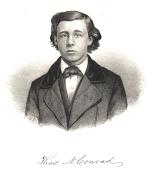
Thomas Conrad was born on August 1, 1837 in Fairfax Court House, Virginia, to Nelson and Lavinia Thomas Conrad. He attended the Fairfax Academy before enrolling in Dickinson College in 1853. While at Dickinson, Conrad was a member of the Phi Kappa Sigma fraternity, and served as secretary and then president of the Belles Lettres Literary Society. He also formed an enduring friendship with a fellow classmate, Daniel Mountjoy Cloud. Conrad graduated with the class of 1857. From 1857 until 1861 Conrad served as principal of the Georgetown Institute in Washington, D. C. For his efforts, he was awarded a master’s degree from Dickinson in 1860.

Conrad enlisted as a chaplain in the 3rd Virginia Cavalry in 1861, and eventually attained the rank of captain. After three years of service, he accepted a position in the Confederate Secret Service. He was responsible for operating the successful “Doctor’s Line,” that supplied reliable intelligence to Richmond. With the aid of his friend Daniel Cloud, Conrad organized a plot to abduct President Lincoln, but their plans fell through. After Lincoln’s assassination, Conrad was briefly incarcerated.

College Relationship
Alumnus/Alumna Class Year

Moncure Daniel Conway (1832-1907)

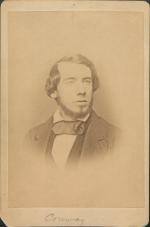
Moncure Daniel Conway, the second son of a distinguished family from Stafford County, Virginia, was born on March 17, 1832. His father, Walker Peyton Conway, was a prominent slaveholding landowner, a magistrate, and a representative to the Virginia legislature. His mother, Margaret Daniel Conway, could trace her family to the earliest days of the commonwealth. Both his parents had converted to Methodism, he from the Episcopalians and she from the Presbyterians, and the Conway children were exposed at an early age to evangelicalism. Moncure Conway first went to a family school and then attended the thriving Fredericksburg Classical and Mathematical Academy, a school that had educated George Washington and other famous Virginians. He entered Dickinson College in Carlisle, Pennsylvania as a sophomore at the age of fifteen. Conway advanced quickly at the Methodist affiliated college and graduated with the class of 1849. While there he had begun his career as a writer, founding the College's first student publication, fell somewhat under the influence of Professor John McClintock, and had also embraced the Methodist Church. After thoughts about a career in law, and despite emerging doctrinal doubts, the young graduate became a circuit-riding Methodist minister in 1851. Increasingly uncomfortable with conformity, he soon left Methodism for Unitarianism and enrolled at Harvard's Divinity School.

College Relationship
Alumnus/Alumna Class Year
Honorary Degree - Year
1892

Thomas Cooper (1759-1839)

Thomas Cooper was born on October 22, 1759 in London. He attended University College, Oxford and though he failed to obtain a degree he was learned in science, medicine, and law. After work at the Inner Temple, he became a barrister in 1787. In England, he was a lawyer, scientist, and philosopher. Though acquainted with men like Pitt, Burke, and Fox, his radical views were not well received at the time. An eventful four month visit to Paris including an address to leading Jacobins in April, 1792 did not aid his reputation even though he and his companion, James Watt, had to flee the country for their lives after standing up to Robespierre in public arguments. He was condemned on his return; his admission into the Royal Society, after his friend Joseph Priestley had nominated him, was rejected. He first visited the United States in 1793 for a few months and returned with the remainder of his family the following year. Along with his friend Priestley, himself seeking quieter surroundings, settled in Northumberland, Pennsylvania.

College Relationship
Faculty - Years of Service
1811-1815

Fred Pierce Corson (1896-1985)

Fred Pierce Corson was born to Mary Payne and Jeremiah Corson, a glass manufacturer, on April 11, 1896 in Millville, New Jersey. He graduated from Millville High School in 1913 and enrolled in Dickinson College. While at Dickinson he was a member of Kappa Sigma Fraternity as well as Omicron Delta Kappa, Tau Kappa Alpha and Tau Delta Kappa. He graduated with an A.B. degree in 1917 cum laude and Phi Beta Kappa. His nickname at the College, spawned by his seriousness, was, ironically in light of later events, "the Bishop."

He went on to study at Drew Theological Seminary and earned a bachelor's degree of divinity in 1920. He also received a Master of Arts degree from Dickinson College in 1920. Following his graduation from Drew, Corson entered the New York East Annual Conference of the Methodist church, in which he had been ordained in 1919, and took on pastorates on Long Island, New York , New Haven, Connecticut and Brooklyn, New York. He was elected as the district superintendent in the New York East Methodist Conference in 1929 and received an honorary doctorate of divinity in 1933 from Syracuse University.

Alumnus/Alumna Class Year
President - Years of Service
1934-1944
Honorary Degree - Year
1931; 1944

George Leo Cottrell, Jr. (1923-1944)

George Cottrell was born in Wilmington, Delaware in August, 1923 but grew up at the home of his grandmother in Ambler, Pennsylvania. Here he graduated from high school in 1942. He entered Dickinson on the accelerated degree plan with the class of 1946 but withdrew after the fall and winter sessions to enlist with the United States Marine Corps.

Cottrell trained in basic infantry and at radio school in San Diego. He departed for the Pacific in April, 1944 and on July 21 was in the communications detail in the first wave of the Marine assault on the island of Guam. After working for hours under fire to establish and maintain radio communications on the beachhead, Cottrell was struck and killed by mortar fire, one month shy of his twenty-first birthday. He was buried on the island the following day.

College Relationship
Alumnus/Alumna Class Year

Forrest Eugene Craver (1875-1958)

Forrest Craver was born September 24, 1875 one of the four children of Frank and Mary Craver, in Scanlin, Pennsylvania He attended Berwick High School, Wyoming Seminary and Dickinson Preparatory School before entering Dickinson College in September 1895. While at Dickinson College, Craver excelled in both athletics and academics. He was a fine scholar, graduating Phi Beta Kappa, and captained the track and football teams. "Cap" also served the Union Philosophical Society, and as treasurer of the college YMCA, editor of both the Hand Book, and the Microcosm, and president of his class during sophomore year. He was also a member of Phi Kappa Sigma.

College Relationship
Alumnus/Alumna Class Year
Honorary Degree - Year
1947
Faculty - Years of Service
1900-1946

William Creighton (1778-1851)

William Creighton was born in western Virginia on October 29, 1778. He entered Dickinson College with the class of 1795 and studied under Charles Nisbet. (The College Archives holds two notebooks in his hand from Nisbet's lectures in moral philosophy and logic and metaphysics) He was elected to the Union Philosophical Society in 1792. He graduated with his class on September 30, 1795.

Following this, he studied law in Virginia and then moved west to Chillicothe, Ohio in 1799. On March 3, 1803, at age twenty-five, he became the first Secretary of State of the new state and served until 1808. Known as a conservative Republican, he was appointed to a congressional vacancy in 1813 and elected to the following Congress. After a time in private law, he was again elected in 1824 as a supporter of Adams. He served in Congress until his final retirement in 1833 and his concentration on his legal practice.

He had married Elizabeth Meade in September, 1805 and they had six daughters and three sons. William Creighton died on October 1, 1851 in Chillicothe.

College Relationship
Alumnus/Alumna Class Year

John Andrew Jackson Creswell (1828-1891)

John A. J. Creswell was born on November 18, 1828 at Port Deposit, Maryland, then called Creswell's Ferry. He attended a local academy and then went on to enroll at Dickinson with the class of 1848. He was an excellent student, was elected to the Belles Lettres Society, and delivered the valedictory oration at his commencement.

College Relationship
Alumnus/Alumna Class Year
Honorary Degree - Year
1871
Trustee - Years of Service
1865-1871; 1885-1891

Andrew McElwain Criswell (1824-1899)

Andrew M. Criswell was born near Scotland, Pennsylvania on November 29, 1824 to Robert and Sarah McElwain Criswell. He had some early schooling at the nearby Chambersburg Academy and then entered Dickinson College in Carlisle, Pennsylvania in 1844 with the class of 1847. Criswell was a member of the Union Philosophical Society while at the College. He left his studies in 1845 to take up farming and then school teaching. He was later involved with a store and local real estate dealings in Scotland.

Criswell married Louisa Renfrew of Duffield, Pennsylvania, and the couple had four children: Robert Thompson, Nancy Jane, Henrietta Alice, and John Renfrew. Only the latter married. After Criswell retired from business, the family moved to Chambersburg. Andrew Criswell died there on March 31, 1899. He was seventy-four years old.

College Relationship
Alumnus/Alumna Class Year

George Richard Crooks (1822-1897)

George Crooks was born on February 3, 1822, the son of George Richard Crooks, Sr. of Philadelphia. He was a member of the class of 1840, and graduated with the highest honors. Crooks served as an itinerant preacher first on the Canton circuit of Illinois in 1841, then on the frontier. He returned to his alma mater in the fall of 1841 as a tutor in the Dickinson Grammar School. In 1843, Crooks was promoted to principal of the Grammar School, a position that he filled until 1848. From 1846 to 1848, he also served as adjunct professor of Latin and Greek in the college.

Crooks resigned from the college in 1848 when his mentor, Professor John McClintock, resigned. He filled posts as a Methodist preacher for the Philadelphia Conference until 1857, when he transferred his affiliation to the New York East Conference. Crooks edited The Methodist from 1860 until 1875; one year later, he retired from the conference. In 1880 Crooks joined McClintock at the Drew Theological Seminary, teaching church history there until 1897. During his lifetime, Crooks received two honorary degrees from Dickinson College: the first in 1857 and the second in 1873.

College Relationship
Alumnus/Alumna Class Year
Honorary Degree - Year
1857; 1873
Faculty - Years of Service
1846-1848

David Harold Crosby, Jr. (1918-1942)

David Crosby was born in Phillipsburg, New Jersey on January 18, 1918. He prepared for college at the Mercersburg Academy and entered Dickinson with the class of 1940. Two years into his time at the College, during which he had become a member of Phi Kappa Psi fraternity, he transferred to Juniata College where he graduated in 1940. He later earned a master's degree in sociology at the University of Southern California and returned to teach at Juniata during the summer session of 1941.

By this time, however, he had already been accepted as a Marine Corps officer candidate. In October, 1941, he entered training and was commissioned in February, 1942 at Quantico, Virginia. He was assigned to the Pacific a few months later and, in early November 1942, was killed in action on Guadalcanal in the Solomon Islands.

College Relationship
Alumnus/Alumna Class Year

James Culbertson (1803-1854)

James Culbertson was born in Carlisle, Pennsylvania on March 17, 1803, the son of prosperous Presbyterian farmer Samuel Culbertson and his wife. His parents died when he was young, and the neighboring farming family of Thomas Urie took him in. When twelve, Culbertson went to Hopewell Academy in Shippensburg and then returned to his hometown to enter Dickinson College as a sophomore in the class 1824. After graduating with his class, Culbertson took up the study of medicine. He studied with Dr. Adam Hays in Carlisle and then at the University of Pennsylvania, where he received his degree in April 1827.

Culbertson opened his practice in Lewistown, Pennsylvania in 1828 and continued there until his death. He was an admired doctor and scientist, interesting himself in geology and mineralogy. He served as a trustee of the local Lewistown Bank and of the Lewistown Academy. Culbertson was a Whig in politics, but never involved himself deeply. He reattached himself to the Presbyterian Church later in his life.

Culbertson married Mary Steel of Lewistown in June 1839. The couple had two sons, one of whom died in infancy. James Culbertson died suddenly in Lewistown on March 30, 1854, two weeks after his fifty-first birthday.

College Relationship
Alumnus/Alumna Class Year