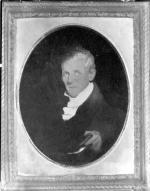
Thomas Bowman (1817-1914)

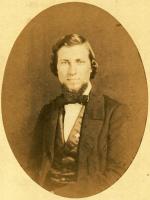
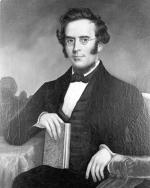
Thomas Bowman was born in Briarcreek Township near Berwick, Pennsylvania on July 15, 1817. His father was a successful businessman and the family had been Methodists since Francis Asbury had converted, and later ordained, Bowman's grandfather, also named Thomas, in 1780. Young Thomas was educated in the local schoolhouse and then entered Wilbraham Academy in Massachusetts for a year, progressing to the Casenovia Seminary in New York where he studied for three years. He entered Dickinson College in Carlisle, Pennsylvania as a junior in 1835 and graduated as valedictorian of the class of 1837, the first class to graduate under the management of the Methodist Church.

College Relationship
Alumnus/Alumna Class Year
Honorary Degree - Year
1872; 1876
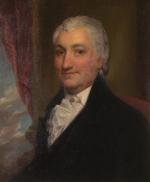
Hugh Henry Brackenridge (1748-1816)

Hugh Henry Brackenridge was born in a small village in western Scotland near Cambeltown. His family emigrated to Philadelphia around 1753 and settled in York County, Pennsylvania. He made determined efforts to educate himself, with the help of a local pastor, and by 1768 he was able to enter Princeton, where he was a classmate of James Madison. After graduation he studied divinity and headed an academy in Maryland. During the Revolution he wrote patriotic literature and served as a chaplain. He later gave up the ministry, having never been ordained, and took up the law under Samuel Chase in Maryland. In 1781 he journeyed to Pittsburgh to begin a practice. There he became active in community affairs, including the beginnings of the first Pittsburgh newspaper, bookstore, and most importantly, in 1787, the Pittsburgh Academy which was eventually to become the University of Pittsburgh.

In politics, he became involved with the Whiskey Rebellion, in such balanced measure that he stirred the suspicions of the rebels amongst whom he lived as well as the Federal representatives engaged in restoring order to the West. Nevertheless, he was a loyal Republican and Governor McKean appointed him to the Supreme Court of Pennsylvania in 1799. Two years later, he left Pittsburgh and settled in Carlisle.

College Relationship
Trustee - Years of Service
1803-1816

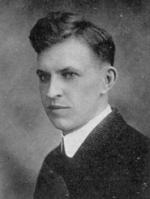
Raymond Rush Brewer (1889-1963)

Raymond Brewer was born on November 23, 1889 to Irvin and Mary Jane Winger Brewer in Sylvan, Pennsylvania. He attended the Dickinson Preparatory School in Carlisle, Pennsylvania before joining the full undergraduate class of 1916. At Dickinson, Brewer studied the Classical course, and was a member of Theta Chi, Union Philosophical Society, the Y.M.C.A., and Phi Beta Kappa. After graduation, he briefly attended Drew Theological Seminary, but the outbreak of the First World War interrupted his studies, and he withdrew to serve as a chaplain in the war. Eventually, Brewer received his bachelor of sacred theology from Boston University in 1921.

College Relationship
Alumnus/Alumna Class Year

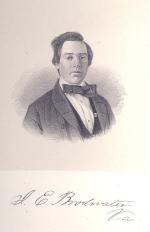
Joseph Emory Broadwater (1837-1899)

Joseph E. Broadwater was born in Accomac County, Virginia to David and Mary Ann White Broadwater on April 29, 1837. He prepared for college at academies in Drummondville, Virginia and Bel-Air, Maryland before entering Dickinson College in Carlisle, Pennsylvania in 1854. Broadwater was elected to the Belles Lettres Society and graduated with his class in July 1858. He then studied medicine at the University of Maryland and was awarded the M.D. there in 1860.

Broadwater returned home to Virginia's Eastern Shore and took up practice in Temperanceville, Virginia. He spent the remainder of his life there as a family physician. Broadwater was also elected to a term in the Virginia House of Delegates in 1889, and he served as a member of the school board for Accomac County.

College Relationship
Alumnus/Alumna Class Year

Matthew Brown (1776-1853)

Matthew Brown was born in the White Deer Valley of Northumberland County, Pennsylvania, where his father had removed from Carlisle to become one of the earliest settlers in the area. The father, an elder in the Reformed Presbyterian Church, was an active opponent of colonial rule; he died of fever while serving in the Revolutionary War. The two year old Matthew was taken in by an uncle, William Brown, who lived near Harrisburg. As a prominent figure in Dauphin County, Brown was able to provide his adopted son with an education in local schools before enrolling him in Dickinson College in nearby Carlisle, Pennsylvania. Graduating with the class of 1794, Matthew returned to Northumberland County where he began to teach classical school; his intellectual pursuits brought him into contact with such noted individuals as Joseph Priestley. He also began to study divinity in 1796 and three years later he was licensed to preach by the Carlisle Presbytery. He was ordained in 1801.

College Relationship
Alumnus/Alumna Class Year

Philip Auld Harrison Brown (1842-1909)

Philip A. H. Brown was born on January 3, 1842 to John and Sarah Harrison Auld Brown in Baltimore, Maryland. He prepared for his undergraduate years at Lynchburg College in Virginia and then entered Dickinson College in Carlisle, Pennsylvania in the fall of 1857. While at the College, Brown became a member of the Phi Kappa Psi fraternity and was elected to the Belles Lettres Society. He graduated with his class in 1860.

By the spring of 1862, Brown was a sergeant in the Fourth Battery, Maryland Artillery, known also as "the Chesapeake Battery," in the Army of Northern Virginia. He served the Confederacy until the end of the war, mustering out as a sergeant in May 1865. He saw action in some of the larger encounters of the war, including Cedar Mountain, Cold Harbor, and Gettysburg, where his unit lost heavily. Following the war, Brown engaged in the transportation trade. By 1871, he had also completed religious training and was ordained in the Episcopal Church. He served as the seventh rector of Christ Church in Cooperstown, New York between 1872 and 1874. He was also the vicar of the Trinity Parish in Verick Street, New York City from 1875 to 1909.

Brown married Jane Russell Averell Carter of Cooperstown in 1879. The couple had eight children. On September 15, 1909, the Reverend Philip Auld Harrison Brown died and was buried in Cooperstown in the Christ Church graveyard. He was sixty-seven years old.

College Relationship
Alumnus/Alumna Class Year

Samuel Brown (1769-1830)

Samuel Brown was born January 30th, 1769 to Rev. John and Margaret Preston Brown in modern-day Rockbridge County, Virginia. Educated in his father's grammar school, Samuel also studied at Rev. James Waddell’s seminary before entering Dickinson College in Carlisle, Pennsylvania in 1787. He was elected to the Belles Lettres literary society, and received his BA in 1789. Preparing for the medical profession, Samuel studied with his brother-in-law Alexander Humphreys in Staunton, Virginia and Benjamin Rush in Philadelphia. In 1792, Samuel went to the Universities of Edinburgh and Aberdeen in Scotland, receiving his medical degree from Aberdeen in 1794.

During his career as a physician, Samuel established himself in Bladensburg (Maryland), Lexington (Kentucky), and New Orleans. From 1799 to 1806 he taught chemistry, anatomy and surgery at Transylvania University in Lexington. In 1800, Samuel joined the American Philosophical Society. He is responsible for bringing the smallpox vaccine to Lexington, inoculating more than 500 people by 1802. In 1819, he abandoned plans for an Ohio medical school in favor of the chair of theory and practice of medicine at Transylvania University. He retired in 1825. Among his other accomplishments, Samuel founded the Kappa Lambda Society of Hippocrates, invented a ginseng clarification process, and promoted the practice of lithotrity, a non-invasive method of breaking up bladder stones.

College Relationship
Alumnus/Alumna Class Year

David Bachman Brunner (1835-1903)

David Bachman Brunner was born on March 7, 1835 in Amity Township, Pennsylvania in what is now Washington County but then Berks. His Lutheran father, John Brunner, was a carpenter who purchased an area farm soon after David was born. His mother was Elizabeth Bachman Brunner and he was one of seven children. David Brunner attended the local log schoolhouse of Daniel Lee from the time he was seven and was apprenticed as a carpenter when he was twelve. He continued his education beyond this, however, and attended the Freeland Academy (now Ursinus College) for long enough to earn money as a local teacher himself. Determined to study the classics further, he entered Dickinson College in Carlisle, Pennsylvania in 1856 at the relatively late age of twenty-one. He was an active member of the Union Philosophical Society and graduated with his class in 1860.

College Relationship
Alumnus/Alumna Class Year

Josephine Brunyate Meredith (1879-1965)

Josephine Brunyate was born on April 14, 1879, in Halifax, Nova Scotia, Canada, the daughter of a prominent clergyman, Edwin Richard Brunyate and his wife Eliza. Home tutored first, she attended the State Model School in Trenton, New Jersey and then entered Dickinson College in Carlisle, Pennsylvania with advance standing in 1899. She graduated with Phi Beta Kappa honors in three years in 1901. After her graduation, Brunyate taught in high schools located in Pleasantville, Atlantic City, and Trenton, New Jersey. In August, 1908 she married Arthur J. Meredith of Boston, Massachusetts and had one daughter. Following the death of her husband in 1917, she returned to teaching at the high school in Woodbury, New Jersey.

College Relationship
Alumnus/Alumna Class Year
Honorary Degree - Year
1952
Faculty - Years of Service
1919-1948

Andrew Buchanan (1780 - 1848)

Andrew Buchanan was born on April 8, 1780 to Andrew and Rachel Gilleylen Buchanan in Chester County, Pennsylvania. Despite the death of his father when young Andrew was five and then the death of his step-father in 1790, Buchanan received an education and enrolled with the class of 1798 at Dickinson College in Carlisle, Pennsylvania. After graduating with his class, he studied law and was admitted to the bar in Harrisburg in 1801 and practiced in York, Pennsylvania for a short time before moving his practice to Waynesburg, in Greene County, Pennsylvania in 1803.

One of the earliest practicing lawyers in the district, a political career at the local, state, and national level followed. He became a county commissioner and served in the Pennsylvania Legislature between 1831 and 1835. Buchanan was then elected to the House of Representatives and served between March 1835 and March 1839 first calling himself a Jacksonian in the Twenty-Fourth Congress and then a Democrat in the Twenty-Fifth. After these two terms, which included service as chairman of the politically charged Elections Committee, he retired from politics and devoted himself to his law practice.

College Relationship
Alumnus/Alumna Class Year

James Buchanan (1791-1868)

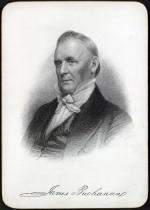
James Buchanan, fifteenth president of the United States, was born near Mercersburg, Pennsylvania on April 23, 1791 to parents of Scotch-Irish descent. Buchanan attended the Mercersburg Academy until the fall of 1807, when he entered the junior class of Dickinson College. He found the school to be in "wretched condition" with "no efficient discipline." However, his own behavior while at Dickinson was far from exemplary; he was expelled during the fall vacation of 1808 for bad behavior. After making a pledge of good behavior to his minister, Dr. John King (a college trustee), Buchanan was readmitted to Dickinson. In his senior year, he felt slighted by the faculty because he did not win the top award of the College for which his literary society had nominated him. Buchanan commented, "I left college, . . . feeling little attachment to the Alma Mater."

College Relationship
Alumnus/Alumna Class Year
Honorary Degree - Year
1842

John Buonocore III (1965-1985)

John Buonocore III, a twenty-year-old Dickinson College junior, was one of five Americans killed in a terrorist attack on Rome's Leonardo da Vinci Airport on December 27, 1985. Buonocore was standing at the check-in counter of Trans World Airlines when Arab suicide terrorists began hurling hand grenades and firing Kalashnikov rifles at holiday travelers. The attack was aimed at the terminal of El Al, an Israeli airline, and was a reprisal for an Israeli air raid on the headquarters of the Palestinian Liberation Organization in Tunis, Tunisia on October 1, 1985. There was a similar attack in Vienna at the Schwechat Airport at about the same time on the same day. A total of nineteen people died in the two attacks, including Natasha Simpson, the eleven-year-old daughter of Victor L. Simpson, the Associated Press news editor in Rome. Abu Nidal, an elusive Palestinian terrorist and leader of the infamous Faith Revolutionary Council, was the apparent mastermind behind the attacks.

Only one of the five attacking terrorists survived as airport security forces returned fire. In his clothes, authorities found a note, in Arabic, which read:

“As you have violated our land, our honor, our people, we in exchange will violate everything, even your children to make you feel the sadness of our children. The tears we have shed will be exchanged for blood. The war has started from this moment.”

The letter was signed, “The Martyrs of Palestine.”

College Relationship
Alumnus/Alumna Class Year

James Burnside (1809-1859)

James Burnside was born in Bellefonte, Pennsylvania on February 22, 1809, the eldest son of Judge Thomas Burnside. He prepared at the Bellefonte Academy and entered Dickinson College in Carlisle, Pennsylvania with the class of 1828, graduating with highest honors. He then studied law in the office of his father and was admitted to the Bellefonte bar in 1830 and began practicing law in his father's firm.

Burnside was elected in October 1844 to the Pennsylvania state legislature and was re-elected the following year. Governor William Bigler named his fellow Centre County resident as the first judge of the newly formed Twenty-Fifth Judicial District on April 20, 1853, and, in October, 1853, his position was confirmed by election.

Burnside married Rachel Cameron, daughter of a fellow judge, on June 2, 1848. The couple had two sons and a daughter. On Friday evening, July 2, 1859, he was thrown from a runaway buggy in Bellefonte and died instantly from a fractured skull. James Burnside was fifty years old.

College Relationship
Alumnus/Alumna Class Year

Paul D. Burtner (?-1967)

Second Lieutenant Burtner died in an automobile accident near Del Rio, Texas, on March 20, 1967, a few days after he had received his wings as an Air Force pilot. A Philosophy and English major and a graduate of the class of 1965, he was the son of Lt. Colonel Clare Paul Burtner and Mrs. Margaret Burt Burtner, both of the class of 1941.

At Dickinson Burtner was a member of the Kappa Sigma fraternity and served all four years on the Student Senate and as its president during his senior year.

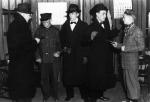
Image Note: Cast of The Ghost Train with Paul Burtner at far right in 1938.

College Relationship
Alumnus/Alumna Class Year

James Hope Caldwell (1860-1941)

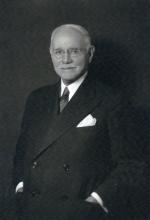
On September 25, 1860 in Newman, Georgia, James Hope Caldwell was born to the educator and minister, Dr. John H. Caldwell, and his wife, Elizabeth Hodnett Caldwell. His father was a founder of Andrew College in Cuthbert, Georgia. Caldwell attended the Wilmington Conference Academy before entering Dickinson in 1876. He became a member of Phi Kappa Psi fraternity and ended his senior year as a member of Phi Beta Kappa. He received a B.A. degree from Dickinson in 1880 and a M.A. degree in 1883.

After leaving Dickinson, Caldwell enrolled at the University of Pennsylvania Law School, where he received his law degree in 1884. That same year, he was admitted to the bar and moved to New York City to practice law. He eventually became a senior partner at Caldwell & Raymond, a firm specializing in municipal and state bond issues. While at Caldwell & Raymond, he served as bond counsel for the cities of Buffalo, Syracuse, Miami Beach, Nashville, and Chattanooga. He also represented several leading motion picture companies when President Taft's Attorney-General George W. Wickersham sued for a dissolution of the motion-picture trust.

College Relationship
Alumnus/Alumna Class Year
Trustee - Years of Service
1930-1941

Merritt Caldwell (1806-1848)

Merritt Caldwell was born on November 29, 1806 to William and Nancy Caldwell of Oxford, Maine. He attended Bowdoin College and Medical School, graduating in 1828. He received his master’s degree from that institution in 1831. From 1828 until 1834, Caldwell was principal of the Maine Wesleyan Seminary.

Caldwell came to Dickinson College in 1834 as professor of mathematics, metaphysics, and political economy. He is credited with introducing the first biology classes at the college, known then as “natural science.” In 1841, he was forced by ill health to take a break from teaching, but returned to the school upon his sufficient recovery. Caldwell traveled to London in 1846 where he participated in the World’s Temperance Conference before a four month tour of Europe. Caldwell’s delicate health had improved during his European tour, but this proved only temporary.

He resigned his position at the College in March 1848 due to failing health. Merritt Caldwell died of tuberculosis on June 6, 1848 in Portland, Maine.

College Relationship
Faculty - Years of Service
1833-1848

Samuel Cushman Caldwell (1836-1923)

Samuel Cushman Caldwell was born on April 10, 1836 in the west end of Old West at Dickinson College in Carlisle, Pennsylvania. His father, science professor Merritt Caldwell, and his mother had their home on the first and second floors of the college building. Professor Caldwell was forced to resign from his position at Dickinson in March 1848 due to poor health. He died soon after in Portland, Maine. There, the younger Caldwell lived with family, preparing at the Hebron Academy for college. In 1855, Samuel Caldwell returned as a student to Dickinson College, where he was elected to the Union Philosophical Society and graduated with his class in 1858. Caldwell taught Greek and Latin in Maryland and at the Rock River Seminary in Mount Morris, Illinois. He then returned to Portland, Maine to study law. Caldwell was admitted to the bar there in 1863, but took up journalism instead. He worked for The Methodist as assistant editor to George R. Crooks, one of his father's former students of the Dickinson class of 1840. 

College Relationship
Alumnus/Alumna Class Year
Honorary Degree - Year
1899

John Farr Campbell (1917-1943)

John Campbell was born on the fourth of July, 1917, in Hightstown, New Jersey. The son of a carpet weaver who never finished high school, he attended the Peddie School in his home town and entered Dickinson on September 16, 1937 as a member of the class of 1941. While at the College, he participated in soccer, baseball, and basketball. Nicknamed "Soupy," he was also very active in campus organizations, including the Student Senate, the Athletic Association, Microcosm, and Omicron Delta Kappa. He was a member of Sigma Alpha Epsilon, serving as treasurer and president, and of Raven's Claw.

Shortly after graduation, he enlisted in the United States Army Air Corps and after being accepted as a flying cadet was commissioned in the fall of 1942. He was assigned to North Africa following the landings there and was posted as missing on March 31, 1943 when a flight he was on did not return. He was later declared as killed in action.


College Relationship
Alumnus/Alumna Class Year

William Laws Cannon (1839-1863)

Birth: April 6, 1839; Bridgeville, Delaware

Death: August 18, 1863 (age 24); Bel Air, Maryland

Military Service: USA, 1861-62

Unit: 1st Delaware Calvary 

Alma Mater: Dickinson College, B.A. (Class of 1860)

Cannon was born on April 6, 1839 at Bridgeville, Delaware. His father, William Cannon, was a successful merchant who later became governor of Delaware during the war. At Dickinson, Cannon was a member of the Union Philosophical Society as well as Phi Kappa Sigma. He received his bachelor of arts degree in 1860. After graduation he obtained a position at the Census Bureau in Washington, D.C.

Cannon became a captain of the 1st Delaware cavalry in the Army of the Potomac and was placed in command of Company B of that unit. He contracted typhoid fever during the occupation of Bel Air, Maryland, dying there on August 18, 1863.

On news of his death, the towns two publishers, the 'Southern Aegis" a southern sympathizing publication and the "Bel Air American," the unionist post joined together to publish a tribute to him.  It read,

"... and from the gentlemanly deportment endeared himself to many of our citizens who deeply and sincerely mourn his loss, and sympthazie with his afflicted family, several members of which were with him when he died. His men were deeply troubled at their loss, many of them being affected to tears when the sad announcement was made to them."

College Relationship
Alumnus/Alumna Class Year

John B. Care (1915-1946)

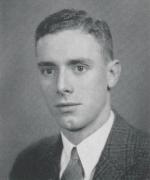
John Care was born in Linglestown, Pennsylvania on June 22, 1915. He attended high school in Lower Paxton and entered Dickinson College with the class of 1936. His ambition was to become a teacher; he had practiced teaching at Boiling Springs High School. After graduation, however, he was mostly employed as a clerk, first with the U.S. Treasury and then with the Pennsylvania Supply Company.

Care enlisted in the Army in April, 1942 and became an officer that November; he was sent to Europe in late 1944. He served in Europe with the advance as a member of the 468th Anti-Aircraft Artillery Automatic Weapons Battalion attached to the Ninth and Third Armies.

On February 10, 1946, while serving with the Army of Occupation in Austria, John Care died of gunshot wounds.

College Relationship
Alumnus/Alumna Class Year

Thomas Care (1832-1864)

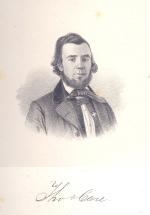
Thomas Care was born at St. Mary's in Chester County, Pennsylvania on July 10, 1832. He was prepared at the Williamsport Seminary and entered Dickinson College in Carlisle with the class of 1858. He was elected to the Union Philosophical Society, was an active debater, and served as treasurer of the society for a time. He graduated with his class in the early summer of 1858 and determined on a career in the Methodist Episcopal Church.

From 1859 to 1863, Care was a pastor and circuit rider with the East Baltimore Conference, riding for a time in 1859 in Huntingdon County. He then took a post in 1863 as instructor of natural science at his old school, the Williamsport Seminary, which he held for a year. In late 1863, he was again a missionary and circuit preacher, this time in Elk County, Pennsylvania.

No information is available at this time on his family situation. Thomas Care died in Harrisburg on March 18, 1864. He was thirty-two years old.

College Relationship
Alumnus/Alumna Class Year

Richard Bennett Carmichael (1807-1884)

Richard Bennett Carmichael was born the only son of William and Sarah Downes Carmichael to an old and wealthy Maryland family in Centreville, Queen Anne County on December 25, 1807. His father had shared rooms in Annapolis with future chief justice Roger Brooke Taney and the two men remained friends till William died in 1853. Richard was schooled locally and then entered Dickinson College in Carlisle, Pennsylvania with the class of 1827. While at the College he was elected to the Union Philosophical Society in 1825 but withdrew later to attend Princeton, where he graduated in 1828. He subsequently studied law and opened a practice in his home town in 1830.

Almost immediately after starting his legal career, he was elected to the Maryland house of delegates and two years later, at the age of twenty five, was elected to the United States Congress as a Jacksonian Democrat. He served one term, returned to Centreville, and later, in 1841, went again to the state house, where he served multiple terms over more than two decades. He remained very active in Democratic politics, acting as a delegate to the party's national convention. in 1856. In 1858 he was appointed an associate justice on the 10th Judicial Circuit that encompassed four local counties on the Eastern Shore of Maryland, including his own.

College Relationship
Alumnus/Alumna Class Year

Andrew Carnegie (1835-1919)

Andrew Carnegie was born November 25, 1835 in Dunfermline, Scotland. In 1848, his family moved to Allegheny City, Pennsylvania to live with relatives in a small Scottish community. Andrew began working at a bobbin factory but by 1850 had managed to secure a job as a messenger for the telegraph company in Pittsburgh, Pennsylvania. From here he would launch a career that made him a man of legendary wealth. During the American Civil War, Carnegie was employed in the railroad industry. Immediately following the war, he traveled to Great Britain to study the railroads there. Upon his return, Carnegie combined his knowledge of the British railroad system with the American steel industry to create a modern industrial empire, catapulting the United States into world leadership in steel production. In doing so, he became one of the wealthiest men in the world.

College Relationship
Trustee - Years of Service
1892-1894

Andrew Carothers (1778-1836)

Andrew Carothers was born in 1778 to John and Mary Carothers of Cumberland County, Pennsylvania. He attended the McHose schoolhouse until he was about 14 years old. As a younger son, Andrew would not inherit the family’s large farm; to provide for his future, the family apprenticed him to a cabinet maker.

But these plans changed dramatically in January 1798, when the entire family became terribly ill. A servant named Sarah Clark later confessed to putting arsenic in the family’s bread and butter. She claimed to be a rival of a Carothers’ daughter for the love of local man. Finding no way of poisoning only the girl, Clark resorted to poisoning the entire family. Sarah Clark was hung for her crimes, but not before both of Carothers’ parents died of arsenic poisoning. Andrew Carothers survived, but suffered from a form of nerve paralysis that left his limbs and hands crippled.

No longer able to pursue cabinet making as a livelihood, Carothers attended Dickinson College as a member of the Class of 1800. From 1802 to 1805, Carothers studied law under David Watts in Carlisle. In December 1805, Carothers was admitted to the Bar of Cumberland County and established a law firm in Carlisle. He also served on the board of the Carlisle Bank, and was eventually elected to the Town Council. Carothers married Catherine Louden in 1812. After her death in 1820, he married Isabella Creigh Alexander.

College Relationship
Alumnus/Alumna Class Year
Trustee - Years of Service
1814-1833

James William Carson (1925-2005)

James W. Carson was born in Ohio in October, 1925 and graduated from Miami of Ohio in 1949. He remained to earn a M.A. in History in 1951, then served as a reference librarian and taught as an instructor in history there. He left to pursue further graduate work at Syracuse University in 1953, teaching in the history department there as well. He also had taught at Western College. He later continued graduate studies at the University of Pennsylvania.

He came to Dickinson in July, 1956, and taught in the Department of History as an assistant and associate professor until his retirement in 1991. He offered a remarkable array of courses during his tenure but is mostly remembered for his contributions to the curriculum in comparative history, especially in the area of South Asia. As his chairman related on his retirement, "the first non-western civilization class at Dickinson was taught in 1935 (but) twenty five years later, colleagues like Donald Flaherty and Jim Carson, along with just a few others, still struggled to nurture this worthy and vital tradition. Today, we know, of course, that they succeeded and that a new generation stands gratefully on these broad shoulders." To commemorate his work, the Department of History instituted in 1992 the James W. Carson Prize for Non-Western and Comparative History, funded from very generous contributions from his friends, his colleagues, and generations of his students.

College Relationship
Faculty - Years of Service
1956-1991